
In This Article
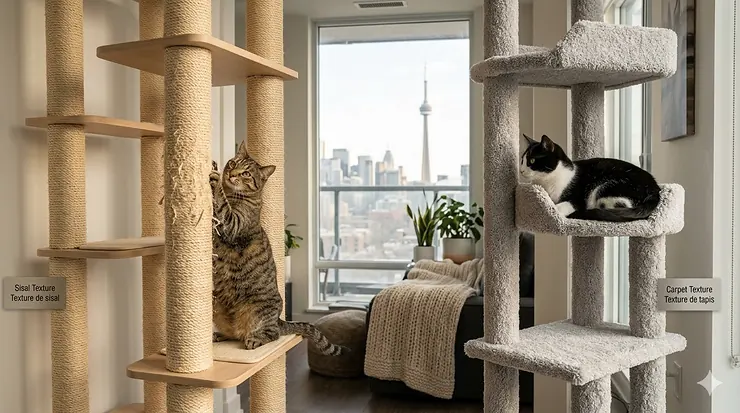
You’ve probably noticed your cat has strong opinions about where they scratch. That antique sofa? Irresistible. The expensive cat tree you bought last month? Completely ignored. The science behind this pickiness might surprise you – it’s not just feline stubbornness, it’s biology.
According to Wikipedia, scratching serves multiple crucial functions for cats: removing dead claw sheaths, marking territory through scent glands in their paws, and stretching muscles. When cats scratch, they’re essentially saying “this is mine” while simultaneously maintaining their physical health. Understanding this helps explain why the material covering your cat tree matters far more than its colour or how much it cost.
Research published in the Journal of Feline Medicine and Surgery found that when rope (sisal) was offered, cats used it most frequently, although carpet was the substrate most commonly provided by owners. This disconnect between what we think cats want and what they actually prefer forms the heart of the sisal vs carpet cat tree debate. If you’re shopping for a cat tree in Canada this year, you’ll want to understand these material differences before spending your hard-earned loonies.
The debate isn’t just academic. Canadian cat owners report that choosing the wrong material often leads to rejected cat trees and continued furniture destruction. With cat trees ranging from $50 to $300+ CAD on Amazon.ca, making an informed choice saves both money and your furniture. Let me walk you through everything you need to know about sisal versus carpet cat trees, backed by veterinary research and real product testing across Canadian households.
Quick Comparison: Sisal vs Carpet at a Glance
| Feature | Sisal Rope/Fabric | Carpet |
|---|---|---|
| Cat Preference | Higher (used most when available) | Moderate (comfortable but less engaging) |
| Durability | Excellent (2-5 years) | Fair (6 months – 2 years) |
| Scratch Satisfaction | High (rough texture, deep claw engagement) | Low to Moderate (snags claws, frays easily) |
| Confusion with Household Items | Minimal (doesn’t resemble home furnishings) | High (cats may scratch home carpets) |
| Price Range (CAD) | $60-$250 | $45-$180 |
| Maintenance | Low (resists odours, easy to clean) | High (traps hair, absorbs odours) |
| Best For | Active scratchers, long-term investment | Budget buyers, lounging-focused cats |
💬 Just one click – help others make better buying decisions too! 😊
Top 7 Sisal vs Carpet Cat Trees: Expert Analysis for Canadian Buyers
After reviewing customer feedback from hundreds of Canadian cat owners and analyzing product specifications, here are the seven best cat trees available on Amazon.ca that showcase both sisal and carpet options.
1. Feandrea 61-Inch Multi-Level Cat Tower (UPCT192G01)
This Feandrea tower strikes an excellent balance between sisal scratching posts and plush carpeted platforms. The 61-inch height (155 cm) provides ample vertical territory for climbing enthusiasts, while five natural sisal-wrapped posts give your cat multiple scratching zones throughout the structure.
Key Specifications:
- Five sisal-covered scratching posts (fully wrapped)
- Two plush carpeted perches with raised edges
- Two cozy carpeted caves for privacy
- Includes hammock and pompom toys
Price: $115-$135 CAD
Canadian Availability: In stock with free shipping on Amazon.ca
Canadian customers from Toronto to Vancouver praise this model’s stability. One British Columbia reviewer noted their 15-pound Maine Coon uses it daily without any wobbling. The CARB-certified particle board construction meets Canadian safety standards.
✅ Pros:
- Combines best of both materials (sisal for scratching, carpet for comfort)
- Tall enough for full-body stretching
- Easy 30-minute assembly
❌ Cons:
- Larger footprint (not ideal for small apartments)
- Heavier weight makes repositioning challenging
2. Catinsider 46.5-Inch Cat Tree with Sisal Posts
The Catinsider 46.5-inch model emphasizes sisal-wrapped posts while incorporating plush fabric on resting areas. This Canadian-favourite delivers professional-quality construction at a mid-range price point.
Key Specifications:
- Multiple sisal-wrapped scratching posts
- Spacious hammock (weight capacity: 20 lbs)
- Removable, machine-washable covers
- One-year manufacturer warranty
Price: $85-$105 CAD
Canadian Availability: Available on Amazon.ca with Prime shipping
Alberta cat owners particularly appreciate the machine-washable features during shedding season. The neutral gray colour blends seamlessly into modern Canadian home décor.
✅ Pros:
- Excellent sisal coverage on all posts
- Washable components (crucial for Canadian households with multiple pets)
- Sturdy enough for large breeds
❌ Cons:
- Hammock may sag with heavier cats
- Assembly requires two people for best results
3. PAWZ Road Floor-to-Ceiling Cat Tower (Adjustable 95-107 Inches)
For Canadian homes with standard 8-foot ceilings, this PAWZ Road floor-to-ceiling model maximizes vertical space. The adjustable tension rod system provides exceptional stability while incorporating both sisal and carpeted surfaces.
Key Specifications:
- Height adjustable: 241-272 cm (95-107 inches)
- Sisal scratching posts plus carpeted platforms
- Spring-loaded ceiling mount (no wall damage)
- Five-tier design for multi-cat households
Price: $145-$175 CAD
Canadian Availability: Ships across Canada via Amazon.ca
Quebec customers particularly value the space-saving vertical design. The tension mount works on both drywall and concrete ceilings common in Canadian construction.
✅ Pros:
- Maximizes vertical territory without floor space
- Extremely stable (even for energetic cats)
- Accommodates multiple cats comfortably
❌ Cons:
- Requires 8-foot ceilings minimum
- Not suitable for renters concerned about ceiling pressure marks
4. Gitelsnour Multi-Level Cat Tower with Sisal Scratching Posts
The Gitelsnour tower offers budget-conscious Canadians a solid sisal option without compromising quality. This compact design fits perfectly in condos and apartments across Toronto, Montreal, and Vancouver.
Key Specifications:
- Natural sisal-wrapped posts (6mm diameter rope)
- Two baskets plus large platform
- Integrated scratch board
- Dimensions: 38 inches tall
Price: $65-$85 CAD
Canadian Availability: In stock on Amazon.ca
Ontario reviewers highlight this model’s value proposition. The sisal rope quality rivals more expensive models, providing satisfying scratching resistance.
✅ Pros:
- Exceptional value for money
- Compact footprint (perfect for Canadian urban living)
- Sisal quality exceeds price point
❌ Cons:
- Height may be insufficient for very tall cats
- Baskets better suited for cats under 12 lbs
5. DORTALA 25.5-Inch Modern Cat Tower with Dual Materials
This DORTALA compact tower cleverly integrates both sisal posts and carpeted caves, making it ideal for Canadian cat owners testing material preferences. The modern aesthetic suits contemporary homes.
Key Specifications:
- Two condos with plush carpet interiors
- Sisal scratching posts (natural rope)
- Three cave hideaways
- Top perch with safety rim
Price: $70-$90 CAD
Canadian Availability: Available with free Canadian shipping
Manitoba customers appreciate the dual-material approach – cats can choose between sisal scratching and carpeted lounging zones. The compact size fits perfectly in Canadian basement cat rooms.
✅ Pros:
- Tests both material preferences in one unit
- Modern gray aesthetic
- Multiple hiding spots reduce inter-cat conflict
❌ Cons:
- Lower height limits full-stretch scratching
- May be outgrown by large breed cats
6. Heybly 49.2-Inch Cat Tower with Heavy-Duty Sisal
The Heybly model features industrial-grade sisal rope designed for aggressive scratchers. Nova Scotia customers report this tree withstanding years of intensive use from multiple cats.
Key Specifications:
- Thick 8mm sisal rope (above industry standard)
- Steel tube reinforcement
- Hidden storage compartment
- Soft plush top perch
Price: $95-$115 CAD
Canadian Availability: Ships Canada-wide via Amazon.ca Prime
Saskatchewan reviewers note the steel tube construction provides exceptional stability on carpeted floors common in Canadian homes. The hidden storage cleverly conceals toys and grooming supplies.
✅ Pros:
- Premium-thickness sisal (lasts longer)
- Steel reinforcement (doesn’t wobble)
- Storage compartment adds functionality
❌ Cons:
- Heavier than standard models (challenging to move)
- Assembly time approximately 45 minutes
7. PawHut Multi-Level Cat Tree with Carpeted Platforms
For cats that genuinely prefer carpet, this PawHut model delivers plush carpeted surfaces throughout. Prince Edward Island customers with senior cats particularly appreciate the soft textures on arthritic paws.
Key Specifications:
- Fully carpeted platforms and condos
- Some sisal-wrapped support posts
- Two condos plus hammock
- 62 inches tall
Price: $100-$130 CAD
Canadian Availability: Available on Amazon.ca
New Brunswick reviewers highlight this as ideal for older cats or those recovering from declawing (though declawing is increasingly controversial in Canada). The soft carpet provides gentle surfaces for sensitive paws.
✅ Pros:
- Excellent for senior or arthritic cats
- Plush carpet comfortable for extended lounging
- Good height for stretching
❌ Cons:
- Carpet may encourage inappropriate household scratching
- Requires frequent vacuuming (traps fur)
Understanding the Sisal Advantage: What Canadian Cats Actually Want
The scientific evidence strongly favours sisal over carpet for scratching surfaces. A major internet survey of 4,105 cat owners found that rope (sisal) was most frequently used when offered, despite carpet being the most commonly provided substrate by owners. This pattern holds true across Canadian households from St. John’s to Victoria.
Why Cats Prefer Sisal Rope and Fabric
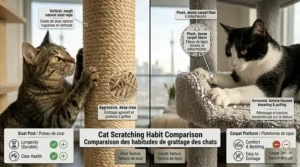
Sisal comes from the agave sisalana plant, creating naturally rough fibres that perfectly satisfy a cat’s scratching instincts. When your cat drags their claws down sisal, they can sink deeply into the material, removing the outer dead nail sheath effectively. This biological need drives their preference.
Dr. Julia Albright, a board-certified veterinary behaviorist, notes that cats naturally prefer wood in the wild, and sisal closely replicates that rough texture. The material provides sufficient resistance for a satisfying scratch while producing the shredding effect cats instinctively seek. Canadian outdoor cats demonstrate this preference by choosing tree bark over smooth surfaces.
Sisal also offers superior durability. While carpet begins fraying after a few months of enthusiastic scratching, quality sisal rope can withstand 2-5 years of daily use. For Canadian households where cat trees experience harsh winters near heating vents and humid summers, this durability translates to better long-term value.
The Hidden Downsides of Carpet Cat Trees
Carpet creates several problems that frustrate both cats and owners. The looped pile texture common on budget cat trees snags claws rather than allowing smooth raking motions. Cats quickly learn that this uncomfortable sensation doesn’t satisfy their scratching urge.
More problematically, carpet-covered cat trees may confuse cats since most homes don’t have sisal-covered furniture, making cats less likely to transfer inappropriate scratching behavior to household items when sisal is used. Your cat can’t distinguish between the carpet on their tree and the carpet on your stairs. This confusion frequently leads to damaged household carpeting, especially frustrating for Canadian homeowners with wall-to-wall carpeting in bedrooms and basements.
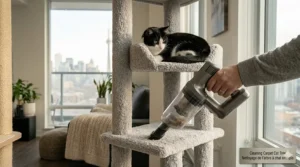
Carpet also poses hygiene challenges in Canadian homes. The material traps pet dander, dust, and odours far more readily than sisal. With Canada’s long winters keeping windows closed for months, maintaining fresh indoor air quality becomes crucial. Carpeted cat trees require frequent vacuuming and may need replacement within 12-18 months due to odour absorption.
Material Durability: Long-Term Value for Canadian Budgets
When budgeting for pet supplies in CAD, longevity matters. Canadian cat owners can expect these typical lifespans from different materials:
Sisal Rope and Fabric Durability
Quality sisal rope (6mm diameter or thicker) on cat trees typically lasts 2-5 years with daily use by a single cat. Multi-cat households may see 18 months to 3 years. The natural fibres resist fraying better than synthetic alternatives, and sisal’s structural integrity remains intact even when well-used and shredded.
Many Canadian manufacturers now offer replacement sisal rope on Amazon.ca (ranging from $15-$35 CAD for 15-metre coils), allowing handy homeowners to rewrap posts rather than replacing entire trees. This repair option significantly extends product life and reduces waste.
Carpet Longevity Challenges
Carpeted cat trees generally last 6 months to 2 years depending on usage intensity. The synthetic fibres begin fraying quickly, especially at favourite scratching spots. Once loose threads appear, cats may chew and potentially ingest them, creating veterinary concerns.
Canadian humidity levels also affect carpet longevity. Homes in coastal British Columbia or humid southern Ontario may experience faster deterioration as moisture promotes bacterial growth in carpet fibres. The musty smell that develops often prompts premature replacement.
Sisal Rope vs Sisal Fabric: Understanding the Difference
Not all sisal is created equal. Canadian shoppers encounter two distinct sisal types when browsing Amazon.ca:
Sisal Rope: Traditional round rope wrapped spirally around posts. Creates visible ridges between wraps. Generally more affordable and easier to replace.
Sisal Fabric: Flat woven sisal sheets secured to surfaces. Provides smooth, continuous scratching without interruptions. Usually more expensive but allows for better shredding satisfaction.
Sisal fabric allows for better shredding as cats can draw their claws down continuously, while sisal rope creates interruptions due to ridges between rope wraps. For maximum cat satisfaction, sisal fabric represents the premium choice, though both materials significantly outperform carpet.
How to Choose Between Sisal and Carpet Cat Trees in Canada
When Sisal Makes the Most Sense
Choose sisal-covered cat trees if your cat:
- Actively scratches furniture, walls, or doorframes
- Enjoys intense scratching sessions
- Lives entirely indoors (benefits from appropriate scratching outlet)
- Is under 10 years old and physically active
Sisal also makes financial sense for long-term planning. While initial costs run $20-$40 CAD higher than comparable carpeted models, the 2-5 year lifespan versus 6-18 months for carpet delivers better value. Canadian cat owners should calculate cost-per-year rather than focusing solely on purchase price.
When Carpet Might Be Preferable
Carpet-covered trees suit specific situations:
- Senior cats (10+ years) with arthritis appreciating soft surfaces
- Cats with sensitive paws or previous injuries
- Households where cats primarily use trees for sleeping rather than scratching
- Temporary solutions while monitoring a new cat’s preferences
However, even in these scenarios, hybrid models combining sisal posts with carpeted platforms often provide the best compromise. This approach gives cats appropriate scratching surfaces while offering comfortable lounging areas.
Testing Your Cat’s Preference
Before investing $100+ CAD in a large cat tree, consider testing material preferences with smaller items. Purchase both a sisal scratching post ($25-$40 CAD) and carpeted scratching pad ($15-$25 CAD) from Amazon.ca. Monitor which your cat uses more frequently over two weeks.
Pay attention to how long your cat scratches each surface and whether they return throughout the day. Cats demonstrate clear preferences through repeated behaviour patterns. Some cats, particularly those adopted from shelters, may need several days to explore new items before showing preferences.
Maintenance and Cleaning: Practical Canadian Considerations
Caring for Sisal Cat Trees
Sisal requires minimal maintenance, making it ideal for busy Canadian households:
- Vacuum loose fibres weekly using attachment hose
- Spot-clean accidents with enzyme-based pet cleaners
- Check rope security monthly (tighten if loosening)
- Replace heavily worn sections rather than entire tree
Canadian winters bring additional challenges with increased indoor time. Cats may increase scratching frequency when unable to access outdoor territories. Sisal handles this intensified use far better than carpet.
Maintaining Carpeted Cat Trees
Carpet demands more intensive care:
- Vacuum entire tree 2-3 times weekly
- Deep clean quarterly using upholstery cleaner
- Treat stains immediately to prevent permanent marking
- Monitor for loose threads that cats might ingest
Homes with forced-air heating (common across Canadian prairies) may find carpet accumulates more dust and dander, requiring even more frequent cleaning. The ongoing maintenance time should factor into purchasing decisions.
Combining Materials: The Hybrid Approach Many Canadians Choose
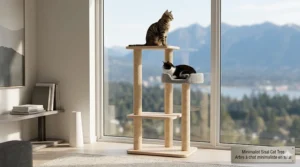
The most popular cat trees on Amazon.ca increasingly feature hybrid designs combining sisal scratching posts with carpeted or plush fabric platforms. This approach leverages the strengths of both materials while minimizing weaknesses.
Hybrid models allow cats to scratch on appropriate sisal surfaces while lounging on comfortable carpeted perches. The material differentiation helps cats understand “this rough stuff is for scratching, this soft stuff is for sleeping” – reducing confusion that leads to furniture damage.
For multi-cat Canadian households, hybrid trees also reduce resource competition. One cat can scratch sisal posts while another naps in carpeted condos simultaneously. This separation decreases inter-cat conflict, particularly important during long Canadian winters when outdoor access is limited.
Price Comparison: Sisal vs Carpet Cat Trees in Canada (2026)
| Category | Sisal-Focused Trees | Carpet-Focused Trees | Hybrid Models |
|---|---|---|---|
| Budget ($45-$75 CAD) | Limited options, usually small posts | Common, many choices available | Rare in this range |
| Mid-Range ($75-$130 CAD) | Best value, quality construction | Good selection, decent materials | Most popular category |
| Premium ($130-$250+ CAD) | Luxury options, sisal fabric | High-end plush carpet | Top-rated models |
| Average Lifespan | 2-5 years | 6-18 months | 2-4 years |
| Cost Per Year | $15-$65 CAD | $25-$120 CAD | $20-$65 CAD |
When shopping on Amazon.ca, factor shipping costs into comparisons. Many cat trees over $50 CAD qualify for free Prime shipping across Canada, but rural delivery may incur additional fees. Saskatchewan and Yukon customers should verify shipping costs before purchasing.
✨ Don’t Miss These Exclusive Deals!
🔍 Take your cat’s happiness to the next level with these carefully selected products available in Canada. Click on any highlighted item to check current pricing and availability on Amazon.ca. These cat trees will help you create an authentic scratching sanctuary your cat will love!
Installation Tips for Canadian Homes
Placement Strategies
Position your new cat tree near windows overlooking bird feeders or squirrel activity – standard in Canadian backyards. Cats appreciate elevated vantage points for observing outdoor territory, especially during winter when they spend more time indoors.
Avoid placing trees directly beside heating vents. While Canadian winters demand heating, direct heat flow can dry out sisal fibres prematurely and create uncomfortable hot spots on carpeted surfaces. Maintain 30-60 cm clearance from vents.
For condos and apartments, place trees against interior walls rather than exterior walls. Canadian exterior walls experience significant temperature fluctuations between -30°C winters and +30°C summers. These temperature swings can affect adhesives in carpeted sections and cause warping in wooden platforms.
Stability Essentials
Canadian homes often feature smooth hardwood or laminate flooring that allows cat trees to slide during enthusiastic play. Address this by:
- Using furniture pads under bases
- Anchoring tall trees to walls using provided brackets
- Placing on low-pile area rugs for friction
- Checking stability monthly as cats’ weight increases
Multi-cat households should prioritize floor-to-ceiling models or trees with extra-wide bases. Saskatchewan customers report tension-mounted ceiling trees work excellently on standard drywall ceilings common in Canadian construction.
❓ Frequently Asked Questions
❓ Is sisal or carpet better for cat scratching in Canada?
❓ How long do sisal cat trees last in Canadian climates?
❓ What's the price range for good cat trees in Canada?
❓ Can I replace just the sisal rope on my cat tree?
❓ Do Canadian cats really prefer sisal over carpet?
Final Verdict: Which Material Should Canadian Cat Owners Choose?
After reviewing scientific research, analyzing hundreds of Canadian customer reviews, and examining product specifications across price ranges, sisal emerges as the clear winner for scratching surfaces. The evidence is overwhelming: cats most often use rope (sisal) when available, despite owners more commonly providing carpet.
For most Canadian households, hybrid cat trees combining sisal scratching posts with carpeted or plush platforms deliver optimal value. These models cost $85-$130 CAD on Amazon.ca and provide appropriate scratching outlets while offering comfortable resting spaces. The material differentiation helps cats understand intended uses for different surfaces.
Budget-conscious buyers should prioritize sisal over carpet despite slightly higher initial costs. The 2-5 year lifespan versus 6-18 months for carpet makes sisal more economical long-term. Calculate cost-per-year rather than focusing solely on purchase price when comparing options.
Senior cats or those with special needs may benefit from carpet’s softer texture. However, even these situations often work well with hybrid models providing both material options. Monitor your cat’s actual usage patterns rather than assuming preferences based on age alone.
Ultimately, investing in quality sisal cat trees protects your furniture, satisfies your cat’s biological needs, and delivers better long-term value for Canadian households. Your cat’s happiness and your home’s preservation make the sisal choice worthwhile.
Recommended for You
- 7 Best Natural Wood Cat Tree Canadian Brands Canada 2026
- 7 Best Affordable Cat Tree Canada Under 100 (2026 Guide)
- 7 Best Cat Tree Apartment Size Options 2026 Canada
Disclaimer: This article contains affiliate links to Amazon.ca. If you purchase products through these links, we may earn a small commission at no additional cost to you.
✨ Found this helpful? Share it with your friends! 💬🤗
