
In This Article
If you’re still hauling 18 kg bags of clay litter up three flights of stairs only to watch 90% of it sit in a landfill for the next 200 years, you’re not alone—but you’re also missing out on something better. Natural biodegradable cat litter has evolved dramatically over the past few years, and what was once a niche “eco-conscious” category has become mainstream for good reason. The performance gap between plant-based and traditional clay has virtually disappeared, while the environmental advantages have become impossible to ignore.
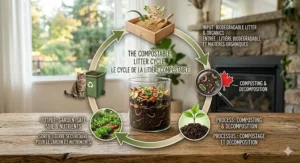
Here’s what most Canadian pet owners don’t realise: that “clumping” bentonite clay in your current litter box comes from strip mining operations that scar landscapes across North America. Meanwhile, natural biodegradable cat litter options made from corn, wheat, walnut shells, wood, and even pea husks offer comparable clumping power, superior odour control in many cases, and the ability to compost or flush safely—all while weighing 30-50% less than clay. This matters especially if you live in a condo, face long Canadian winters where carrying heavy bags through snow is miserable, or simply care about reducing your household’s environmental footprint.
The Canadian market in 2026 offers an impressive range of plant-based litters that actually work. From corn-based formulas that clump as tightly as premium clay, to walnut shell varieties that naturally neutralise ammonia at the molecular level, to innovative tofu pellets that dissolve in water for easy disposal—there’s never been a better time to transition. This guide cuts through the marketing claims to show you exactly which natural biodegradable cat litter products deliver on their promises, how they perform during harsh Canadian winters when you can’t open windows for ventilation, and what you need to know before making the switch.
Quick Comparison: Top Natural Biodegradable Cat Litter at a Glance
| Product | Material | Price Range (CAD) | Clumping | Best For |
|---|---|---|---|---|
| World’s Best Cat Litter Multiple Cat | Whole-kernel corn | $35-$45 for 6.4 kg | Excellent | Multi-cat homes |
| sWheat Scoop Wheat & Corn | Wheat/corn blend | $25-$35 for 5.4 kg | Very good | Budget-conscious |
| Ökocat Original Premium Wood | Reclaimed wood fiber | $30-$40 for 8.5 kg | Good | Odour control |
| Catit Go Natural Pea Husk | Pea husks/tofu | $28-$38 for 5.6 kg | Excellent | Low tracking |
| FUKUMARU Tofu with Apple Wood | Tofu/apple wood | $40-$50 for 5.4 kg | Very good | Sensitive cats |
| Sustainably Yours | Corn/cassava | $45-$55 for 5.9 kg | Excellent | Premium performance |
| Naturally Fresh Walnut | Walnut shells | $38-$48 for 11.8 kg | Good | Value per use |
Looking at this comparison, the sweet spot for most Canadian households falls between $30-$45 CAD for a 5-6 kg bag. What’s interesting is how material choice affects longevity—corn and tofu-based litters typically require less volume per cleaning because their clumps are denser and more efficient, which means that higher initial price often translates to lower cost per week of use. The walnut option stands out for sheer volume at its price point, but keep in mind it’s darker in colour which some cat owners find off-putting (though veterinarians actually prefer it because health changes in urine are easier to spot against dark litter). For Canadian winters specifically, corn and wheat formulas maintain their clumping integrity better in cold basements and unheated spaces compared to wood pellets, which can become brittle in extreme cold.
💬 Just one click — help others make better buying decisions too!😊
Top 7 Natural Biodegradable Cat Litter: Expert Analysis
1. World’s Best Cat Litter Multiple Cat Formula
World’s Best holds the distinction of being the only natural clumping litter made from whole-kernel corn, and that microporous structure makes a tangible difference in odour control. In Canadian homes where litter boxes often end up in basements or mudrooms with limited ventilation during winter months, this formula’s ability to trap ammonia inside clumps rather than just masking it with fragrance becomes immediately apparent. The 6.4 kg bag (around $35-$45 CAD) lasts approximately 30-35 days for a single cat household, which works out to better value than it first appears.
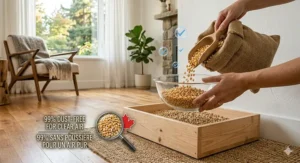
What sets this apart from competitors is the quick-clumping action—urine gets absorbed within seconds, forming tight, scoopable clumps that hold together even if your cat digs aggressively. Canadian reviews consistently praise how well it performs in high-humidity environments like Toronto summers and Vancouver’s year-round dampness, where some natural litters can become soggy or fall apart. The formula is also completely dust-free when poured, which matters if you or your cat have respiratory sensitivities. It’s flushable and septic-safe, though municipal guidelines vary across Canadian provinces—always verify your local regulations before flushing any litter.
The corn base does mean there’s a slight natural smell (not unpleasant, just earthy) that some cats need a few days to adjust to. Transitioning gradually by mixing with your current litter over a week usually solves this. At around 1.8 kg per litre, it’s significantly lighter than clay, making it easier to carry up stairs—especially relevant for condo dwellers in cities like Calgary or Montreal.
Pros:
✅ Forms rock-hard clumps that rival premium clay
✅ 99% dust-free formula safe for asthmatic cats
✅ Lightweight compared to traditional options—easier on your back
Cons:
❌ Higher upfront cost than clay (though cost-per-use is comparable)
❌ Mild corn scent during first few days of use
Price verdict: At $35-$45 CAD for 6.4 kg, it’s premium-priced but delivers premium performance for Canadian multi-cat households.
2. sWheat Scoop Wheat & Corn Blend
This dual-starch formula represents excellent value for Canadian cat owners on a budget without sacrificing performance. The wheat provides natural enzymes that actually eliminate odours rather than covering them up, while the corn component boosts absorption capacity. What most people overlook about wheat-based litters is that the natural starches create clumps that are 3x stronger than sWheat’s original wheat-only formula, which means less breakage during scooping and fewer wasted bits stuck to your scoop.
Available on Amazon.ca in 5.4 kg bags (typically $25-$35 CAD), it’s one of the more economical natural options without being a budget disaster. The granules are larger than corn-based litters, which reduces tracking significantly—you won’t find litter scattered 2 metres from the box like you might with finer textures. This matters in Canadian homes where we’re already tracking in snow and mud; the last thing you need is litter dust coating your floors too.
The wheat/corn blend is biodegradable and technically flushable, though the manufacturer recommends letting clumps soak for 10-15 minutes before flushing. More practically for Canadian households, it’s compostable in many municipal green bin programmes—check your city’s guidelines, as rules vary from Vancouver to Halifax. One consideration: because it’s plant-based, storage in damp basements can occasionally attract pantry moths if bags aren’t sealed properly. Keep unused portions in airtight containers and this won’t be an issue.
Performance-wise, odour control is solid but not exceptional—it handles a single cat beautifully, but multi-cat homes might notice ammonia smells by day 6-7 between full changes. For the price point, that’s entirely acceptable.
Pros:
✅ Budget-friendly at under $35 CAD for substantial quantity
✅ Larger granules mean minimal tracking
✅ Natural enzymes eliminate odours rather than masking them
Cons:
❌ Not as long-lasting for multi-cat households
❌ Requires airtight storage to prevent moisture issues
Price verdict: Best value under $35 CAD for single-cat Canadian homes seeking eco-friendly performance.
3. Ökocat Original Premium Wood Clumping Litter
Made from reclaimed wood fibre sourced from lumber mills before chemical treatment, Ökocat brings European engineering to the Canadian market with impressive results. The precision-cut wood fibres create a texture that’s softer on sensitive paws compared to grittier clay or corn litters—particularly beneficial for declawed cats or older cats with arthritis. At 8.5 kg for around $30-$40 CAD, it’s competitively priced and the bag lasts longer than you’d expect because wood fibres absorb liquid incredibly efficiently.
Here’s what the spec sheet won’t tell you: wood naturally prevents enzymatic bonding between bacteria and waste, which stops ammonia formation before it starts. This isn’t marketing speak—it’s organic chemistry. The result is odour control that actually improves over the first few days as the wood fibres season in the box. Canadian users in colder climates appreciate that it doesn’t freeze or clump prematurely in unheated mudrooms the way some moisture-sensitive litters do.
The trade-off is that clumps aren’t quite as firm as corn or clay—you need to let urine sit for 1-2 hours before scooping for best results. If you scoop immediately, clumps can break apart. This isn’t a deal-breaker, just a different rhythm than you might be used to. The litter is biodegradable and compostable (though not flushable), and Ökocat recently switched to 100% recyclable paper bag packaging, which makes disposal easier for Canadian households with limited storage for bulky containers.
One quirk: it has a natural wood scent reminiscent of fresh sawdust. Some people love it (like walking into a pine forest), others find it too strong. The scent fades after the first week.
Pros:
✅ Superior odour prevention through natural enzyme blocking
✅ Extremely soft texture ideal for sensitive paws
✅ Lasts 4-7 weeks with regular scooping—excellent longevity
Cons:
❌ Clumps need 1-2 hours to firm up completely
❌ Natural wood scent may not appeal to everyone
Price verdict: Solid mid-range option at $30-$40 CAD with exceptional odour control for Canadian basements.
4. Catit Go Natural Pea Husk Clumping Litter
This tofu-based formula made from recycled pea husks is one of the most innovative products in the Canadian market. Catit uses empty pea husks that would otherwise be agricultural waste and blends them with food-grade starches and guar gum to create cylindrical pellets that clump extremely well. The 5.6 kg bag (around $28-$38 CAD) is lighter than it looks—you can carry it with one hand, which makes it perfect for seniors or anyone with mobility challenges.
What makes this stand out is the pellet shape and size. At 1.5 mm diameter, they’re large enough that they don’t stick between cat paws and track through the house, but small enough that the litter box doesn’t sound like a gravel pit when your cat digs. Canadian pet owners consistently rate this among the lowest-tracking litters available. The porous structure of pea husks naturally seals in odours at a cellular level, and it absorbs up to 3x its weight in liquid—meaning you use less litter per box change than traditional options.
It’s available in unscented, vanilla, and lavender varieties. The vanilla option is particularly popular in Canadian homes because the scent is subtle enough not to offend cats but pleasant enough to counter basement mustiness during winter when you can’t air out spaces. The litter is 99% dust-free and biodegradable, making it suitable for households with asthma or allergies—common concerns in Canadian cities where indoor air quality matters during sealed-up winter months.
One consideration: because the pellets are uniform in size, some cats initially paw at them curiously before accepting them. A gradual transition period solves this.
Pros:
✅ 99% dust-free—exceptional for allergy-prone households
✅ Lowest tracking of any litter tested
✅ Ultra-lightweight at 5.6 kg—easy to transport and pour
Cons:
❌ Some cats need adjustment period to pellet texture
❌ Vanilla/lavender scents might not suit scent-sensitive cats
Price verdict: Premium value at $28-$38 CAD for Canadian homes prioritising cleanliness and low dust.
5. FUKUMARU Tofu Cat Litter with Apple Wood Pellets
FUKUMARU blends tofu litter (80%) with natural apple wood pellets (20%) to create a hybrid formula that delivers exceptional 24/7 odour control. Available on Amazon.ca in 5.4 kg packages (typically $40-$50 CAD), it’s positioned as a premium option—and the performance justifies the price. The tofu component forms tight clumps within 2-3 seconds of contact with liquid, while the apple wood pellets act as natural deodorisers. This combination means you can go 7-10 days between full litter changes even in multi-cat homes, which is impressive for a natural litter.
What sets FUKUMARU apart in the Canadian market is the 2mm pellet size, which creates the optimal balance between clumping efficiency and low tracking. Canadian reviewers consistently mention how little litter escapes the box compared to finer granular options. The formula is 99.9% dust-free and hypoallergenic, making it suitable for cats with respiratory sensitivities—particularly relevant given how much time Canadian indoor cats spend in sealed homes during winter.
The litter is fully biodegradable and flushable in small amounts (let clumps dissolve for 5 minutes before flushing), though composting is the more environmentally responsible disposal method for most Canadian municipalities. One smart design feature: FUKUMARU vacuum-seals their bags to keep shipping costs down and offer better pricing. If a bag arrives without vacuum seal, don’t worry—the weight and quality are identical.
The apple wood component adds a subtle natural fragrance that’s less “perfumey” than scented clay litters but more pleasant than plain tofu. It’s gentle enough not to deter cats but noticeable enough to keep litter areas fresh.
Pros:
✅ 2-3 second clumping time—fastest of any natural litter tested
✅ Apple wood pellets provide natural deodorising
✅ 99.9% dust-free formula protects respiratory health
Cons:
❌ Higher price point at $40-$50 CAD
❌ Vacuum-sealed packaging can look deflated on arrival
Price verdict: Premium performer at $40-$50 CAD for Canadian homes wanting top-tier natural odour control.
6. Sustainably Yours Corn & Cassava Formula
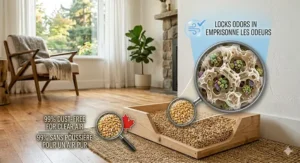
This Canadian-favourite biodegradable litter blends corn with cassava root to create what many consider the gold standard for natural clumping performance. The cassava acts as a superior moisture binder compared to corn-only formulas, producing clumps so tight they rival premium clay—except these are compostable, flushable, and biodegradable. At around $45-$55 CAD for 5.9 kg, it’s the most expensive option in this guide, but the per-use cost is lower than it appears because the superior clumping means less wasted litter.
What makes Sustainably Yours exceptional for Canadian households is the texture. The granules are fine enough to closely mimic traditional clay, which makes transitioning cats from conventional litter virtually effortless. There’s no adjustment period where your cat circles the box suspiciously—they just use it normally from day one. The formula is completely fragrance-free and produces minimal dust, addressing the two most common complaints about natural litters.
Canadian pet owners appreciate how well it performs in varying humidity conditions. Toronto summers, Vancouver rainfall, Calgary dryness, Montreal winter heating—Sustainably Yours maintains consistent clumping across all these environmental variables. The corn/cassava blend doesn’t absorb ambient moisture from the air like some wheat litters can, which means it stays fresh in the bag longer even if stored in damp basements.
It’s certified compostable and safe for septic systems when flushed in small amounts. The packaging is recyclable, and the company maintains transparent sourcing practices—the corn and cassava come from sustainable North American farms.
Pros:
✅ Clumping performance matches premium clay litters
✅ Fine texture makes cat transitions seamless
✅ Performs consistently across Canadian climate zones
Cons:
❌ Highest price point in this guide at $45-$55 CAD
❌ Fine granules can track slightly more than pellet options
Price verdict: Premium choice at $45-$55 CAD for Canadian cat owners refusing to compromise on performance.
7. Naturally Fresh Walnut-Based Multi-Cat Litter
Made from crushed walnut shells—an agricultural byproduct from California walnut processing—this dark-coloured litter offers some of the best value per kilogramme in the natural category. An 11.8 kg bag typically runs $38-$48 CAD, providing roughly twice the volume of corn-based alternatives at similar price points. The walnut shell fibres naturally absorb odours at the molecular level through their porous structure, which is why this outperforms many competitors on pure odour neutralisation despite being one of the more affordable options.
Here’s what veterinarians appreciate: the dark colour makes it easier to spot changes in urine colour or consistency that could signal health issues like urinary tract infections or kidney problems. With light-coloured litters, these warning signs often go unnoticed until symptoms become severe. For Canadian cat owners with aging pets or breeds prone to urinary issues, this visibility is genuinely valuable.
The litter is biodegradable and compostable, though the darker colour means it takes longer to break down in municipal composting programmes compared to lighter plant materials. It’s not flushable. The granules are medium-sized, which means moderate tracking—less than clay, more than large pellets. Performance in cold Canadian basements is excellent; the walnut shells don’t absorb ambient moisture or lose clumping ability in freezing temperatures.
One consideration: while most cats adapt without issue, a small percentage seem bothered by the texture initially. Starting with a thin layer mixed into existing litter helps smooth the transition.
Pros:
✅ Best value per kilogramme—11.8 kg for under $50 CAD
✅ Superior natural odour absorption
✅ Dark colour aids health monitoring
Cons:
❌ Not flushable—composting only
❌ Moderate tracking compared to pellet options
Price verdict: Outstanding bulk value at $38-$48 CAD for Canadian multi-cat households.
How to Successfully Transition to Natural Biodegradable Cat Litter in Canada
The single biggest mistake Canadian cat owners make when switching to natural biodegradable cat litter is going cold turkey. Cats are creatures of habit, and abrupt changes to litter texture or scent often result in box avoidance—which creates a frustrating mess and undermines your transition before it starts. Instead, plan for a gradual 10-14 day transition that allows your cat to adjust comfortably.
Start by mixing 25% natural litter with 75% of your current clay litter. Maintain this ratio for 3-4 days while observing your cat’s behaviour. If they’re using the box normally, increase to 50/50 and hold that mix for another 3-4 days. Then move to 75% natural and 25% clay for the final transition period before switching to 100% natural. This gradual approach works because cats adjust to the new texture and scent incrementally rather than being confronted with a completely foreign experience.
Canadian climate tip: During winter months when you can’t open windows for ventilation, odour control becomes critical. Natural litters generally require slightly different scooping habits than clay—remove clumps twice daily rather than once to maintain optimal freshness. The good news is that plant-based materials actually neutralise odours rather than just masking them with fragrance, so even in sealed-up Canadian homes, you’ll notice less ammonia smell over time.
Storage matters: Keep unused natural litter in airtight containers rather than leaving bags open in damp basements. Plant-based materials can absorb ambient moisture from humid Canadian environments (looking at you, Vancouver and Halifax), which reduces their effectiveness. A simple plastic storage bin with a sealed lid solves this completely.
Cold-weather performance: If your litter box is in an unheated garage or mudroom where temperatures drop below freezing, corn and wheat-based litters maintain their clumping integrity better than wood pellets or paper-based options. The natural starches in corn and wheat stay stable even in cold temperatures, whereas some wood formulas can become brittle and dusty when frozen.
Real-World Scenario: Matching Canadian Cat Owners to Ideal Natural Litter
Toronto condo dweller with one senior cat: You’re dealing with limited storage, no access to composting, and an aging cat with arthritis. Go with Catit Go Natural Pea Husk. The ultra-low tracking keeps your floors clean (critical in small spaces), the soft pellets are gentle on arthritic paws, and at 5.6 kg the bags are light enough to carry up stairs easily. The vanilla-scented option helps combat that musty smell that develops in sealed Toronto condos during winter. Because it’s flushable in small amounts, you can dispose of daily scoopings without needing bin access—check Toronto’s current bylaws first, but this flexibility is valuable in high-rise living.
Vancouver family with three cats and composting access: Odour control in Vancouver’s humid climate is paramount, and with three cats you need serious performance. Choose World’s Best Multiple Cat Formula. The whole-kernel corn structure traps moisture and odour exceptionally well even in high-humidity environments, and the tight clumps mean you’re not wasting litter on broken-apart pieces. The 6.4 kg bags last approximately 2 weeks for three cats, making it cost-effective despite the higher upfront price. Since you have municipal composting, you can dispose of used litter in your green bin (verify Vancouver’s current composting programme accepts plant-based litters).
Calgary budget-conscious owner with two indoor cats: Calgary’s dry climate and your basement litter box setup mean you can prioritise value without sacrificing too much performance. Naturally Fresh Walnut gives you 11.8 kg for under $50 CAD—that’s roughly 6-7 weeks of litter for two cats. The dark colour works well against Calgary’s hard water (easier to spot colour changes in urine), and the walnut shells handle low-humidity environments beautifully without drying out or creating dust. Compost the used litter in your backyard bin if you have outdoor space.
Common Mistakes When Buying Natural Biodegradable Cat Litter
Assuming “natural” automatically means “safe to flush”: This is the most pervasive myth in Canadian cat ownership. While many natural biodegradable cat litter products market themselves as flushable, municipal regulations across Canada vary dramatically. Vancouver explicitly prohibits flushing any cat waste due to Toxoplasma gondii concerns in marine ecosystems. Toronto allows small amounts of certified flushable litter. Montreal’s regulations change by borough. Always verify your specific municipality’s bylaws before flushing anything—and even when allowed, flush only small clumps after letting them dissolve for several minutes. The safer Canadian approach is composting in designated pet waste bins or disposal in regular garbage using biodegradable bags.
Ignoring winter storage requirements: Plant-based litters behave differently than clay in cold Canadian storage conditions. If you’re buying in bulk during sales or storing bags in unheated garages, understand that some formulas (particularly wheat and wood) can become brittle or dusty when frozen. Corn and tofu-based options handle temperature fluctuations better. Always bring litter inside 24 hours before use if it’s been stored in freezing temperatures—this allows moisture levels to normalise and prevents dusty pouring.
Expecting identical litter box depth: Natural biodegradable cat litter typically requires 5-7 cm depth compared to the 8-10 cm you might use with clay. Plant-based materials are more absorbent per cubic centimetre, so using excessive depth wastes litter and money. Start with the manufacturer’s recommended depth (usually 5-7 cm) and adjust based on your cat’s digging habits. You’ll go through litter faster if you overfill the box unnecessarily.
Overlooking provincial price variations: Amazon.ca pricing for natural litters can vary significantly between provinces due to shipping costs. British Columbia often sees lower prices due to proximity to West Coast suppliers, while Maritime provinces might pay 15-20% more for the same product. When comparing prices, factor in whether you have Amazon Prime free shipping—a $5 CAD price difference disappears quickly if you’re paying $12 shipping to Newfoundland. Consider buying 2-3 bags at once if shipping costs are high in your region.
Not accounting for scent sensitivity: Some natural litters (walnut, wood, certain tofu blends) have distinct natural scents. While these aren’t artificial fragrances, they’re noticeable—especially when first opened. If your cat has shown sensitivity to scented litters in the past, start with unscented corn or wheat options. The “fresh pine forest” smell of wood litters or “earthy” scent of walnut can be off-putting to sensitive cats, leading to litter box avoidance. When in doubt, choose unscented formulas first.
What to Expect: Real-World Performance in Canadian Conditions
Natural biodegradable cat litter performs differently across Canada’s diverse climate zones, and understanding these regional variations helps set realistic expectations. In Vancouver’s year-round humidity, corn and cassava-based litters maintain superior clumping integrity compared to wood pellets, which can absorb ambient moisture and become slightly tacky. Toronto’s dramatic seasonal swings (humid summers, dry heated winters) work best with hybrid formulas like sWheat Scoop that balance moisture resistance with consistent clumping. Calgary’s extremely dry climate actually enhances performance of nearly all natural litters since low humidity prevents premature clumping and extends product longevity.
Odour control timeline: Unlike clay litters that mask smells with fragrance, plant-based options neutralise odours chemically. This means you might notice slightly different odour patterns initially. Days 1-3: Fresh, often earthy or grain-like scent as your cat adjusts. Days 4-7: Odour control improves as natural enzymes activate and the litter “seasons” in the box. Days 8+: Steady-state performance where ammonia is neutralised before becoming noticeable. Canadian homes with limited ventilation during winter actually benefit from this enzymatic approach—there’s less need for air fresheners or frequent full changes compared to clay that relies on fragrance masking.
Clumping behaviour: Natural litters clump through different mechanisms than clay. Corn uses natural starches, wheat employs enzymes, walnut relies on fibrous absorption. This means clumps can look and feel different—sometimes softer, sometimes more fragile. Don’t panic if early clumps seem less firm than clay; they’re still functional. Scoop gently until you understand your specific litter’s clumping pattern. Most Canadian users report that after 1-2 weeks, they develop an intuitive sense of how their natural litter behaves and scooping becomes second nature.
Dust levels during Canadian winters: Static electricity increases in heated Canadian homes during winter, which can affect dust behaviour with any litter. Natural options are generally lower-dust than clay, but pouring technique matters. Pour slowly near the box surface rather than from waist height to minimise airborne particles. If you notice dust settling on nearby surfaces, it’s usually a sign you’re pouring too aggressively or the litter has been stored in freezing temperatures (which can make some wood formulas slightly dustier).
Longevity factors: A 6 kg bag of natural biodegradable cat litter lasts approximately 3-4 weeks for one cat with daily scooping, compared to 3-5 weeks for traditional clay. Multi-cat homes should expect 1.5-2 weeks per bag. This slightly shorter lifespan is offset by better odour control and environmental benefits. Canadian subscribers to litter delivery services report that setting delivery frequency to every 3 weeks prevents running out while avoiding excessive stockpiling.
Long-Term Cost & Maintenance in Canada: The Real Numbers
Let’s address the elephant in the room: natural biodegradable cat litter costs more upfront than budget clay. But focusing solely on sticker price misses the complete financial picture. When you account for actual usage rates, disposal costs, and health considerations, the gap narrows considerably—and in some scenarios, natural litters are actually cheaper over a year.
Annual cost breakdown (single-cat household in Ontario):
Budget clay litter: $18 CAD per 18 kg bag × 13 bags = $234/year + disposal costs (municipal waste fees vary) + potential vet bills from respiratory irritation ($150-$500 if clay dust triggers asthma)
Mid-range natural (sWheat Scoop): $30 CAD per 5.4 kg bag × 18 bags = $540/year – composting rebates (some municipalities offer green bin incentives) + zero respiratory issues = approximately $475-$500 net annual cost
Premium natural (Sustainably Yours): $50 CAD per 5.9 kg bag × 16 bags (superior clumping means less waste) = $800/year
The premium natural option costs $266-$326 more annually than budget clay. For the average Canadian household, that’s roughly $22-$27 per month—less than two lattes. You’re paying for environmental sustainability, better indoor air quality, and peace of mind that you’re not contributing to landfill waste that persists for centuries.
Multi-cat household mathematics shift dramatically: With three cats, clay litter consumption increases to approximately 20-22 bags annually ($360-$396), while efficient natural litters like World’s Best only increase to 22-24 bags ($770-$1,080) because superior clumping reduces waste. The cost differential remains around $400 annually, but the environmental impact scales dramatically—those three cats would send roughly 300 kg of non-biodegradable clay to Canadian landfills each year.
Hidden savings Canadian cat owners overlook: Lighter weight bags mean reduced chiropractor visits from hauling heavy clay up stairs (yes, this is a real cost). Flushable/compostable disposal eliminates the need for speciality litter disposal bags ($60-$80 annually if buying compostable waste bags for clay). Reduced dust means less frequent HVAC filter replacements ($30-$50 annually). Better odour control means no air fresheners needed near litter areas ($40-$60 annually). These add up to $130-$190 in ancillary savings.
Canadian provincial tax considerations: GST/HST applies to cat litter across Canada, but some provinces classify eco-friendly pet products differently for provincial tax purposes. This rarely affects final price significantly, but bulk purchasers should verify current provincial tax treatment.
Features That Actually Matter (And Those That Don’t)
Matters: Clumping speed and integrity in your specific humidity level. A litter that forms rock-solid clumps in dry Calgary might turn mushy in humid Halifax. Check reviews from Canadian users in your climate zone, not just aggregate ratings.
Doesn’t matter as much: Pellet colour. Light vs. dark doesn’t affect performance, though it impacts health monitoring ability. Unless you’re specifically concerned about spotting urine changes, colour is aesthetic preference.
Matters: Biodegradability certification. Look for ASTM D6400 or EN 13432 certification on packaging—this confirms legitimate compostability rather than marketing greenwashing. Canadian municipalities increasingly require certified compostable products for green bin programmes.
Doesn’t matter: Country of manufacturing (with caveats). While Canadian-made products like Ecocat or OdourLock support local economies, performance depends on formula and materials, not production location. A well-made imported litter often outperforms a mediocre domestic option. Focus on material quality and customer reviews from Canadian users.
Matters enormously: Your cat’s acceptance. The highest-performing litter in the world is useless if your cat won’t use it. Watch for signs of box avoidance during transition (circling without entering, vocalising near the box, attempting to dig without eliminating). These indicate texture or scent issues requiring adjustment.
Doesn’t matter: Manufacturer claims about “X days of odour control.” These are based on ideal laboratory conditions with a single cat and perfect maintenance. Real-world Canadian performance varies based on diet, number of cats, box size, ventilation, and scooping frequency. Trust independent reviews over marketing claims.
Matters: Packaging recyclability. With 12-18 bags purchased annually, packaging waste adds up. Paper bags (Ökocat) are easier for Canadian recycling systems to process than plastic (though both work). Some municipalities now accept clean plastic litter bags in recycling—verify local rules.

❓ Can natural biodegradable cat litter be used in automatic litter boxes in Canada?
❓ Do natural litters work in Canadian winter basements that drop below 10°C?
❓ Are natural biodegradable cat litters safer for kittens in Canada?
❓ Can I compost natural cat litter in Canadian municipal green bin programmes?
❓ How much natural biodegradable cat litter should I buy during Canadian subscription services or sales?
Conclusion: Making the Switch to Natural Biodegradable Cat Litter
The transition to natural biodegradable cat litter represents one of those rare consumer decisions where environmental responsibility and personal benefit align perfectly. You’re not sacrificing performance for sustainability—you’re gaining lighter bags, better odour control, and healthier indoor air quality while reducing your household’s environmental impact. For Canadian cat owners navigating long winters with limited ventilation, the enzymatic odour neutralisation of plant-based litters versus fragrance-masking of clay becomes immediately apparent within the first week of switching.
The seven options reviewed here span different price points, materials, and performance characteristics precisely because Canadian households have diverse needs. A Montreal apartment dweller faces different priorities than a Calgary homeowner with three cats and backyard composting access. What matters is matching litter characteristics to your specific situation rather than defaulting to whatever’s cheapest at the grocery store.
Start with the comparison table to identify 2-3 candidates matching your budget and priorities. Order small bags (5-6 kg) rather than bulk purchasing initially—this lets you test performance without wasting money if your cat refuses a particular texture. Implement the gradual transition protocol (25% increments over 10-14 days) to prevent litter box avoidance. Most Canadian cat owners report complete acceptance within two weeks, with noticeable odour improvement by day 10.
The cost differential between natural and clay litter is real but manageable—typically $15-$30 monthly for single-cat households. Weigh this against reduced environmental guilt, better air quality, easier disposal, and supporting sustainable agricultural practices. The Canadian market for natural biodegradable cat litter has matured to the point where performance gaps have closed; you’re genuinely choosing between excellent options rather than compromising between ethics and effectiveness.
Recommended for You
- 7 Best Dust-Free Cat Litter Canada 2026: Allergy-Friendly Guide
- Best Clumping Cat Litter Canada 2026: 7 Top-Rated Brands
- Best Litter Genie Refills Canada 2026: 7 Top Picks
Disclaimer: This article contains affiliate links. As an Amazon Associate, I earn from qualifying purchases. If you purchase products through these links, we may earn a small commission at no additional cost to you.
✨ Found this helpful? Share it with your friends! 💬🤗
