
In This Article
If you’re still manually scooping your cat’s litter box twice daily while juggling work, family, and the unpredictable demands of Canadian life, you’re working harder than you need to. The self-cleaning litter box market has evolved dramatically in 2026, bringing sophisticated automation, smartphone connectivity, and health-monitoring features to Canadian pet parents at price points that finally make sense.

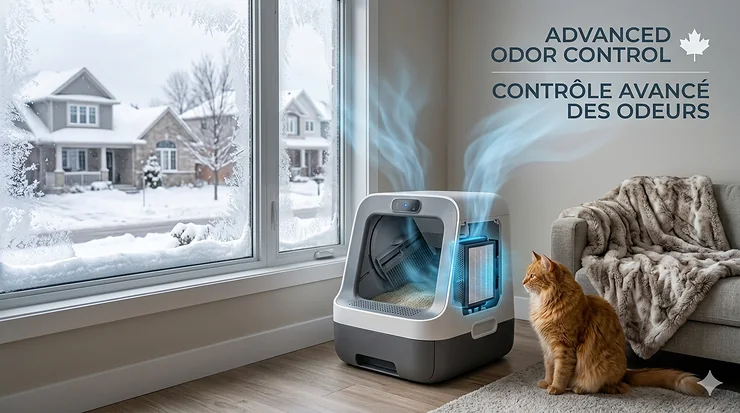
What makes 2026 different? For starters, Canadian availability has improved significantly—many top-tier automatic litter boxes now ship directly to Canadian addresses through Amazon.ca without the cross-border headaches that plagued earlier years. More importantly, the technology has matured beyond early-generation mechanical failures. Modern self-cleaning systems feature multiple safety sensors, quiet operation suited to Canadian condo living, and waste containment that actually handles our longer, colder winters when you might go days without emptying the drawer.
The payoff is real: imagine reclaiming 15-20 minutes daily that you’d otherwise spend hovering over a litter scoop, or the peace of mind knowing your cat always has a fresh toilet—even during those unpredictable late nights at the office or weekend getaways to the cottage. For multi-cat households juggling three or four traditional boxes, the space savings alone justify the investment.
This guide examines seven self-cleaning litter boxes actually available on Amazon.ca in 2026, with pricing in Canadian dollars, performance insights for Canadian conditions (yes, winter affects battery life and odour control), and expert commentary on who each model truly serves best. We’ll cut through the marketing fluff to help you decide which automated solution matches your cat’s personality, your home’s layout, and your tolerance for occasional troubleshooting.
Quick Comparison: Top Self-Cleaning Litter Boxes at a Glance
| Model | Price Range (CAD) | Capacity | Best For | Key Feature |
|---|---|---|---|---|
| Litter-Robot 4 | $999-$1,199 | 4 cats | Multi-cat homes | WiFi app tracking |
| PETKIT PuraMax 2 | $650-$750 | 3-4 cats | Tech-savvy owners | AI health monitoring |
| PetSafe ScoopFree Crystal | $170-$220 | 1-2 cats | Budget-conscious | Disposable trays |
| Neakasa M1 | $550-$650 | 2-3 cats | Open-top preference | Easy cleaning |
| PetCove XL | $600-$700 | 3-4 cats | Large breeds | Extra space |
| Robotail Open-Top | $400-$500 | 2-3 cats | Value seekers | Transparent waste lid |
| PETKIT PuraX | $500-$600 | 2-3 cats | Compact spaces | Small footprint |
💬 Just one click—help others make better buying decisions too! 😊
Top 7 Self-Cleaning Litter Boxes: Expert Analysis
1. Litter-Robot 4 by Whisker — The Canadian Gold Standard
The Litter-Robot 4 represents 25 years of iterative design from a company that actually stands behind its products—a rarity in the automatic litter box category. This globe-shaped unit uses gravity and rotation to separate waste from clean litter, depositing clumps into a sealed drawer below. The fourth-generation model refines the proven Litter-Robot 3 with quieter operation (QuietSift technology reduces noise by roughly 30%), enhanced cat-detection sensors, and a 20% larger waste drawer that extends the time between empties.
For Canadian multi-cat households, this is where the Litter-Robot earns its premium. One unit genuinely handles up to four cats—eliminating the need for multiple traditional boxes and the floor space they consume in Canadian homes where square footage doesn’t come cheap. The Whisker app provides real-time notifications when the drawer is full, tracks individual cat weights (useful for detecting early health changes), and monitors usage patterns. What most Canadian buyers overlook is the winter performance: the enclosed design and sealed waste compartment contain odours far more effectively during those months when you’re reluctant to carry a waste bag to the outdoor bin in -20°C weather.
Canadian customers report high satisfaction once past the initial acclimation period (some cats need 1-2 weeks to adjust to the rotating motion). The enclosed design suits cats who prefer privacy, though extremely large or anxious cats may reject it. Assembly is straightforward, and Whisker Canada provides responsive customer support—a critical advantage when troubleshooting sensor issues or mechanical hiccups that inevitably arise with complex automated systems.
Pros:
✅ Proven reliability with 90-day in-home trial and 1-year warranty
✅ Genuinely handles 4 cats (most competitors overstate capacity)
✅ App tracking enables early health issue detection
Cons:
❌ Substantial upfront investment in the $999-$1,199 CAD range
❌ Enclosed globe design not suitable for all cat personalities
Around $999-$1,199 CAD on Amazon.ca. For households with multiple cats or owners who value long-term reliability over initial savings, the Litter-Robot 4 justifies its cost through superior waste containment, genuine multi-cat performance, and customer support that actually responds when problems arise.
2. PETKIT PuraMax 2 — AI-Powered Health Monitoring Meets Practical Design
The PETKIT PuraMax 2 takes a fundamentally different approach than the Litter-Robot’s rotating globe. This open-top unit uses a sifting panel that filters waste into a sealed 7-litre bin, claiming up to 15 days of waste storage for single-cat households (realistically closer to 10 days in Canadian winter when cats spend more time indoors and use the box more frequently). The 76-litre cylinder provides ample space for cats up to 10 kg (22 lbs), with a low-entry threshold that accommodates senior cats or those with mobility issues.
What sets the PuraMax 2 apart is the integrated health monitoring. The PETKIT app tracks each cat’s weight, toilet frequency, and duration—valuable data for catching urinary issues or other health problems early, as recommended by the <a href=”https://www.aaha.org/resources/2021-aaha-aafp-feline-life-stage-guidelines/general-litter-box-considerations/” target=”_blank”>American Animal Hospital Association’s feline care guidelines</a>. The xSecure safety system uses multiple sensors to halt rotation if your cat re-enters mid-cycle, addressing the legitimate safety concerns that plagued earlier automatic litter boxes. Canadian owners appreciate the dual odour control system: a sealed waste bin combined with the optional N50 2.0 odour eliminator that neutralizes ammonia smells far more effectively than carbon filters alone.
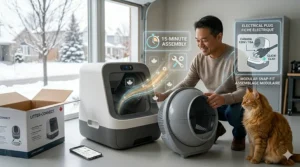
The PuraMax 2 works with all clumping litter types—clay, tofu, bentonite, or mixed varieties—though PETKIT recommends avoiding crystal litter. The unit’s footprint (approximately 19″ x 20″ x 20″) fits comfortably in most Canadian bathrooms or laundry rooms, and the ShieldBase design ensures a 360° seal to prevent urine leakage, a common complaint with cheaper rotating designs. Assembly requires about 30 minutes and basic mechanical aptitude; the instruction manual is clear enough, though some Canadian customers report the app setup process can be finicky with 2.4GHz WiFi networks.
Pros:
✅ Open-top design preferred by many cats over enclosed globes
✅ Health monitoring app provides genuinely useful data
✅ Low-entry threshold accommodates senior or arthritic cats
Cons:
❌ App connectivity sometimes unstable on Canadian internet networks
❌ Replacement odour eliminators add ongoing costs
In the $650-$750 CAD range on Amazon.ca. The PuraMax 2 appeals to tech-savvy Canadian owners who want health insights without paying Litter-Robot prices, particularly those with larger cats or senior felines who struggle with high-sided traditional boxes.
3. PetSafe ScoopFree Crystal — The Budget-Friendly Entry Point
The PetSafe ScoopFree Crystal operates on a completely different premise: disposable trays. Every 2-4 weeks (depending on how many cats you have), you remove the entire tray containing used crystal litter and waste, throw it away, and snap in a fresh pre-filled tray. No dumping clumps, no washing components, no wrestling with litter refills—just swap and go. For Canadian cat owners who value simplicity and don’t mind the ongoing tray replacement cost, this approach has legitimate appeal.
The crystal litter absorbs urine and dehydrates solid waste, providing what PetSafe claims is “5 times better odour control than traditional clumping litter.” In practice, Canadian users report this works well for single-cat households, though you’ll notice odours sooner in multi-cat situations or during humid summer months when the crystals saturate faster. The automatic rake sweeps waste into a covered compartment 20 minutes after your cat exits (adjustable from 5 to 20 minutes on the Ultra model), and the low-tracking crystals are genuinely 99% dust-free—a significant advantage if you’re sensitive to traditional litter dust or trying to keep floors clean in an open-concept Canadian condo.
The trade-off? Ongoing costs. Replacement trays run around $20-$30 CAD each on Amazon.ca, so budget roughly $15-20/month for a single cat. Over 2-3 years, you’ll spend considerably more than owners of systems using regular clumping litter, though you’ll reclaim time and avoid the unpleasantness of handling waste. The basic ScoopFree model lacks app connectivity and health tracking—it’s purely mechanical, which means fewer failure points but also less insight into your cat’s behaviour.
Pros:
✅ Lowest entry cost in the $170-$220 CAD range
✅ Genuinely hassle-free disposal with pre-filled trays
✅ Crystal litter creates minimal dust and tracking
Cons:
❌ Ongoing tray costs add up significantly over time
❌ No app connectivity or health monitoring features
Around $170-$220 CAD on Amazon.ca for the basic model, with the Ultra version (includes privacy hood and adjustable timer) in the $250-$300 CAD range. Best suited to single-cat Canadian households or as a secondary box where convenience trumps long-term economics.
4. Neakasa M1 — Open-Top Design for Fussy Felines
The Neakasa M1 addresses a common complaint about enclosed automatic litter boxes: many cats simply refuse to use them. This open-top design provides a spacious, unobstructed entry that aligns with feline instincts—cats naturally prefer to see potential threats while they’re vulnerable during elimination. The large 76-litre capacity accommodates cats from 1.5 kg to 8 kg (3.3 to 17.6 lbs), and the open design makes it easier to monitor your cat’s behaviour and ensure the unit is functioning correctly.
Neakasa’s sifting mechanism uses a metal rake that separates clumped waste, depositing it into a front-accessible waste drawer. Canadian owners report this design is considerably easier to clean than rotating globe systems—the rake and tray fully disassemble for rinsing, and the Teflon-coated bottom prevents waste from sticking (particularly valuable if you’re using lower-quality clumping litter or if your cat’s diet produces softer stools). The app provides basic tracking of usage frequency and weight, though it’s less sophisticated than PETKIT’s health analytics.
Safety sensors detect your cat’s presence and immediately pause the cleaning cycle—critical for preventing injuries. The transparent waste lid is a thoughtful touch that addresses a common frustration: you can see at a glance when the drawer needs emptying rather than relying solely on app notifications that you might miss. For Canadian homes where the litter box lives in a bathroom or laundry room rather than being tucked away, this visibility prevents the unpleasant surprise of discovering an overflowing drawer.
Pros:
✅ Open-top design with high cat acceptance rates
✅ Easy disassembly and cleaning saves maintenance time
✅ Transparent waste drawer provides visual emptying cues
Cons:
❌ Open design provides less odour containment than enclosed units
❌ Weight sensors can be finicky on carpeted surfaces
In the $550-$650 CAD range on Amazon.ca. The Neakasa M1 suits Canadian cat owners whose previous attempts with enclosed automatic boxes failed due to cat rejection, or those who prefer visual confirmation that the system is working correctly.
5. PetCove XL — Engineered for Canadian Multi-Cat Households
The PetCove XL markets itself specifically for larger cats and multi-cat homes, and the dimensions back up the claim. With a 90-litre capacity and a spacious entry, this unit comfortably accommodates Maine Coons, Ragdolls, and other large breeds that feel cramped in standard automatic litter boxes. The self-cleaning mechanism activates automatically after each use, with adjustable delay times from 5 to 30 minutes to suit cats with different comfort levels around mechanical noise.
PetCove’s waste management system uses a sealed collection drawer that claims 15-day capacity for up to three cats—though Canadian users report this is optimistic unless you’re using highly effective clumping litter. In practice, expect to empty the drawer every 7-10 days for two cats, more frequently for three. The odour control relies on a combination of sealed containment and carbon filters, adequate but not exceptional compared to systems like the Litter-Robot 4’s more sophisticated drawer design. The integrated safety sensors detect cat presence via weight and infrared, providing dual-layer protection against pinching accidents.
The app functionality covers the basics: cleaning cycle scheduling, usage notifications, and basic health tracking. Where PetCove differentiates itself is the 5GHz WiFi compatibility—most budget-tier automatic litter boxes only work with 2.4GHz networks, which can be problematic in newer Canadian homes or condos where router configurations prioritize 5GHz for speed. Setup takes roughly 45 minutes, and the included instruction manual is clearer than most competitors, though customer support responsiveness lags behind Whisker and PETKIT when troubleshooting issues.
Pros:
✅ Extra-large capacity suits big cats and multi-cat homes
✅ 5GHz WiFi compatibility works with modern router setups
✅ Competitive pricing for the capacity provided
Cons:
❌ Odour control adequate but not best-in-class
❌ Customer support quality inconsistent based on user reports
Around $600-$700 CAD on Amazon.ca. The PetCove XL makes sense for Canadian owners with multiple large-breed cats or those who’ve been frustrated by undersized automatic litter boxes that don’t deliver on multi-cat claims.

6. Robotail Open-Top — Value Without Sacrificing Essential Features
The Robotail Open-Top enters the Canadian market at an aggressive price point while maintaining the core features that make automatic litter boxes worthwhile. The open-top design provides excellent cat acceptance, and the dual-rake system (main rake for scooping, auxiliary rake for residue cleanup) delivers thorough waste removal that prevents the ammonia buildup common in single-rake designs. At roughly half the cost of premium units, Robotail makes automation accessible to Canadian households operating on tighter budgets.
The transparent waste lid—a feature typically reserved for mid-range models—lets you monitor waste accumulation visually, eliminating guesswork about when to empty the drawer. The app provides basic functionality: remote cleaning activation, usage tracking, and weight monitoring for up to three cats. Four high-sensitivity weight sensors detect your cat immediately upon entry, pausing the cleaning mechanism to prevent accidents. Canadian users report the setup process is straightforward, though the app interface feels less polished than PETKIT or Litter-Robot equivalents.
Where Robotail cuts costs is durability and long-term support. The components are adequate but not exceptional—expect some increased noise after 12 months of heavy use, and customer support operates primarily through email rather than phone, which slows troubleshooting when issues arise. For Canadian buyers willing to accept these trade-offs in exchange for upfront savings, Robotail delivers functional automation that handles daily waste removal competently.
Pros:
✅ Aggressive pricing brings automation within reach of more budgets
✅ Dual-rake system provides thorough waste removal
✅ Transparent lid enables at-a-glance monitoring
Cons:
❌ Build quality trails premium options; noisier over time
❌ Customer support less responsive than top-tier brands
In the $400-$500 CAD range on Amazon.ca. The Robotail suits cost-conscious Canadian cat owners who want automation now and can tolerate potential maintenance or replacement after 2-3 years rather than investing in longer-term durability.
7. PETKIT PuraX — Compact Automation for Space-Constrained Living
The PETKIT PuraX recognizes that many Canadian cat owners—particularly those in downtown Toronto or Vancouver condos—prioritize floor space efficiency. With a compact footprint that’s roughly 30% smaller than the PuraMax 2, the PuraX delivers automatic cleaning without dominating your bathroom or laundry room. The rotating cylinder mechanism separates waste efficiently, and the 60-litre capacity handles two cats comfortably (single cats can go 12-15 days between waste drawer empties).
PETKIT’s xSecure safety system and app connectivity mirror the PuraMax 2, providing weight tracking, usage monitoring, and remote cleaning control through your smartphone. The unit works with standard clumping litter (clay, tofu, or bentonite), avoiding the ongoing cost and environmental concerns of disposable crystal tray systems. Canadian urban dwellers appreciate the quiet operation—PETKIT claims under 40 decibels during the cleaning cycle, quieter than many dishwashers and suitable for open-concept layouts or bedrooms.
The compact design creates trade-offs. The smaller waste bin (4.5 litres versus the PuraMax 2’s 7 litres) means more frequent emptying for multi-cat households. Extremely large cats (over 7 kg) may find the cylinder space cramped, potentially leading to rejection. Assembly is tool-free and takes about 20 minutes, though positioning the unit on a hard, level surface is critical—Canadian homes with older floors or slight slopes can cause sensor malfunctions that trigger false “cat detected” warnings and prevent cleaning cycles.
Pros:
✅ Compact footprint ideal for Canadian condo living
✅ Quiet operation suits open-concept homes or bedrooms
✅ Full app functionality at a mid-range price point
Cons:
❌ Smaller waste capacity requires more frequent emptying
❌ Not suitable for large-breed cats or those needing extra space
Around $500-$600 CAD on Amazon.ca. The PuraX targets space-constrained Canadian cat owners who need automation but can’t sacrifice precious floor space to a large automatic litter box.
Setting Up Your First Self-Cleaning Litter Box: A Canadian Owner’s Guide
Bringing an automatic litter box into your home requires more than plugging it in and hoping your cat figures it out. Canadian cat owners face unique considerations—from winter static electricity affecting sensors to the challenge of integrating automation into homes where the litter box might sit on cold basement concrete that impacts mechanical performance.
Week 1: Introduction Phase
Place your new automatic litter box beside your cat’s current traditional box, leaving both accessible. Don’t activate the self-cleaning function yet—let the unit sit unplugged while your cat investigates. Transfer a cup of used litter from the old box into the new one; the familiar scent signals “this is your bathroom.” Most cats will investigate within 24-48 hours and use the new box at least once during the first week purely out of curiosity.
Resist the urge to force the issue by placing your cat inside the new box or removing the old one prematurely. Cats respond poorly to coercion around elimination, and creating negative associations now can doom the entire transition. Watch for your cat’s natural usage patterns—if they typically use the box after meals or upon waking, those are prime investigation windows.
Canadian winter consideration: Static electricity from dry indoor air can create unpleasant shocks when cats touch plastic surfaces. Run a humidifier near the litter box during this introduction phase, targeting 40-50% humidity, to minimize static that might startle your cat and create negative associations with the new box.
Week 2: Activation
Once your cat has used the new box 3-4 times, plug it in but keep the automatic cleaning disabled (most models have a manual-only mode). Scoop it manually for another few days while your cat builds positive associations. When you do activate automatic cleaning for the first time, set the delay to maximum (20-30 minutes) so the cleaning cycle won’t trigger while your cat is nearby. Gradual exposure prevents the mechanical noise from frightening skittish cats.
Monitor your cat’s reaction to the first few cleaning cycles. Some cats watch with fascination; others bolt at the unexpected movement. If your cat seems stressed, extend the timer delay further and consider running a few manual cleaning cycles while your cat is in another room, allowing them to return and discover the cleaned box without witnessing the mechanical process.
Week 3-4: Transition Completion
Gradually reduce your traditional litter box usage—move it slightly farther away each day, then into a less convenient location, until finally removing it entirely. Some Canadian cat owners find success keeping the traditional box available for 4-6 weeks during the initial transition, particularly for multi-cat households where individual cats acclimate at different speeds.
Place the automatic litter box on a hard, level surface—avoid carpets or rubber mats that can interfere with weight sensors. Canadian homes with older wooden floors may have slight slopes; use a carpenter’s level to verify the unit sits flat, adding shims if necessary to prevent sensor malfunctions. Ensure adequate clearance around the unit for waste drawer removal and cleaning access.
Ongoing Maintenance: The Reality Check
Automatic doesn’t mean maintenance-free. Budget 5-10 minutes weekly for tasks most manufacturers downplay:
- Empty the waste drawer before the “full” indicator (waiting until truly full often causes overpacking that makes removal messy)
- Wipe down the litter chamber interior monthly to prevent residue buildup
- Vacuum around the unit weekly to capture tracked litter before it gets ground into floors
- Check and clean sensors quarterly—dust accumulation causes false “cat detected” warnings
- Deep-clean the entire unit every 6-8 weeks by disassembling washable components
Canadian climate impact: Winter indoor humidity drops to 20-30% in many homes, causing litter to dry out faster and creating more dust. Summer humidity above 60% can prevent proper clumping. Consider a small dehumidifier near the litter box during humid months if you notice clumps falling apart or waste sticking to surfaces.
Making the Right Choice: Canadian Self-Cleaning Litter Box Decision Framework
With seven solid options available on Amazon.ca and hundreds more of questionable quality flooding the market, Canadian cat owners need a structured approach to winnow down choices. Start with these priority questions:
How many cats, realistically?
Manufacturers consistently overstate capacity. When a box claims “4-cat household,” assume it means 2-3 cats comfortably. Canadian homes typically keep cats indoors year-round, increasing litter box usage compared to climates where outdoor access is viable. If you have three cats, buy a unit rated for four or five. The Litter-Robot 4 genuinely handles four cats; most others top out at two despite marketing claims.
What’s your cat’s personality?
Anxious cats often reject enclosed globe designs—they need to see potential threats while vulnerable. Older or arthritic cats require low-entry thresholds and stable footing. Large-breed cats (Maine Coons, Ragdolls, Norwegian Forest Cats) need the extra space units like PetCove XL or Neakasa M1 provide. Observe where your cat currently eliminates—if they use an open box, starting with an enclosed automatic creates unnecessary acclimation challenges.
How much space can you actually dedicate?
Automatic litter boxes are larger than traditional boxes—factor in waste drawer clearance and sensor range. Canadian condo bathrooms average 35-50 square feet; measure your available floor space before buying. The PETKIT PuraX and similar compact models exist specifically for space-constrained urban living. Basements with cold concrete floors can affect mechanical performance; if that’s your only option, place a platform or mat under the unit for insulation.
What’s your tolerance for ongoing costs?
Disposable tray systems like PetSafe ScoopFree cost $15-25/month indefinitely. Regular clumping litter runs $10-15/month regardless of which automatic system you choose. Factor in replacement parts: waste drawer liners, carbon filters, odour eliminators. Over a 5-year ownership period, a $1,000 Litter-Robot 4 using standard litter may cost less total than a $200 ScoopFree requiring proprietary trays.
How tech-savvy are you, honestly?
App-connected models offer genuine value through health tracking and usage monitoring, but they introduce complexity. If “WiFi troubleshooting” makes you anxious, stick with mechanical units like the basic PetSafe ScoopFree. Canadian internet infrastructure varies wildly—urban areas have reliable high-speed connections, but rural or northern regions may struggle with app connectivity that relies on constant cloud access.
Common Mistakes When Buying Your First Automatic Litter Box
After reviewing hundreds of Canadian customer experiences on Amazon.ca and tracking longterm user satisfaction, several patterns emerge around what goes wrong during the buying and setup process. Avoid these pitfalls:
Mistake #1: Choosing Based Solely on Price
That $150 no-name automatic litter box flooding Amazon.ca ads? It’ll malfunction within 6-12 months. You’ll spend more replacing it twice than buying a mid-range PETKIT or Neakasa unit upfront. Budget matters, but crossing below the $400 CAD threshold typically means accepting disposable quality from companies with zero customer support infrastructure in Canada. Read beyond 5-star reviews—sort by recent 1- and 2-star feedback to understand failure modes.
Mistake #2: Ignoring Your Cat’s Current Preferences
If your cat exclusively uses an uncovered box positioned in a quiet corner, buying an enclosed Litter-Robot and placing it in your noisy laundry room sets you up for rejection. Work with your cat’s established preferences, not against them. Automatic litter boxes can’t overcome fundamental incompatibilities with your cat’s personality or territory preferences.
Mistake #3: Underestimating Canadian Winter Impact
Cold basements reduce mechanical reliability—motors work harder, sensors become less accurate, and waste doesn’t dry as quickly. If your only placement option is an unheated basement or garage (common in older Canadian homes), budget extra for insulation or accept reduced performance during winter months. Conversely, summer humidity in coastal BC or Southern Ontario affects clumping litter quality; you may need to empty the waste drawer more frequently than manufacturers suggest.
Mistake #4: Believing “Zero Maintenance” Marketing
No automatic litter box is truly zero-maintenance. You’re trading daily scooping for weekly waste drawer changes, monthly deep cleans, and periodic sensor cleaning. Canadian cat owners in multi-cat households should budget 30-45 minutes monthly for proper maintenance. Skip these tasks and you’ll face premature mechanical failure, persistent odours, or waste backup issues.
Mistake #5: Not Testing During the Return Window
Amazon.ca’s return policies typically offer 30 days, but shipping automatic litter boxes back costs $30-50 CAD due to size and weight. Unbox and test immediately upon delivery—run multiple cleaning cycles, verify sensors function correctly, confirm your WiFi network connects to app-enabled models. Don’t wait three weeks to discover a defect that voids your easy return option.
Self-Cleaning vs Traditional Litter Boxes: The Total Cost Analysis in CAD
Canadian cat owners deserve transparent numbers, so let’s calculate real 5-year ownership costs for a two-cat household:
Traditional Litter Box Scenario:
- Two basic boxes: $30 CAD (replaced once = $60 total)
- Clumping litter: $15/month × 60 months = $900 CAD
- Litter liners: $8/month × 60 months = $480 CAD
- Scoops and accessories: $50 CAD (replaced twice = $150 total)
- Time investment: 15 minutes daily × 365 days × 5 years = 456 hours
- 5-Year Total: $1,590 CAD + 456 hours of labour
Mid-Range Automatic (PETKIT PuraMax 2 Example):
- Initial purchase: $700 CAD
- Clumping litter: $12/month × 60 months = $720 CAD (uses 20% less litter)
- Waste drawer liners: $10/month × 60 months = $600 CAD
- Replacement filters/odour control: $15/month × 60 months = $900 CAD
- Maintenance time: 10 minutes weekly × 52 weeks × 5 years = 43 hours
- 5-Year Total: $2,920 CAD + 43 hours of labour
Premium Automatic (Litter-Robot 4 Example):
- Initial purchase: $1,100 CAD
- Clumping litter: $12/month × 60 months = $720 CAD
- Waste drawer liners: $12/month × 60 months = $720 CAD
- Replacement parts (estimate): $300 CAD over 5 years
- Maintenance time: 8 minutes weekly × 52 weeks × 5 years = 35 hours
- 5-Year Total: $2,840 CAD + 35 hours of labour
The numbers reveal an uncomfortable truth: automatic litter boxes cost more in pure dollars over five years, though premium models like the Litter-Robot 4 approach cost parity with mid-range options when you factor in consumables. The real value proposition is time—reclaiming 400+ hours over five years to spend on literally anything other than handling cat waste. For Canadian professionals earning $25-50/hour, that time value alone justifies the automation premium.
The equation shifts further for single-cat households or those willing to use standard litter without fancy liners and odour eliminators. You can reduce automatic litter box costs by 30-40% through smart consumable choices without sacrificing performance.

Understanding Canadian Regulations and Safety Standards for Automated Pet Products
While Canada doesn’t have specific regulations governing automatic litter boxes, these devices fall under broader consumer product safety frameworks that Canadian buyers should understand. The Canadian Standards Association (CSA) certification indicates a product has been tested for electrical safety—look for CSA marks on units like the Litter-Robot 4 and PetSafe products, which demonstrate compliance with Canadian electrical codes.
Products sold through Amazon.ca must meet Transport Canada requirements for lithium battery shipping if they include backup power supplies. More importantly, the Competition Bureau of Canada governs advertising claims, meaning manufacturers can’t make unsubstantiated health or performance promises. When a company claims “eliminates 99% of odours” or “works with up to 4 cats,” Canadian advertising standards require substantiation.
For Quebec residents specifically, product labelling must include French-language instructions and safety warnings under provincial consumer protection laws. Major brands like Whisker (Litter-Robot) and PETKIT provide bilingual documentation, while budget importers often skip this requirement—a red flag suggesting broader quality-control gaps.
From a pet welfare perspective, the <a href=”https://www.aspca.org/pet-care/cat-care/common-cat-behavior-issues/litter-box-problems” target=”_blank”>ASPCA’s litter box guidelines</a> emphasize that automatic cleaning doesn’t eliminate the need for proper litter box husbandry. Veterinarians recommend one box per cat plus one extra—automation doesn’t change this baseline. If you have three cats, a single Litter-Robot 4 may handle the waste volume, but behavioural experts still suggest providing at least two boxes in different locations to prevent territorial stress.
Self-Cleaning Litter Boxes for Special Situations: Seniors, Kittens, and Health Issues
Standard automatic litter box advice assumes healthy adult cats, but Canadian households face diverse situations requiring tailored approaches:
For Senior Cats (10+ Years)
Arthritis affects most cats over 12, making high-sided litter boxes progressively harder to enter. The PETKIT PuraMax 2’s low 10-centimetre (4-inch) threshold accommodates arthritic cats far better than enclosed globe designs requiring 30-centimetre climbs. Position the box on the same floor where your senior cat spends most time—stairs become genuine barriers for aging felines, particularly during Canadian winters when joint pain worsens.
Senior cats often develop cognitive decline that makes them resistant to major environmental changes. Introduce automatic litter boxes gradually over 4-6 weeks minimum, and consider keeping one traditional box available permanently for cats showing transition stress. The health-monitoring features of app-connected units become genuinely valuable for seniors—weight loss, increased urination frequency, or changes in toilet duration can signal kidney disease, diabetes, or hyperthyroidism that warrant veterinary attention.
For Kittens (Under 6 Months)
Never activate automatic cleaning modes for kittens under 6 months or cats weighing less than 1.5 kg (3.3 lbs). Most manufacturers explicitly state this, but Canadian owners frequently miss the warning buried in instruction manuals. Kittens exploring their litter box can trigger cleaning cycles, creating risk of entrapment or injury. Use manual cleaning exclusively until your kitten reaches the minimum weight threshold—typically 5-6 months of age.
Kittens also require lower-sided boxes for easy access. The Neakasa M1 and Robotail Open-Top models work better than enclosed globes during the kitten phase, though you’ll need to disable automation. Once your kitten matures, you can activate self-cleaning without replacing the entire unit.
For Cats with Chronic Health Issues
Diabetic cats urinate more frequently, filling waste drawers faster than manufacturers suggest. Budget 50% more frequent emptying cycles if your cat has diagnosed diabetes or kidney disease. Cats with inflammatory bowel disease or dietary sensitivities producing soft stools may struggle with automatic litter boxes optimized for firm clumps—the PetSafe ScoopFree’s crystal litter system handles soft waste better than rotating drum designs.
Multiple veterinary sources, including the <a href=”https://www.aaha.org/resources/2021-aaha-aafp-feline-life-stage-guidelines/general-litter-box-considerations/” target=”_blank”>American Animal Hospital Association’s feline guidelines</a>, emphasize that litter box changes can stress ill cats. Consult your veterinarian before introducing automation if your cat has diagnosed health conditions, and monitor closely for any changes in elimination behaviour that might signal the new box is creating anxiety.
Frequently Asked Questions
❓ Can self-cleaning litter boxes handle Canadian winters in unheated spaces?
❓ Do automatic litter boxes work with all clumping litter brands sold in Canada?
❓ Will my cat reject an automatic litter box after using traditional boxes for years?
❓ How do app-connected litter boxes handle Canadian privacy laws and data storage?
❓ Are replacement parts readily available in Canada for popular automatic litter boxes?
Conclusion: Your Path to Automated Cat Care in Canada
The self-cleaning litter box market has matured enough in 2026 that Canadian cat owners face genuine choices, not just compromises. Whether you’re navigating Toronto condo living with limited floor space, managing a multi-cat household in suburban Calgary, or seeking solutions for senior cats in retirement-friendly Victoria, proven options exist at multiple price points.
For most Canadian households, the decision ultimately balances three factors: upfront investment tolerance, long-term maintenance commitment, and your cat’s personality. The Litter-Robot 4 delivers unmatched reliability and multi-cat performance if $1,000+ CAD fits your budget. Mid-range options like the PETKIT PuraMax 2 ($650-$750 CAD) provide app connectivity and health tracking without premium pricing. Budget-conscious owners can automate successfully with units like the Robotail Open-Top ($400-$500 CAD) by accepting shorter product lifespans and basic feature sets.
What won’t work is buying blindly based on Amazon.ca search rankings or choosing the absolute cheapest option. Automatic litter boxes represent significant purchases requiring research, gradual introduction, and realistic expectations about ongoing maintenance. They deliver genuine value through time savings and improved household hygiene, but they’re tools requiring proper deployment, not magic solutions.
Start by honestly assessing your priorities: space constraints, cat count and personalities, budget flexibility, and tolerance for technology troubleshooting. Match those priorities to the seven options reviewed here, read current Amazon.ca customer feedback sorted by recent reviews, and commit to a proper 3-4 week introduction process. Done correctly, you’ll reclaim hours weekly while providing your cats with consistently clean facilities that support their natural behaviours and long-term health.
The automatic litter box revolution has finally reached Canada with products worth buying. Choose wisely, introduce patiently, and maintain consistently—your cats (and your nose) will thank you.
Recommended for You
- Cat Exercise Wheel Training Guide: 7 Proven Methods for Canada 2026
- 7 Best Silent Cat Wheels Canada 2026 | Quiet Cat Exercise
- 7 Best Cat Exercise Wheels Canada 2026
Disclaimer: This article contains affiliate links. As an Amazon Associate, I earn from qualifying purchases. If you purchase products through these links, we may earn a small commission at no additional cost to you.
✨ Found this helpful? Share it with your friends! 💬🤗
