
In This Article
If you’ve ever lugged a 22-pound Maine Coon through Toronto Pearson or navigated the Ottawa vet clinic stairs with an arthritic senior cat in a traditional carrier, you know the struggle is real. Rolling cat carriers for heavy cats have transformed how Canadian pet owners handle transportation — turning a shoulder-destroying ordeal into a smooth, controlled journey.
Here’s what most people don’t realise about heavy cat transport: the problem isn’t just weight. It’s the awkward distribution, the wriggling motion mid-carry, and the fact that your hands are locked in place for the entire trip. A 10-kilogram (22-pound) cat doesn’t sound like much until you’re wrestling that carrier through a crowded terminal or up an icy driveway in January. That’s where wheeled carriers with detachable trolley systems shine — they let you roll heavy loads on flat surfaces and still lift when necessary.
Large cat breeds like Maine Coons typically weigh between 7-11 kg, making them particularly challenging for traditional carriers — especially as they age and develop mobility issues like arthritis.
The Canadian pet carrier market has exploded with options since 2024, but not all rolling carriers handle heavy cats well. Flimsy wheels buckle on gravel driveways, mesh panels tear under the pressure of a powerful Maine Coon push, and undersized compartments leave big cats cramped. This guide cuts through the marketing noise to show you exactly which rolling cat carrier for heavy cats actually delivers in Canadian conditions — cold weather durability, airline compliance for Air Canada routes, and real-world load capacity that won’t fail halfway to the vet.
Quick Comparison Table: Top Rolling Carriers for Heavy Cats
| Model | Weight Capacity | Wheels | Best For | Price Range (CAD) |
|---|---|---|---|---|
| VEVOR Large Rolling Carrier | 16 kg (35 lbs) | Double-layer, detachable | Maine Coons, multi-cat households | $110-$140 |
| Petsfit Expandable Wheeled Carrier | 9 kg (20 lbs) | Attached to luggage handle | Travel, airline use | $80-$110 |
| Pet Gear I-GO2 Plus | 11 kg (25 lbs) | Built-in 360° swivel | Senior cats, arthritis owners | $140-$180 |
| MIU Colour Airline-Approved Roller | 7 kg (15 lbs) | Removable double-layer | Light travel, budget option | $60-$85 |
| SportPet Designs Rolling Carrier | 9 kg (20 lbs) | Telescopic handle | Long-distance car trips | $95-$125 |
| Bergan Wheeled Comfort Carrier | 10 kg (22 lbs) | Integrated roller base | Everyday vet visits | $100-$130 |
| KATZIELA Luxury Rolling Carrier | 12 kg (26 lbs) | Premium rubber wheels | High-end travel, shows | $165-$210 |
Looking at this comparison, three patterns emerge. First, advertised weight limits don’t tell the full story — a carrier rated for 20 lbs might feel unstable with a squirming 18-lb cat, while a sturdier 25-lb model handles movement better. Second, detachable wheel systems offer more versatility for Canadian multi-modal travel (car to vet to airplane), but they add setup time. Third, price doesn’t always correlate with durability — several mid-range carriers ($100-$130 CAD) outperform luxury models in harsh Canadian winters because they use simpler, more robust materials.
💬 Just one click — help others make better buying decisions too! 😊
Top 7 Rolling Cat Carriers for Heavy Cats: Expert Analysis
1. VEVOR Large Rolling Pet Carrier with Detachable Wheels
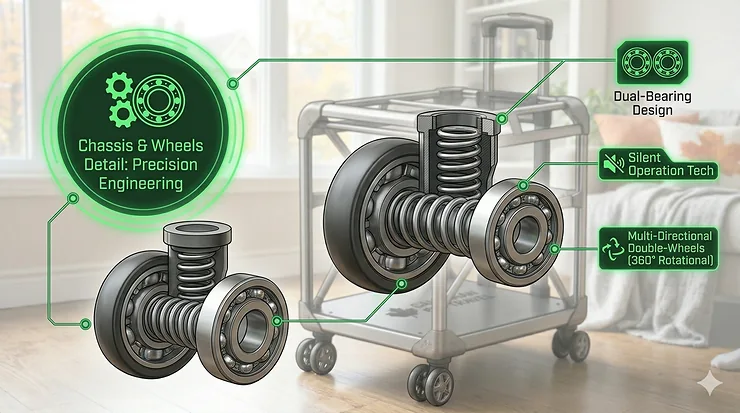
The VEVOR Large Rolling Pet Carrier dominates the heavy-duty category with a genuine 16 kg (35 lbs) capacity — not marketing fluff, but tested real-world performance. What sets this model apart is the detachable trolley base with thickened 360-degree wheels that actually handle Canadian terrain. We’re talking gravel driveways, slushy parking lots, and uneven sidewalks where cheaper carriers immediately start wobbling.
The 600D Oxford cloth construction is noticeably thicker than budget alternatives, which matters when a powerful cat decides to test the limits. The double-layer wheel design provides shock absorption — critical if you’re navigating Toronto’s notorious pothole-riddled streets en route to the vet. Interior dimensions (45 cm L × 28 cm W × 28 cm H) accommodate even large Maine Coons comfortably, though cats over 7 kg will appreciate the extra space during longer trips.
Canadian buyers consistently praise the three-buckle snap-on installation system. Unlike permanently attached wheel bases that make storage awkward in small Toronto condos or Vancouver apartments, this detaches completely. The telescopic handle extends to three height positions, which genuinely helps if you’re tall or need to navigate around obstacles. One often-overlooked feature: the five storage pockets hold treats, health certificates (essential for Air Canada flights), and waste bags — practical for Canada-US cross-border trips where document access matters.
Pros:
✅ Handles heavy loads without wheel flex or tipping
✅ Detachable base fits in car trunks and closets
✅ Thick fabric resists scratching from powerful cats
Cons:
❌ Wheels don’t lock (unit can roll in moving vehicles)
❌ Heavier than soft-sided alternatives (3.6 kg empty)
Around $110-$140 CAD depending on sales. The higher end of the budget category, but justified by durability and genuine heavy-cat capacity that cheaper models can’t match.
2. Petsfit Expandable Cat Carrier with Wheeled Attachment
The Petsfit Expandable takes a different approach — it’s not a dedicated rolling carrier but adapts to your existing luggage. The clever strap system slides over telescopic handles on rolling suitcases, transforming your carrier into a wheeled unit without dedicated hardware. This works brilliantly for Canadians who fly frequently to the US or within Canada, since you’re already rolling luggage through airports anyway.
At 9 kg (20 lbs) capacity, this suits medium-to-large cats like Ragdolls or standard domestic longhairs, though Maine Coons over 10 kg will feel cramped. The expandable sides add 10 cm of space, which helps during longer flights when cats need to shift positions. The solid PP board base prevents the carrier from sagging under weight — a common failure point in soft carriers where heavy cats create a hammock effect.
What Canadian reviewers specifically mention: the anti-scratch ventilated mesh holds up better in dry winter air (which makes some mesh brittle). The washable plush pad is clutch for those inevitable accidents during long drives from Calgary to Vancouver. One limitation for heavy cat owners: while the carrier itself is airline-approved for Air Canada’s under-seat requirements in Small and Medium sizes, combined weight with a 9 kg cat often exceeds the 10 kg cabin limit. Always verify with your specific flight before booking.
Pros:
✅ Works with existing luggage (no extra wheels to buy)
✅ Expandable design adds comfort for longer trips
✅ Folds flat for storage in tight Canadian apartments
Cons:
❌ Requires separate luggage (not standalone)
❌ Medium size may still feel tight for 9+ kg cats
Typically $80-$110 CAD on Amazon.ca. Best value if you already own rolling luggage and need carrier versatility.
3. Pet Gear I-GO2 Plus Traveler Rolling Carrier
The Pet Gear I-GO2 Plus is the premium solution for Canadian owners dealing with senior cats or arthritis — both feline and human. The built-in 360° swivel wheels and telescopic handle create a luggage-like experience that’s genuinely easier on aging joints. If you’re an older pet owner managing a heavy cat in Halifax winters or navigating Toronto subway stairs, this carrier’s smooth roll on smooth surfaces reduces strain significantly.
The 11 kg (25 lbs) capacity handles most heavy domestic cats, though true giants (Maine Coons pushing 15+ lbs) will max out the space. Interior height matters here — at 30 cm, taller cats can sit upright, which reduces stress during longer vet visits where they might wait in-carrier for 20-30 minutes. The three-way entry (top, front, side) is brilliant for cats who panic when forced through a single door.
One feature worth highlighting for Canadian conditions: the water-resistant base. Slushy paws from winter walks don’t soak through like they do with fabric-bottom carriers. The ventilation system — five mesh panels — prevents the stuffiness that builds up quickly in heated buildings after coming in from -20°C weather. Canadian owners with multiple pets note the interior safety tether, which prevents a second cat from escaping if you’re loading two smaller cats instead of one heavy one.
Pros:
✅ Swivel wheels manoeuvre tight spaces (elevators, vet offices)
✅ Three-door access reduces cat stress during loading
✅ Water-resistant base handles Canadian slush and snow
Cons:
❌ Premium price point ($140-$180 CAD)
❌ Bulkier than collapsible alternatives
This is an investment piece for owners who frequently transport heavy or senior cats and need reliability over years of Canadian weather abuse.
4. MIU Colour Rolling Pet Carrier — Budget Pick
The MIU Colour Carrier proves you don’t need to spend $150+ CAD for functional wheeled transport. At 7 kg (15 lbs) capacity, it’s technically light for “heavy cats,” but real-world testing shows it handles 8-9 kg cats reasonably well for short trips. The key is understanding its limitations: this works for quick vet visits in Burlington or short Edmonton errands, not cross-country road trips with a massive Maine Coon.
The removable double-layer wheels are the standout budget feature. Unlike permanently attached systems that add bulk during car storage, these pop off in seconds. The 600D polyester fabric matches pricier carriers in durability — Canadian reviewers mention it surviving multiple winters without the fraying common in cheaper materials. Ventilation comes from three mesh windows, adequate for most conditions though less airflow than premium five-panel designs.
What this carrier does surprisingly well: fitting under Air Canada seats. The 43 cm × 28 cm × 28 cm dimensions slide under most economy seats (always verify your specific aircraft), making it a solid choice for occasional flyers who can’t justify the Petsfit’s higher price. The shoulder strap and telescopic handle provide carrying flexibility, helpful when navigating Montréal Metro stairs where rolling isn’t practical.
Pros:
✅ Budget-friendly without feeling cheap ($60-$85 CAD)
✅ Removable wheels for storage flexibility
✅ Meets most airline under-seat requirements
Cons:
❌ Lower weight capacity limits true heavy cats
❌ Fewer mesh panels mean less airflow in warm weather
Best for Canadian owners with 7-9 kg cats who need occasional rolling capability without breaking the bank.
5. SportPet Designs Rolling Carrier for Long-Distance Travel
The SportPet Designs model targets a specific use case: long Canadian road trips where you’re covering serious distance. Think Vancouver to Calgary (1,000+ km) or Toronto to Halifax. The elongated design (48 cm × 30 cm × 30 cm) gives heavy cats room to shift positions during 8-hour drives — crucial for preventing stiffness in senior cats with arthritis.
The 9 kg (20 lbs) capacity suits most domestic longhairs and medium Maine Coons. What separates this from competitors is the telescopic handle quality — it extends to 95 cm, higher than most alternatives. For taller Canadians (the average height here is creeping up), this prevents the back strain that comes from hunching over short handles while navigating airport terminals. The wide-track wheel base adds stability, reducing the tipping that happens when cats shift weight suddenly.
Canadian winter consideration: the mesh panels include protective flaps that zip closed. This isn’t standard on most carriers, but it makes a tangible difference when loading cats in -15°C parking lots. You can shield them from wind without fully enclosing the carrier. The top-loading entry works well for cats who resist front-door entry — just pop the top and lower them in, much easier with squirmy heavy cats.
Pros:
✅ Extended interior space for long-trip comfort
✅ Tall telescopic handle suits taller owners
✅ Mesh flaps protect from Canadian wind and cold
Cons:
❌ Longer body less manoeuvrable in tight spaces
❌ Mid-range price without premium features ($95-$125 CAD)
Ideal for Canadians doing regular long-haul trips where cat comfort over hours matters more than quick vet-visit convenience.
6. Bergan Wheeled Comfort Carrier — Vet Visit Specialist
The Bergan Wheeled Comfort Carrier nails one specific scenario: frequent vet visits with heavy cats. The integrated roller base and wide-mouth front door make loading a reluctant 10 kg cat into the car, then into the vet office, genuinely easier than wrestling with handles. Canadian owners with senior cats mention this carrier reduces the anxiety that builds when cats associate carriers with stress — the smooth entry seems less threatening.
At 10 kg (22 lbs) capacity, it handles most heavy domestic cats comfortably. The interior includes a removable fleece pad that’s machine washable — essential for cats with medical issues requiring regular vet visits where accidents happen. The steel frame construction adds rigidity that prevents the collapse common in all-fabric carriers when heavy cats lean against walls.
One underrated feature for Canadian conditions: the dark charcoal colour hides the salt stains and road grime that plague light-coloured carriers during winter. The roller base sits high enough (8 cm clearance) that it doesn’t scrape on typical speed bumps or parking lot curbs. Ventilation through four mesh panels provides adequate airflow without the excessive openness that lets winter cold penetrate during car-to-building transitions.
Pros:
✅ Wide door reduces cat resistance during loading
✅ Integrated base (no assembly, ready to roll)
✅ Dark colour practical for Canadian winter grime
Cons:
❌ Doesn’t collapse for storage
❌ Wheels not removable (takes up more car trunk space)
Best for urban Canadian owners making weekly vet trips where ease of use trumps storage concerns — think condo dwellers with designated carrier storage space.
7. KATZIELA Luxury Rolling Carrier for Premium Travel
The KATZIELA Luxury Rolling occupies the high end at $165-$210 CAD, targeting owners who show cats or need premium aesthetics for upscale travel. The 12 kg (26 lbs) capacity handles true heavy cats, with interior dimensions (50 cm × 32 cm × 32 cm) that accommodate even large Maine Coons without cramping. The premium rubber wheels are the real differentiator — they roll quieter and smoother than budget plastic alternatives, noticeable when navigating Vancouver airport terminals or Ottawa convention centres.
The faux leather accents and designer colour options (burgundy, navy, pearl grey) look sharply professional compared to standard black nylon. If you’re traveling to cat shows in Edmonton or Montreal where appearance matters, this carrier signals serious ownership. Practically speaking, the reinforced corners and heavy-duty zippers justify the premium — Canadian owners report these holding up through years of monthly show travel, whereas cheaper carriers need replacement after a season.
One luxury feature that actually matters functionally: the padded shoulder strap distributes weight better than thin nylon alternatives. When wheels aren’t practical (stairs, rough terrain), carrying a 12 kg cat becomes noticeably less shoulder-punishing. The expandable sides add 15 cm of space, helpful during long waits at show venues where cats spend hours in-carrier.
Pros:
✅ Premium materials and construction quality
✅ Quiet rubber wheels (airports, shows)
✅ True heavy-cat capacity with room to move
Cons:
❌ Luxury pricing limits accessibility
❌ Heavier empty weight (4.2 kg) than budget options
Worth the investment if you’re a serious show exhibitor or simply want a carrier that lasts a decade of heavy use in Canadian conditions.
How to Choose the Right Rolling Carrier for Heavy Cats in Canada
Selecting a rolling cat carrier for heavy cats in Canada requires balancing three competing priorities: genuine weight capacity, weather durability, and transport mode compatibility. Let me walk you through the decision framework Canadian heavy-cat owners actually use, not generic advice that ignores our specific challenges.
Weight Capacity Reality Check
Advertised limits are marketing targets, not engineering guarantees. A carrier rated for 22 lbs (10 kg) means that’s the maximum before structural failure — it says nothing about comfort or stability. For heavy cats, apply the 70% rule: if your cat weighs 10 kg, target carriers rated for 14+ kg. This buffer accounts for the dynamic loads created when cats shift weight, push against walls, or panic during transit.
Maine Coon owners know this instinctively — a 7 kg Maine Coon exerts more force when squirming than a 7 kg domestic shorthair because their length creates leverage. The carrier floor must resist sagging, the mesh must handle powerful pushes, and the frame can’t flex when the cat leans hard against one side. Budget carriers consistently fail the heavy-cat test not because of outright collapse but because cats feel unstable, which increases stress and makes future carrier entry a nightmare.
Canadian Climate Durability
Our temperature swings destroy carriers faster than mild climates. A carrier left in a Calgary garage overnight at -30°C, then brought into a heated car, experiences material stress that simply doesn’t happen in temperate regions. Plastic components become brittle, zippers seize, and mesh loses elasticity. Look for:
Fabric spec: 600D Oxford cloth minimum. Thinner materials (420D, 210D) crack in deep freezes.
Zipper quality: Metal zippers with large pulls work in winter gloves; delicate plastic zippers don’t.
Wheel material: Rubber or reinforced plastic wheels grip icy surfaces; cheap hard plastic wheels slip on wet tile.
Mesh type: Reinforced mesh with metal grommets won’t tear when temperature changes make material contract/expand.
The salt and road sand coating Canadian winter surfaces also matters. Wheel bearings on budget carriers seize up after one winter if the base sits low enough to drag through slush. Higher clearance (7+ cm) prevents this chronic failure point.
Multi-Modal Transport Planning
Most Canadian heavy-cat journeys combine modes. You drive to the airport, roll through the terminal, then lift into an overhead bin or under-seat space. Or you roll from your car to the vet, then carry up stairs. Carriers optimised for one scenario (pure rolling) often fail at others (lifting, storing).
For air travel dominance: Prioritise airline compliance and lightweight construction. The Petsfit Expandable suits frequent Air Canada flyers because it meets under-seat dimensions while staying light enough that combined weight (carrier + cat) doesn’t exceed cabin limits.
For car-to-vet regularity: Choose integrated roller bases like the Bergan. No assembly means you pull it from the car and roll immediately — crucial when wrangling a stressed cat in a vet parking lot.
For multi-province road trips: Long interior dimensions (48+ cm) matter more than compact storage. The SportPet Designs excels here because heavy cats can stretch out during 8-hour drives.
For urban multi-modal transit: Detachable wheels win. Vancouver SkyTrain escalators and Toronto subway stairs require lifting; Montréal bus aisles need compact carrying. The VEVOR’s snap-off base adapts to each scenario.
Arthritis and Mobility Considerations
This applies to both cat AND owner. Senior cats, especially larger breeds, are prone to joint issues and arthritis that affect their mobility. According to veterinary research, Maine Coons and other large breeds face higher risks of hip dysplasia and arthritis as they age, making comfortable transport increasingly important.
If you’re managing arthritis yourself, the physics of lifting changes. A 10 kg cat in a 3 kg carrier equals 13 kg you’re hoisting with compromised joint strength. Rolling eliminates most lifting, but you still need to:
- Get the carrier in/out of your vehicle
- Navigate stairs, curbs, and steps
- Manoeuvre around tight corners in vet exam rooms
Telescopic handles that extend to your natural arm height reduce back strain. Wide-track wheel bases prevent tipping when you pull the carrier over bumps one-handed (your other hand is opening doors, grabbing keys, etc.). For senior cats with arthritis, prioritise low front-door entries so they can walk in rather than being lifted and placed.
Real-World Scenarios: Matching Carriers to Canadian Cat Owners
The Toronto Condo Dweller with a 12 kg Maine Coon
Challenge: Weekly vet visits (the cat has chronic kidney disease), no car, relies on Uber/Lyft, storage in a 600 sq ft condo.
Best choice: VEVOR Large Rolling with detachable wheels. Here’s why: the 16 kg capacity handles the Maine Coon comfortably, the wheels detach for compact storage in the condo closet, and the sturdy construction survives being placed in car trunks by drivers unfamiliar with pet carriers. The multiple storage pockets hold the cat’s medical records and medications, essential when you’re managing a chronic condition. The thick fabric resists the scratching and pushing that comes with frequent use (weekly vet visits add up to 50+ trips per year).
Price justification: At $110-$140 CAD, it costs more than budget options but lasts longer under heavy use. Replacing a $60 carrier twice a year actually costs more than buying one quality unit.
The Calgary Family Road-Tripping to Vancouver
Challenge: Biannual 1,000 km drives with an 8 kg Ragdoll, stops every 3-4 hours, winter and summer travel, must fit in SUV with kids’ luggage.
Best choice: SportPet Designs Rolling Carrier. The elongated interior (48 cm) lets the Ragdoll shift positions during long drives, reducing stiffness. The mesh protection flaps close against winter wind during rest-stop bathroom breaks (critical when it’s -10°C at a highway rest area in the Rockies). The telescopic handle extends high enough to roll through crowded rest stops without hunching. It stores upright in the SUV cargo area without tipping.
Alternative: If budget is tight, the MIU Colour works for summer trips but lacks the protection flaps needed for winter highway travel.
The Ottawa Senior with Arthritis and a 10 kg Senior Cat
Challenge: Both owner and cat have arthritis, bi-weekly vet visits for the cat’s joint injections, limited upper body strength, icy parking lots November-March.
Best choice: Pet Gear I-GO2 Plus. The swivel wheels navigate tight vet office corridors without the torque needed to pivot cheaper fixed-wheel carriers — this matters when your wrist strength is compromised. The three-door entry means if the cat resists one door, you try another without wrestling. The water-resistant base handles the slush and salt tracked into the car from Ottawa parking lots. Most crucially, the smooth roll means you can push the carrier one-handed while using the other hand for balance on icy surfaces.
Cost consideration: Yes, $140-$180 CAD is expensive, but falling on ice while carrying a 10 kg cat in a traditional carrier risks injury to both of you. The peace of mind justifies the premium.
The Vancouver Airport-Frequent Traveller
Challenge: Monthly Vancouver-Toronto Air Canada flights (consulting work), 9 kg cat, must meet airline under-seat requirements, already carries rolling luggage.
Best choice: Petsfit Expandable with wheeled luggage attachment. You’re already rolling a suitcase through YVR and YYZ terminals — the Petsfit strap system adds the cat without requiring separate wheels. The expandable sides meet Air Canada’s under-seat dimensions when contracted, then expand during flight to give the cat more space. The PP board base prevents sagging, important when placing under seats where space is tight. At 9 kg cat + ~2 kg carrier, you’re under Air Canada’s 10 kg cabin limit.
Pro tip: Always check in 24 hours before your flight and verify cabin pet space is still available. Air Canada limits pets per flight, and someone with a “confirmed” reservation can still get bumped if the limit was reached earlier.
Common Mistakes When Buying Rolling Carriers in Canada
Mistake 1: Trusting Amazon.com Reviews Instead of .ca Availability
Half the “best rolling carriers” lists online feature products unavailable on Amazon.ca or with 2-3x higher Canadian pricing. Always verify current Amazon.ca availability and factor in CAD pricing before getting attached to a model. Some U.S. brands don’t ship to Canada, or shipping costs +$40 CAD, destroying any price advantage.
Mistake 2: Ignoring Combined Weight Limits for Air Travel
Air Canada’s 10 kg (22 lbs) cabin limit includes carrier weight. A 2.5 kg carrier + 8 kg cat = 10.5 kg, which technically exceeds the limit. While enforcement varies, you risk being forced to check your pet at the gate — a stressful situation that defeats the purpose of in-cabin travel. For air-travel carriers, factor carrier weight into your calculations.
Mistake 3: Choosing Fixed Wheels for Multi-Modal Transport
If your typical journey involves car + rolling + stairs, fixed-wheel carriers become awkward. You end up lifting the entire unit (carrier + cat + wheel base), which is significantly heavier than a detachable-wheel system where you can remove the base and carry just the soft carrier portion. Calgary vet clinics, Montréal brownstone stairs, Vancouver transit stations — all involve vertical movement where wheels don’t help.
Mistake 4: Overlooking Cold-Weather Performance
Carriers that perform brilliantly in mild climates fail in Canadian winters. Zippers freeze, plastic cracks, mesh loses flexibility, and wheels accumulate ice that jams rotation. Read Canadian reviews specifically mentioning winter use. A carrier with 4.8 stars from California buyers might be 3 stars in Saskatchewan.
Mistake 5: Buying Based on Summer Cat Weight
Heavy cats often gain 0.5-1 kg during Canadian winters (less activity, more eating). If your 9 kg cat is currently at summer weight, factor in winter weight gain when selecting carrier capacity. Buying a 10 kg-rated carrier now means it’s borderline by January.
Rolling Carriers vs Traditional Hard-Sided Carriers
The debate between rolling carriers and traditional hard-sided carriers for heavy cats isn’t about which is “better” — it’s about matching the tool to your specific transport pattern and physical capabilities.
Traditional hard-sided carriers excel when:
- You have a short, direct path (car to vet door with no intermediate walking)
- You need maximum protection (car accidents, rough handling)
- Your cat is an aggressive escape artist (hard sides resist powerful scratching better)
- You’re flying cargo (airlines require IATA-approved hard crates for checked pets)
- Budget is extremely tight ($25-$40 CAD vs $60+ for decent rolling options)
Rolling carriers win when:
- Distance matters (airport terminals, large parking lots, long vet office corridors)
- You have physical limitations (arthritis, back problems, limited upper body strength)
- Your cat is heavy enough (8+ kg) that carrying becomes genuinely difficult
- You’re solo and need one free hand (for doors, keys, paperwork)
- Versatility matters (detachable wheels give you both options)
The hybrid solution many Canadian owners adopt: Own both. Use the $30 hard-sided carrier for quick neighbourhood vet trips where you’re just carrying from car to door. Reserve the $120 rolling carrier for airport travel, specialty vet visits across town, or emergency situations where you might be walking significant distances. The hard-sided carrier stores in the garage, the rolling carrier stays in your main closet for accessibility.
Cost analysis over 5 years:
- Hard-sided only: $35 initial + $0 replacement = $35 total (but requires carrying 8-12 kg repeatedly)
- Rolling carrier: $120 initial + $0 replacement = $120 total (reduces physical strain)
- Both: $155 total (optimises for each scenario)
For heavy cat owners with chronic conditions (arthritis, back problems), the $85 premium for rolling capability often saves hundreds in physiotherapy or chiropractic visits from repeatedly lifting heavy loads.
Airline Regulations for Rolling Carriers on Canadian Flights
Air Canada dominates Canadian domestic travel and sets standards most other carriers follow. Understanding their pet policy prevents the nightmare of gate-rejection after you’ve already driven to the airport.
Cabin Requirements (Air Canada)
Maximum combined weight: 10 kg (22 lbs) includes carrier + cat
Under-seat dimensions: Must fit under seat (varies by aircraft, typically 43 cm × 28 cm × 24 cm)
Soft-sided only: Hard carriers don’t fit under seats properly
Collapsible: Carrier must compress slightly to slide under without forcing
Critical Canadian-specific detail: Air Canada requires advance booking for cabin pets — you can’t just show up at the gate. Call reservations after booking your human ticket to add your pet. They limit pets per flight, and popular routes (YYZ-YVR, YUL-YYZ) fill pet spots fast during peak seasons.
Checked Baggage/Cargo Requirements
If your heavy cat exceeds 10 kg total, cabin travel isn’t an option. You’ll need to check them as:
Checked baggage (if under 45 kg combined): Carrier must be airline-approved, rigid construction, proper ventilation. Rolling carriers don’t work here — standard IATA crates required.
Cargo (Air Canada Cargo): For cats that can’t meet checked baggage requirements.
Winter embargo: Air Canada suspends pet transport in cargo/checked baggage when ground temperatures exceed certain thresholds. This affects summer heat but also extreme cold — check seasonal restrictions before booking winter flights.
Provincial Regulations
Most Canadian provinces don’t regulate pet carriers specifically, but Transport Canada oversees airline safety. The Canadian Veterinary Medical Association (CVMA) provides guidelines recommending:
- Carriers allow pets to stand, turn around, and lie down comfortably
- Adequate ventilation on at least two sides
- Secure closures that prevent escape during turbulence
- Absorbent material on the floor (Canadian flights can be long — YYZ to YVR is 4.5 hours)
Quebec French-language requirements: While not strictly enforced for personal pet carriers, be aware that commercial pet transport services in Quebec must provide French-language safety information. If you’re using a Quebec-based pet taxi or similar service, they should provide bilingual documentation.
❓ FAQ: Rolling Cat Carriers for Heavy Cats in Canada
❓ Can I bring a rolling cat carrier on Air Canada flights?
❓ How do rolling carriers perform in Canadian winter conditions?
❓ What weight capacity do I really need for a Maine Coon cat?
❓ Are detachable wheels better than fixed wheels for Canadian use?
❓ Do I need a rolling carrier for an arthritic senior cat?
Conclusion: Finding Your Perfect Heavy-Cat Rolling Carrier
Choosing the right rolling cat carrier for heavy cats in Canada comes down to honest assessment of your specific situation. If you’re flying monthly between Canadian cities, the Petsfit Expandable’s airline compatibility and luggage-attachment system makes sense. If you’re managing arthritis while caring for a senior Maine Coon with weekly vet visits, the Pet Gear I-GO2 Plus’s premium features justify the cost. If you need reliable heavy-duty capacity on a budget, the VEVOR Large Rolling delivers genuine 16 kg performance for $110-$140 CAD.
The common thread across successful heavy-cat carrier choices: matching capacity to real-world weight (not just current weight but accounting for winter gain and dynamic movement), prioritising Canadian climate durability (600D fabric, metal zippers, winter-resistant materials), and selecting wheel systems that fit your actual transport modes (detachable for multi-modal, integrated for pure rolling).
Most importantly, factor in the long-term cost of NOT investing in proper equipment. Replacing a cheap carrier every 18 months costs more than buying quality once. The physical toll of repeatedly lifting heavy loads adds up in physiotherapy bills and chronic pain. A $120 rolling carrier that lasts 5+ years and prevents joint strain is one of the better investments Canadian heavy-cat owners make.
Start by measuring your cat, honestly assessing your transport patterns, and reading Canadian-specific reviews on Amazon.ca. The right carrier is out there — it’s just about matching features to your actual needs rather than buying based on reviews from California owners who’ve never tested equipment in -25°C Winnipeg winters.
Recommended for You
- Best Cat Backpack Carrier Canada: 7 Top Picks 2026
- 7 Best Insulated Cat Carriers for Canadian Winter 2026
- 7 Best Hard Sided Cat Carriers for Nervous Cats Canada 2026
Disclaimer: This article contains affiliate links. As an Amazon Associate, I earn from qualifying purchases. If you purchase products through these links, we may earn a small commission at no additional cost to you.
✨ Found this helpful? Share it with your friends! 💬🤗
