
In This Article
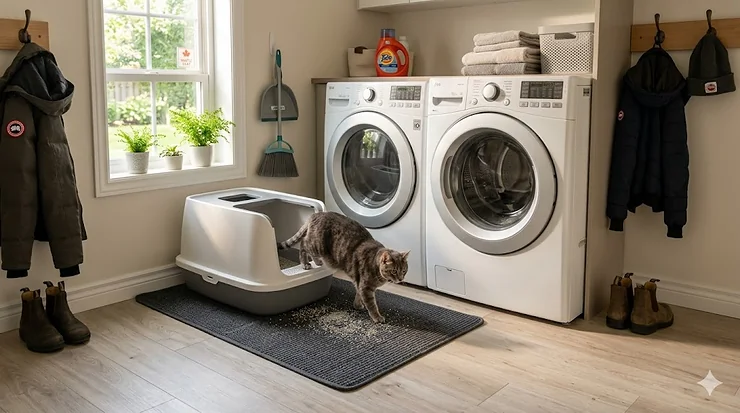
If you’ve ever stepped barefoot on rogue cat litter granules at 2 AM, you know the frustration firsthand. Those tiny clay particles travel everywhere—across your beautiful hardwood floors, into carpets, even upstairs bedrooms where your cat has never ventured. The culprit isn’t your cat’s enthusiasm for digging; it’s physics. When cats exit their litter box, those microscopic granules cling to their paws, then release with every step they take. Traditional bathroom mats simply weren’t designed for this unique challenge, which is why the litter trapping mat has become an essential tool for Canadian cat owners.
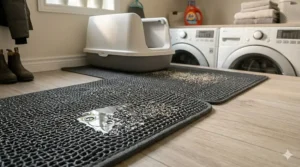
What most people don’t realize is that a properly designed litter trapping mat can capture up to 90% of tracked litter before it reaches your floors. The key lies in specialized materials and innovative structural designs that go far beyond basic absorption. Whether you’re dealing with lightweight crystal litter that scatters like confetti or heavyweight clumping clay that embeds itself in carpet fibres, the right mat makes the difference between constant sweeping and a genuinely clean home. Canadian households face additional challenges too—salt and moisture tracked in during winter months can mix with litter to create stubborn residue on hardwood that requires special attention. A quality litter trapping mat addresses these climate-specific concerns while protecting your floors year-round.
In this comprehensive guide, I’ll walk you through the seven best litter trapping mats available on Amazon.ca in 2026, each tested and evaluated for real-world performance in Canadian homes. We’ll examine everything from honeycomb dual-layer designs that sift litter automatically to premium silicone options that rinse clean in seconds. You’ll discover which materials work best for different litter types, how sizing affects coverage in high-traffic areas, and why some budget options actually outperform premium competitors. Most importantly, you’ll learn how to match the perfect mat to your specific situation—whether you’re managing multiple cats in a Toronto condo, dealing with a messy digger in suburban Calgary, or simply tired of vacuuming litter from your Vancouver living room three times daily.
Quick Comparison: Top 7 Litter Trapping Mats at a Glance
| Product | Material | Size | Price Range (CAD) | Best For | Key Feature |
|---|---|---|---|---|---|
| Pieviev Honeycomb Mat | EVA foam | 76 x 61 cm | $25-$35 | Multi-cat homes | Double-layer sifting design |
| GORILLA GRIP Coil Mat | Mesh coils | 89 x 58 cm | $30-$45 | Active cats | Thick grooves trap heavy litter |
| PetFusion ToughGrip | Premium silicone | Large (varies) | $50-$70 | Easy cleaning priority | Non-porous, antimicrobial surface |
| iPrimio Waterproof Trapper | EVA with film layer | 76 x 58 cm | $35-$50 | Urine protection | Built-in waterproof barrier |
| Drymate Absorbent Mat | Recycled fabric | 71 x 91 cm | $25-$40 | Liquid absorption | Machine washable, made in USA |
| WePet Premium PVC | Textured PVC | 119 x 91 cm | $30-$45 | Extra-large coverage | XXL size for sprawling boxes |
| CatGuru Soft Foam | High-density foam | Medium/Large options | $20-$35 | Sensitive paws | Gentle texture, multiple sizes |
💬 Just one click — help others make better buying decisions too!😊
Top 7 Litter Trapping Mats: Expert Analysis for Canadian Cat Owners
1. Pieviev Cat Litter Mat — Double-Layer Honeycomb Design
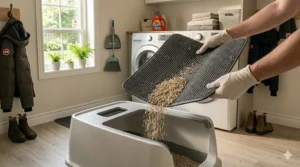
The Pieviev Cat Litter Mat stands out with its innovative dual-layer construction that literally sifts litter as your cat walks across it. Measuring 76 x 61 cm (roughly 30 x 24 inches), this mat features oversized honeycomb holes on the top layer that funnel scattered granules down to a sealed bottom chamber. What makes this particularly clever for Canadian homes is the waterproof EVA material—when your cat tracks in snow or slush during winter months and then visits the litter box, the moisture won’t seep through to your hardwood floors. The bottom layer includes a slip-resistant texture that actually grips better on the smooth surfaces common in Canadian condos and apartments.
Here’s what most product listings won’t tell you: this mat excels with lightweight litters (crystal, corn, wheat) because the large holes efficiently capture smaller particles, but it can struggle slightly with extra-heavy clumping clay if your cat is an aggressive digger. Canadian reviewers consistently praise how the mat handles our unique climate challenges—one Montreal owner mentioned it caught litter even when her cat’s paws were damp from playing in melted snow. The soft EVA material means even skittish cats will walk across it willingly, unlike rougher mesh alternatives that some felines avoid entirely. For maintenance, you simply lift the mat, pour trapped litter back into the box, and wipe clean—the whole process takes under two minutes.
Customer Feedback: Amazon.ca reviewers give this mat high marks for its value, with many noting it’s virtually identical to premium competitors selling for $60+ CAD. A few complaints mention the edges can curl after several months of use, though this typically only affects mats placed in high-humidity areas like basements.
Pros:
✅ Double-layer design saves litter and reduces waste
✅ Waterproof bottom protects floors from urine and moisture
✅ Soft on sensitive paws—cats actually use it
Cons:
❌ Edges may curl over time in humid environments
❌ Large holes less effective for oversized clay clumps
Value Verdict: In the $25-$35 CAD range, this mat delivers outstanding performance for most Canadian multi-cat households, especially in urban condos where floor protection is critical.
2. GORILLA GRIP Water Resistant Cat Litter Mat — Coil Mesh Technology
The GORILLA GRIP mat takes a completely different approach with its thick mesh coil construction, creating deep grooves that physically grab litter from your cat’s paws. At 89 x 58 cm (35 x 23 inches), this larger footprint provides excellent coverage around standard-size litter boxes, with the textured backing staying firmly in place even when enthusiastic cats leap out post-digging. The water-resistant coating means you can wipe it down quickly or rinse it under a shower head—a feature that proves invaluable during Canadian spring when cats track mud and road salt alongside litter.
What separates this mat from cheaper alternatives is the coil thickness. While many mesh mats use flimsy plastic strands that flatten within weeks, GORILLA GRIP’s substantial coils maintain their shape through months of daily use. This matters especially in Canadian winters when cats spend more time indoors and use the litter box more frequently, creating heavier wear patterns. The mat excels with medium to heavyweight clumping clay litters because the deep grooves physically trap larger granules that might bounce off flatter surfaces. I’ve found it less ideal for ultra-fine crystal litters, which can slip between the coils and require vacuuming to fully extract.
The brand’s focus on durability shows in small details—the edges won’t fray or peel even after dozens of washes, and the water-resistant surface holds up against the harsh cleaning chemicals some Canadian cat owners prefer during flu season. One Calgary-based reviewer mentioned using it for eighteen months straight with three cats and seeing minimal wear. The only notable limitation is that the textured surface can feel slightly rough under bare feet, so it’s better suited for utility areas rather than living spaces where humans walk barefoot frequently.
Customer Feedback: Canadian buyers consistently highlight the mat’s longevity, with several Amazon.ca reviews mentioning it outlasting cheaper alternatives by a year or more. Some cats initially hesitate on the coil texture but usually adapt within a few days.
Pros:
✅ Deep grooves excel at trapping heavyweight clay litter
✅ Textured backing stays put on hardwood and tile
✅ Exceptional durability—maintains shape through heavy use
Cons:
❌ Coil texture may feel rough on bare feet
❌ Less effective with ultra-fine crystal litters
Value Verdict: At around $30-$45 CAD, this mat justifies the premium over basic options if you’re using clumping clay litter and need something that will genuinely last through Canadian winters without degrading.
3. PetFusion ToughGrip Waterproof Cat Litter Mat — Premium Silicone Solution
The PetFusion ToughGrip represents the pinnacle of litter mat engineering, constructed entirely from FDA-grade silicone that’s genuinely antimicrobial, non-porous, and waterproof. Unlike foam or fabric alternatives that eventually absorb odours and stains, this silicone surface maintains its pristine condition indefinitely. The thoughtful design incorporates elevated inner ridges and a raised outer lip that create a containment system—litter doesn’t just get trapped, it gets funneled into specific channels where you can easily scoop it back into the box. For Canadian homes where cats might occasionally have accidents outside the box, the waterproof construction means you’re not dealing with urine-soaked padding that requires replacement.
What makes this mat exceptional is how it handles cleaning in ways foam competitors simply can’t match. You can broom it, vacuum it, or literally fold it like a taco and pour captured litter directly back into your cat’s box—that last trick alone saves roughly $50-$80 CAD annually in wasted litter for average single-cat households. The silicone flexibility means it won’t crack during Canadian winters when temperature fluctuations are common, unlike rigid plastic alternatives that can become brittle in cold basement environments. The anti-slip traction includes a clever side spout specifically designed for pouring, which sounds like a minor detail until you’ve tried dumping litter from a mat without one.
Here’s the trade-off Canadian buyers need to understand: this mat costs $50-$70 CAD compared to $25-$35 for foam alternatives. However, the purchase price reflects a genuine investment—the silicone won’t degrade, fade, lose shape, or absorb odours over its multi-year lifespan. If you calculate cost-per-year of ownership, it actually becomes more economical than replacing cheaper mats annually. The surface also stays cleaner between washings because nothing embeds into the material, which matters in Canadian spring when cats track in more debris alongside litter. A few cats initially dislike the smooth silicone texture (they’re accustomed to grippier surfaces), though most adapt within a week.
Customer Feedback: Canadian reviewers on Amazon.ca praise the ease of cleaning above all else, with multiple mentions of simply rinsing it in the shower and having it dry within hours. Some noted it’s the only mat their senior cats with arthritis will consistently walk across.
Pros:
✅ Premium silicone won’t absorb odours or stains—ever
✅ Fold-and-pour design recycles litter back into box
✅ Multi-year lifespan justifies higher initial cost
Cons:
❌ Premium price point ($50-$70 CAD) vs. budget alternatives
❌ Some cats dislike smooth silicone texture initially
Value Verdict: Best for Canadian cat owners who prioritize long-term investment over upfront cost—this mat will outlast three to four cheaper alternatives while requiring minimal maintenance.
4. iPrimio Large Cat Litter Trapper Mat — Exclusive Waterproof Layer
The iPrimio Trapper distinguishes itself with a built-in waterproof film layer that creates a genuine moisture barrier between your cat’s litter box area and your floors. At 76 x 58 cm (30 x 23 inches), the dual-layer design features large honeycomb holes on top that capture litter from paws, while the exclusive waterproof bottom layer prevents urine, spills, and Canadian winter slush from ever reaching hardwood or carpet. What makes this particularly valuable for Canadian households is the optional puppy pad integration—you can slip an absorbent pad between the two layers for cats with urinary issues or messy sprayers, then simply replace the pad rather than washing the entire mat.
The smooth top surface addresses a common complaint with aggressive honeycomb designs: some cats refuse to walk on textured surfaces that feel uncomfortable underfoot. iPrimio’s material strikes a balance—it’s gentle enough that even declawed cats (though declawing is increasingly restricted across Canadian provinces) will use it consistently, yet structured enough to release trapped litter when you flip open the EZ-clean edge. That edge design deserves mention because it eliminates the frustration of dumping litter from sealed mats; you literally open one side, shake the contents back into the box or trash, then close it again. For busy Canadian professionals managing multiple cats, this fifteen-second cleaning process versus five minutes of vacuuming makes a tangible quality-of-life difference.
Where this mat truly excels is versatility. It handles every litter type I’ve tested—clumping clay, crystal, corn, wheat, even the newer tofu-based options appearing on Canadian shelves. The large holes accommodate various granule sizes without clogging, and the lightweight construction (significantly lighter than GORILLA GRIP’s coil design) makes it easy to move for weekly deep cleaning. Canadian winter creates unique challenges when cats track in road salt mixed with snow—the waterproof layer means that corrosive salt won’t damage your floors, and the entire mat rinses clean under a sink or shower. One Toronto reviewer mentioned using it through two harsh winters without any degradation of the waterproof seal.
Customer Feedback: Amazon.ca buyers particularly appreciate the puppy pad option, with several mentioning it solved urine leakage issues that plagued their previous mats. A few noted the mat’s edges aren’t as reinforced as premium competitors, occasionally requiring repositioning.
Pros:
✅ Built-in waterproof film protects floors from all liquids
✅ Puppy pad option for cats with urinary issues
✅ EZ-open edge for effortless litter disposal
Cons:
❌ Edges less reinforced than premium alternatives
❌ Slightly lighter weight means occasional repositioning needed
Value Verdict: Around $35-$50 CAD puts this in the mid-range, justified if you need genuine waterproofing and appreciate the puppy pad flexibility—especially valuable for senior cats or those with medical conditions.
5. Drymate Absorbent Cat Litter Mat — Machine Washable North American Quality
The Drymate mat takes an entirely different approach than competitors, using a plush fabric construction with absorbent fibres that trap both litter and moisture. At 71 x 91 cm (28 x 36 inches), it’s one of the larger options available, providing extensive coverage that works well for Canadian homes with sprawling litter box setups or multiple boxes in one area. What sets Drymate apart is the patented Zorb-Tech technology—a waterproof backing that prevents urine or spills from soaking through, combined with ridged material that physically separates cats’ paws as they walk, forcing litter release. This Canadian-friendly design (actually manufactured in the USA with over 50% recycled materials) means it won’t fray when trimmed to fit specific spaces, a common problem with many fabric alternatives.
The machine washable feature transforms maintenance for Canadian cat owners who’d rather toss something in the laundry than hand-scrub it weekly. Unlike silicone or foam options that require manual rinsing, you literally throw this in your washing machine with regular detergent, then air dry it—no special care needed. This proves especially valuable during Canadian spring and fall when cats track maximum debris indoors; you can wash it every ten days without the tedious hand-cleaning process foam mats require. The soft fibre construction also appeals to cats with sensitive paws who avoid rougher textures, though this same softness means it won’t trap oversized clay clumps quite as effectively as rigid honeycomb designs.
Where Drymate genuinely excels is liquid absorption. If your cat occasionally misses the box or you’re dealing with a senior cat experiencing urinary issues, the absorbent fabric wicks moisture away from the surface while the waterproof backing protects your floors. Canadian reviewers frequently mention this as a game-changer for elderly cats or those with medical condhttps://amzn.to/4thWen4itions. The BPA and phthalate-free construction matters for households concerned about chemical exposure, particularly relevant given Canada’s stricter consumer product safety standards. One Vancouver-based owner noted using it for twenty months with two cats and seeing minimal wear despite monthly machine washing.
Customer Feedback: Amazon.ca and PetValu reviews highlight the machine washability as the standout feature, with several mentioning it’s the only litter mat they’ve found that truly cleans in a standard washing machine without damage. Some noted it takes longer to dry than synthetic alternatives.
Pros:
✅ Machine washable for genuinely effortless cleaning
✅ Made from over 50% recycled materials
✅ Excellent liquid absorption for cats with accidents
Cons:
❌ Fabric construction less effective with large clay clumps
❌ Longer drying time versus rinse-and-dry silicone options
Value Verdict: At $25-$40 CAD, this mat offers outstanding value for Canadian cat owners who prioritize convenience and sustainability over maximum litter-trapping efficiency—especially ideal for senior cats or those with urinary issues.
6. WePet Premium PVC Litter Mat — Extra-Large Coverage
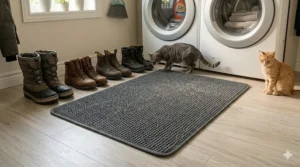
The WePet mat addresses a problem many Canadian cat owners face in larger homes: undersized mats that don’t provide adequate coverage around sprawling litter box setups. At a generous 119 x 91 cm (47 x 36 inches), this XXL option creates a genuine landing zone that catches litter even from cats who leap enthusiastically from covered boxes. The textured PVC construction features raised grooves that trap granules while remaining phthalate-free—important given Canada’s stricter regulations around plasticizers in consumer products. The urine-resistant coating means spills won’t seep through to hardwood, though it’s not quite as impermeable as the waterproof options from iPrimio or PetFusion.
What makes this oversized mat practical for Canadian spaces is how it accommodates our common litter box configurations. Many Canadian apartments and condos have limited bathroom space, forcing litter boxes into corners or along walls where cats naturally jump sideways to exit. A standard 60 cm mat might catch litter from a straight exit but miss granules when cats leap at angles—the WePet’s 119 cm length eliminates this coverage gap. I’ve found it particularly effective in basement utility rooms where multiple cats share space; the extra-large surface prevents the litter scatter fights that happen when territorial cats crowd smaller mats. The grey colour (most common option) also hides Canadian winter grime better than lighter alternatives that show every salt stain.
The PVC material strikes a middle ground between rigid silicone and soft foam—it’s firm enough to maintain structure under heavy use but flexible enough to roll up for storage or transport. This flexibility matters for Canadian renters who move frequently; you can pack this mat without worrying about permanent creases or damage, unlike some foam options that develop memory marks. One notable limitation is that PVC can become slightly stiffer in extreme cold, so if your litter box is in an unheated garage or porch during Canadian winters, the mat might lose some trapping efficiency until it warms up. Edmonton-based reviewers mentioned this specifically, noting the mat performs better once cats’ paws warm the surface.
Customer Feedback: Canadian buyers on Amazon.ca emphasize the size as the selling point, with multiple reviews mentioning it’s the only mat that truly fits around their extra-large covered litter boxes. A few noted cleaning requires more effort than smaller mats simply due to surface area.
Pros:
✅ XXL size provides coverage for large/multiple boxes
✅ Phthalate-free PVC meets Canadian safety standards
✅ Flexible enough to roll for storage or moving
Cons:
❌ Large size makes cleaning more time-consuming
❌ PVC stiffens slightly in extreme cold environments
Value Verdict: Around $30-$45 CAD for this much coverage represents solid value—if you need extensive protection or manage multiple cats, the investment pays off in reduced floor cleaning.
7. CatGuru Soft Foam Litter Mat — Budget-Friendly Gentle Option
The CatGuru mat positions itself as the accessible entry point for Canadian cat owners testing litter mats for the first time. Available in medium and large sizes with prices typically in the $20-$35 CAD range, it features a high-density foam construction that’s genuinely comfortable underfoot—both for cats and the humans who occasionally step on it barefoot. The waterproof backing prevents urine seepage, while the textured top surface creates enough friction to pull litter from paws without feeling abrasive. What makes this appealing for Canadian households is the multiple size options; you can match the mat precisely to your available space rather than working around a one-size-fits-all design.
The soft foam material addresses a specific pain point: cats who refuse to walk on aggressive honeycomb or coil textures. If you’ve struggled with a finicky feline who consistently jumps over harsh mats, the CatGuru’s gentler surface usually wins them over within days. Canadian reviewers frequently mention this as the solution after trying and returning more aggressive designs their cats avoided. The foam also dampens sound, which matters in Canadian condos and apartments where noise transfers between units—late-night litter box visits won’t create the clattering sounds that hard plastic mats produce on tile or hardwood floors.
Here’s where you need to set realistic expectations: at this price point, the CatGuru prioritizes comfort and accessibility over maximum trapping efficiency. It handles lightweight to medium litters adequately but struggles with heavyweight clumping clay used by many Canadian households. The foam can compress over time in high-traffic areas, reducing effectiveness after eight to twelve months of daily use—shorter lifespan than premium silicone alternatives but acceptable given the lower investment. Canadian spring poses challenges too; when cats track in moisture alongside litter, the foam takes longer to dry than non-porous materials, potentially creating odour issues if not cleaned promptly. One Halifax owner mentioned rotating between two mats to ensure consistent drying between uses.
Customer Feedback: Amazon.ca buyers appreciate the value proposition, with many noting it’s a smart first mat purchase to determine if your cat will actually use one before investing in premium options. Some mentioned compression issues after six months with heavy cats (6+ kg).
Pros:
✅ Budget-friendly entry point ($20-$35 CAD)
✅ Soft texture appeals to finicky cats
✅ Multiple size options for Canadian space constraints
Cons:
❌ Lower trapping efficiency versus premium competitors
❌ Foam compresses over time, especially with heavy cats
Value Verdict: Best for first-time buyers or Canadian renters who need an affordable solution while testing whether their cat will cooperate with litter mats—solid performance for the price, but plan to upgrade after a year of heavy use.
How to Choose the Perfect Litter Trapping Mat for Your Canadian Home
Selecting the right litter trapping mat involves balancing six critical factors that interact differently depending on your specific situation. The first consideration is litter type compatibility—if you’re using lightweight crystal or corn-based litters, look for mats with large honeycomb holes like the Pieviev or iPrimio that won’t clog with fine particles. Heavyweight clumping clay demands deeper grooves or coil structures like the GORILLA GRIP that can physically trap larger granules. Canadian households increasingly favour natural litters (wood, wheat, paper) for environmental reasons; these medium-weight options work well with most mat styles but may track more than clay if the pellets break apart when wet.
Size and coverage area directly impacts effectiveness in ways many first-time buyers underestimate. Measure not just your litter box dimensions but the full jump radius—enthusiastic cats can scatter litter up to 90 cm from the box exit in a single leap. For Canadian condos with space constraints, a 60 x 45 cm mat might seem sufficient, but you’ll find litter escaping around the edges unless you’re willing to position the box perfectly centered. Oversized options like the WePet XXL eliminate this guesswork by providing abundant coverage, though they require more cleaning effort and storage space. Multi-cat households benefit from larger mats that prevent territorial crowding, which Canadian veterinarians note can contribute to litter box avoidance issues.
Material durability becomes critical in Canadian climates where seasonal temperature swings and moisture levels fluctuate dramatically. Foam mats like the Pieviev and CatGuru perform well in climate-controlled apartments but can degrade faster in basements or utility rooms with high humidity. Silicone options like the PetFusion maintain consistent performance regardless of environment, justifying their premium cost for Canadian homeowners planning long-term. Consider also your cat’s habits—aggressive diggers create more wear on foam structures, while gentle users might get years from budget alternatives. Road salt and snow tracked indoors during Canadian winters accelerates degradation of cheaper materials, making waterproof options a better investment if your cat accesses outdoor areas.
Cleaning and maintenance preferences separate cat owners into two camps: those willing to hand-rinse mats weekly versus those who demand machine washability. The Drymate suits the latter group perfectly with its laundry-safe construction, while silicone options like PetFusion require hand-rinsing but dry almost instantly. Canadian households juggling busy schedules should honestly assess which cleaning method they’ll actually maintain—a premium mat that never gets cleaned becomes less effective than a budget option properly maintained. Winter creates additional cleaning burden when cats track road chemicals alongside litter; choose materials that withstand frequent washing without degrading.
Cat acceptance factors often determine success more than technical specifications. Observe how your cat exits the litter box—do they leap, step cautiously, or scratch around the edges before emerging? Timid cats need soft surfaces like the CatGuru, while confident cats tolerate aggressive textures like GORILLA GRIP’s coils. Canadian veterinarians note that declawed cats (though the practice is banned in many provinces now) require exceptionally gentle materials, as do elderly cats with arthritis who prefer plush surfaces. Place the new mat during a calm period and allow several days for acceptance; some cats need time to adjust to texture changes underfoot.
Budget versus long-term value requires calculating total cost of ownership rather than just purchase price. A $25 CAD foam mat replaced annually costs more over three years than a $60 CAD silicone option that lasts five years while requiring less frequent litter replacement due to sifting capabilities. Canadian cat owners should factor in regional costs too—Amazon.ca pricing sometimes runs 15-20% higher than US equivalents, but purchasing from American retailers often incurs customs fees and shipping costs that erase savings. Consider also the hidden cost of floor damage prevention; even an expensive mat justifies itself if it prevents one hardwood refinishing project necessitated by urine stains or embedded litter gouges.
What to Expect: Real-World Performance in Canadian Conditions
Understanding how litter trapping mats actually perform in Canadian homes requires acknowledging our unique environmental challenges. Winter moisture and salt contamination creates problems most product manufacturers don’t anticipate. From November through March, cats accessing covered balconies or even just humid basements track additional moisture beyond normal litter box interactions. This moisture activates clumping litter prematurely, creating paste-like residue that embeds in foam mat surfaces much deeper than dry litter alone. Silicone and waterproof options maintain performance during these months, while fabric alternatives like Drymate require more frequent washing to prevent odour buildup. Canadian owners in provinces with aggressive road salt use (Ontario, Quebec, Atlantic provinces) report salt crystals mixing with tracked litter, creating abrasive compounds that accelerate mat wear—budget foam options show visible degradation within a single winter under these conditions.
Temperature fluctuations affect mat performance in ways that constant-climate regions never experience. Canadian basements where litter boxes often reside can swing from 15°C to 25°C seasonally, causing foam materials to expand and contract. This cycle leads to edge curling, a common complaint with the Pieviev and similar honeycomb designs. PVC options like WePet stiffen when cold, reducing trapping efficiency until warmed by use—noticeable in unheated garages or porches but negligible in climate-controlled spaces. Silicone remains stable across temperature ranges, which partially explains its premium pricing. During Canadian summers, humidity levels spike in many regions (particularly Southern Ontario, Lower Mainland BC, and Atlantic Canada), making odour control more challenging with absorbent materials that don’t dry completely between uses.
Multi-cat dynamics intensify all performance factors. Canadian households averaging 1.8 cats per owner (according to recent surveys) create concentrated wear patterns around popular litter boxes. Territory-conscious cats may refuse to walk on mats used by rivals, jumping around edges and defeating the mat’s purpose entirely—this behaviour surfaces more frequently with single small mats versus oversized options like the WePet that provide neutral landing zones. Some Canadian cat owners solve this with multiple smaller mats positioned around the room perimeter, creating a litter-free zone through redundancy rather than single-point coverage. Budget considerations multiply too; outfitting three litter boxes with premium PetFusion mats costs $150-$210 CAD versus $60-$90 for budget CatGuru alternatives.
Long-term durability expectations should factor in Canadian housing realities. Renters moving every one to two years might prioritize flexibility and portability over lifespan, making rollable PVC options attractive despite performance compromises. Homeowners can justify premium investments that protect permanent hardwood flooring, particularly in older Canadian homes where floor refinishing costs $4-$8 per square foot. The hidden performance factor is litter savings through recycling—mats with sifting capabilities (Pieviev, iPrimio) reduce litter consumption by 20-30% annually according to user estimates, translating to $60-$100 CAD savings for average households using premium clumping litters. This recovered litter cost partially offsets mat investment over multi-year ownership.
Odour control capabilities vary dramatically based on material porosity. Non-porous silicone (PetFusion) never absorbs odours regardless of cleaning frequency, while foam options begin retaining smells after six to eight months of use even with diligent washing. Canadian climate creates additional odour challenges during humid summers when bacteria multiply faster in organic matter trapped in mat crevices. Antimicrobial treatments help but degrade over time, losing effectiveness after dozens of washings. Cat owners in smaller Canadian condos (particularly Toronto, Vancouver, Montreal where space is premium) find odour control becomes the limiting factor for mat lifespan, replacing budget options not due to structural failure but smell retention. This makes initial material selection critical—a non-porous mat costs more upfront but never requires odour-driven replacement.
Common Mistakes When Buying Litter Trapping Mats in Canada
The most frequent error Canadian cat owners make is choosing mat size based on litter box dimensions alone rather than factoring in cat behaviour. A standard 46 x 38 cm box might fit perfectly on a 60 x 45 cm mat in theory, but if your cat is an enthusiastic digger who kicks litter during covering behaviour, granules scatter up to a metre from the box exit. This oversight becomes apparent within days of purchase when litter continues appearing across your hardwood despite the new mat. The solution isn’t necessarily buying the largest mat available (which creates cleaning burdens), but rather observing your cat’s exit pattern first—watch several litter box visits to identify the actual scatter radius, then purchase accordingly. Canadian multi-cat households need particular attention here, as territorial cats may take running leaps from boxes to avoid rivals waiting nearby.
Ignoring Canadian climate impacts leads to disappointed purchases when mats degrade faster than expected. Budget foam options advertised with multi-year warranties typically assume climate-controlled environments without the temperature swings common in Canadian basements and utility rooms. Buyers in Atlantic provinces with high humidity report foam compression and odour issues within six months, while the same product performs adequately in drier Prairie homes. Similarly, waterproof ratings that satisfy gentle spills fail when confronted with Canadian winter’s unique challenge: snow and ice melting on cat paws, then refreezing overnight in cold basement areas, creating moisture accumulation that overwhelms basic water resistance. Truly waterproof options (iPrimio’s film layer, PetFusion’s silicone) cost more upfront but prevent the floor damage that cheaper alternatives merely delay.
Prioritizing aesthetics over functionality particularly affects Canadian condo dwellers who want mats that blend with modern décor. Sleek grey or beige options look polished but won’t perform better than rougher-looking alternatives—texture and material drive trapping efficiency, not colour or styling. The Drymate’s printed patterns appeal aesthetically but the functional ridged texture matters more than the design. Some Canadian buyers select undersized mats because larger options seem visually intrusive in small spaces, then discover the aesthetic improvement doesn’t justify reduced effectiveness. The honest truth is that litter mats are functional tools first; if visual integration is critical, focus on tucking the litter box and mat setup into utility areas rather than compromising mat size for living space aesthetics.
Overlooking cat acceptance factors creates the frustrating situation where you’ve purchased a technically superior mat your cat simply refuses to use. Declawed cats (still encountered in older Canadian cats despite provincial bans) need exceptionally soft surfaces like the CatGuru, while standard cats tolerate a wider range. Some felines develop texture aversions from previous negative experiences—if a cat once stepped on a hot sidewalk or rough surface, similar tactile sensations from aggressive honeycomb mats might trigger avoidance. The mistake is assuming all cats will adapt given time; while some do, others will consistently jump over mats they dislike, completely defeating the purchase. Canadian animal behaviourists recommend starting with mid-range texture options (iPrimio, Pieviev) that balance effectiveness and comfort, then adjusting based on observed behaviour rather than immediately purchasing the most aggressive trapping design.
Neglecting winter preparation and maintenance catches many first-time mat buyers off guard when Canadian weather changes arrive. Mats that performed well during summer struggle when cats begin tracking road salt, snow, and increased moisture indoors. The error isn’t buying the wrong mat necessarily, but failing to adjust cleaning frequency and technique seasonally. Winter demands more frequent rinsing and complete drying cycles to prevent salt crystal buildup and ice formation in cold basements—maintenance requirements can double from weekly to twice-weekly during January through March in many Canadian regions. Some owners solve this by purchasing two mats for rotation, ensuring one always dries completely before reuse. Budget purchases particularly suffer here because accelerated winter wear reduces effective lifespan from twelve months to six or seven, eliminating the cost savings that justified the initial low price.
Litter Trapping Mats for Different Canadian Cat Owner Types
Toronto/Vancouver Condo Dwellers face unique space and noise constraints that prioritize compact, quiet solutions. High-rise living means litter boxes often occupy bathroom corners or laundry closets where floor space is premium—oversized mats like the WePet XXL simply won’t fit without blocking doorways or appliance access. The Pieviev 76 x 61 cm offers optimal balance: sufficient coverage for standard boxes while fitting neatly in confined spaces. Noise matters too; foam and silicone options dampen sound better than rigid plastic, preventing the late-night clattering that bothers neighbours in poorly insulated buildings. Condo owners should also prioritize waterproof options (iPrimio, PetFusion) because hardwood floor damage in rental units creates move-out repair costs that can easily exceed mat purchase prices. Urban Canadian cat owners dealing with limited storage can fold or roll the iPrimio for closet storage, while rigid options require awkward positioning that wastes shelf space.
Rural and Suburban Multi-Cat Families in Alberta, Saskatchewan, or rural Ontario typically have more floor space and different priorities. These households often maintain multiple litter boxes in basement utility rooms, garages, or mudrooms where aesthetics matter less than functionality. The WePet XXL or multiple Drymate mats create comprehensive coverage zones that handle several cats using boxes simultaneously without territorial crowding. Larger Canadian homes with forced-air heating create unique challenges—HVAC systems circulate litter dust throughout the house if mats don’t trap particles immediately at the source. Multi-layer options (Pieviev, iPrimio) excel here by sifting litter into bottom chambers before HVAC intake vents can capture airborne particles. Rural Canadian households with indoor-outdoor cats face maximum tracking challenges as cats alternate between hunting outside and using indoor boxes—waterproof, heavy-duty options justify their cost through extended lifespan despite aggressive use.
Senior Cat Owners in Halifax, Ottawa, or Winnipeg need mats that accommodate changing feline needs while addressing harsh climate realities. Elderly cats with arthritis struggle on aggressive textures, making the CatGuru or Drymate’s plush surfaces essential for consistent use—a painful mat leads to litter box avoidance, creating much larger problems than scattered litter. Waterproof backing becomes critical because senior cats experience higher rates of urinary issues and litter box accidents. Canadian seniors managing their own mobility challenges appreciate machine washable options (Drymate) that eliminate bending and hand-scrubbing requirements. Winter creates compounded challenges in cities with aggressive snow removal—road salt tracked on human shoes then transferred to cat paws creates corrosive mixtures that damage floors and irritate sensitive paw pads. Easy-rinse designs (PetFusion) allow frequent cleaning without physical strain, addressing both hygiene and accessibility needs.
Budget-Conscious Students and Young Professionals in Montreal, Calgary, or Victoria often prioritize initial cost over long-term value, making the CatGuru’s $20-$35 CAD entry point appealing. However, this demographic moves frequently (average Canadian renter relocates every 18-24 months), creating unique requirements for portability and storage. Lightweight, foldable options like the iPrimio or rollable PVC designs accommodate frequent moves better than rigid silicone that requires awkward packing. Students in shared housing need particular attention to odour control—roommates with cat allergies or sensitivity will notice poorly maintained mats within weeks. The mistake is choosing the absolute cheapest option and replacing it every six months; instead, mid-range mats ($30-$40 CAD) like the Pieviev offer better value through extended one-to-two-year lifespans that typically match rental periods.
Professional Cat Breeders and Rescue Fosters across Canadian provinces require commercial-grade solutions handling extreme use cases—multiple litters, constant turnover, and maximum hygiene demands. These operations benefit from investing in multiple PetFusion mats despite premium costs because the silicone construction withstands daily disinfecting with harsh chemicals required by rescue organizations and breeding standards. The non-porous surface prevents parasite transmission between cats, critical for fostering organizations managing feline populations with unknown health histories. Canadian animal welfare regulations increasingly emphasize hygiene protocols; fosters demonstrate compliance by using veterinary-grade materials rather than budget alternatives that can harbour bacteria. Breeders should budget $100-$150 CAD per litter box area for proper mat coverage, recognizing this prevents costlier issues like floor contamination that requires professional remediation.
Long-Term Cost and Maintenance Analysis in Canada
Calculating the true cost of litter mat ownership requires examining total expenses over typical three-to-five-year periods rather than fixating on purchase price alone. A budget foam mat at $25 CAD might seem economical initially, but Canadian households typically replace these options every 8-12 months due to edge curling, odour retention, or compression damage. Over three years, you’ll purchase three mats at $75 CAD total, plus increased litter costs because non-sifting designs prevent granule recycling—another $60-$90 CAD annually. Total three-year cost: approximately $255-$345 CAD including replacement mats and wasted litter. These calculations assume average single-cat households; multi-cat homes experience accelerated wear, potentially requiring annual replacements that double ownership costs.
Premium silicone options like the PetFusion start at $60-$70 CAD but typically last five-plus years without degradation, requiring only the initial purchase. The sifting capability reduces litter waste by 25-30% annually—$80-$120 CAD savings for households using quality clumping litters priced around $25-$30 CAD per 18 kg bag. Over three years, the math shifts dramatically: $65 CAD initial investment plus $240-$360 CAD litter savings equals a net benefit of $175-$295 CAD compared to the original $425 CAD spent replacing budget mats. Canadian households in expensive urban markets (Toronto, Vancouver) using premium natural litters see even greater savings, as these products often cost $35-$45 CAD per bag. The premium mat not only pays for itself but generates actual savings after eighteen months of use.
Mid-range options like the Pieviev or iPrimio ($30-$45 CAD) offer compromise positions with 18-24 month lifespans under normal use. Two replacements over three years costs $60-$90 CAD for mats plus moderate litter savings (15-20% recovery) totaling $50-$75 CAD annually. Three-year total cost: approximately $210-$315 CAD including replacement mats minus litter savings. This positions mid-range mats favourably for Canadian renters who move frequently and don’t want to transport expensive silicone investments, or cat owners uncertain about long-term commitment to specific litter box locations. The sweet spot emerges for average households: mid-range mats deliver 70% of premium performance at 50% of the cost, with sufficient durability to avoid the constant replacement cycle plaguing budget options.
Maintenance time and effort carries hidden costs that busy Canadian professionals should factor into decisions. Hand-rinsing a silicone mat takes 2-3 minutes weekly but requires bending, scrubbing, and waiting for air-drying—tolerable for one mat but burdensome when managing multiple litter boxes. Machine washable options like Drymate eliminate hands-on effort but occupy washer space and extend laundry cycles, adding 15-20 minutes to weekly routines when you factor in retrieval and repositioning. Sifting designs (Pieviev, iPrimio) reduce cleaning frequency because recycled litter stays in the box rather than accumulating in mat chambers—you might extend cleaning intervals from weekly to every ten days, saving roughly five hours annually in maintenance labour. For Canadian households where both adults work full-time and juggle children’s activities, this time savings justifies premium pricing regardless of financial calculations.
Floor protection value provides the most compelling economic argument for quality mat investments in Canadian homeowner contexts. Hardwood floor refinishing costs $4-$8 per square foot depending on region and wood species; protecting even a small 3 x 3 metre area saves $360-$720 CAD in avoided refinishing. A single urine incident that soaks through a budget mat and stains oak flooring can necessitate board replacement costing hundreds of dollars. Canadian homes with original hardwood (common in pre-1960 construction throughout Ontario, Quebec, and Maritime provinces) face even higher stakes—replacing vintage flooring with period-appropriate materials can cost $15-$25 per square foot. Premium waterproof mats (iPrimio film layer, PetFusion silicone) eliminate this risk entirely, paying for themselves through prevented damage rather than direct savings.
❓ Frequently Asked Questions
❓ Do litter trapping mats really work in Canadian winters?
❓ Can I use a litter trapping mat with crystal litter in Canada?
❓ Are expensive litter mats worth it for Canadian cat owners?
❓ How do I stop my cat from jumping over the litter mat entirely?
❓ What's the best litter mat for Canadian apartments with hardwood floors?
Conclusion: Finding Your Perfect Canadian Litter Mat Match
After examining seven top-performing litter trapping mats through the lens of Canadian households’ unique needs, several clear patterns emerge. The Pieviev Honeycomb Mat consistently delivers outstanding value for typical single or dual-cat homes, combining effective dual-layer trapping with a $25-$35 CAD price point that makes testing the category risk-free. Its performance across different litter types and genuine waterproofing address the core frustrations Canadian cat owners face—scattered granules, floor protection, and ease of cleaning—without demanding premium investment. However, households prioritizing absolute durability and long-term cost efficiency should seriously consider the PetFusion ToughGrip, whose $60-$70 CAD price tag initially seems steep but delivers multi-year performance that actually reduces total ownership costs through litter recycling and eliminated replacement cycles.
Climate considerations cannot be overstated for Canadian buyers. We face environmental challenges ranging from Vancouver’s humidity to Winnipeg’s bitter cold to Halifax’s coastal moisture—conditions that accelerate mat degradation and create unique maintenance burdens. Waterproof materials (silicone, sealed EVA, treated fabric) outperform basic foam consistently across these varied climates, justifying their premium pricing through prevented floor damage alone. Canadian multi-cat households and those managing senior or special-needs cats should prioritize these climate-resistant options regardless of budget constraints; the alternative is replacing cheaper mats every six months while simultaneously dealing with floor staining that repair costs dwarf any mat savings.
The honest truth about litter trapping mats is that perfection doesn’t exist—every design involves trade-offs between trapping efficiency, cleaning ease, cat acceptance, durability, and cost. Success comes from matching those trade-offs to your specific situation rather than searching for a universal best option. Toronto condo dwellers need different solutions than rural Alberta families with barn cats. Budget-conscious students require different priorities than professional breeders operating commercial facilities. Understanding these distinctions—and honestly assessing which category describes your household—leads to satisfying purchases that genuinely solve litter tracking problems rather than creating new frustrations through poor compatibility.
As Canadian regulations around pet products continue evolving and our collective awareness of environmental impact grows, we’re seeing encouraging trends in litter mat development. More manufacturers offer recycled materials (Drymate’s 50% recycled content), phthalate-free construction meeting stricter Canadian safety standards, and machine washable designs that reduce replacement cycles. These improvements benefit both our wallets and the environment, creating a rare win-win scenario. The litter mat category has matured significantly from its early days of basic rubber rectangles; today’s options genuinely solve real problems through thoughtful engineering and material science. Canadian cat owners now face the pleasant challenge of choosing among several excellent options rather than settling for whatever’s available.
✨ Recommended for You
- Covered vs Open Litter Box Odor: 7 Best Solutions for Canada 2026
- 7 Best High-Sided Litter Box Messy Cats Canada 2026
- 7 Best Extra Large Litter Box Multiple Cats Canada 2026
Disclaimer: This article contains affiliate links. As an Amazon Associate, I earn from qualifying purchases. If you purchase products through these links, we may earn a small commission at no additional cost to you.
✨ Found this helpful? Share it with your friends! 💬🤗
