
In This Article
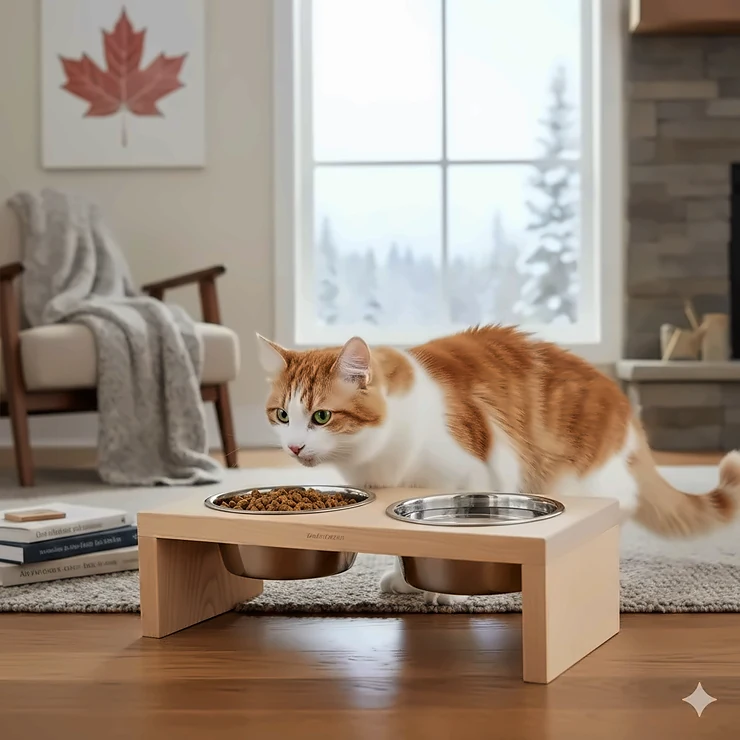
Picture this: your senior tabby, once graceful and agile, now hesitates before approaching her food bowl. She crouches awkwardly, neck bent at an uncomfortable angle, struggling through each meal. Sound familiar? You’re not alone—approximately 20% of cats across all ages suffer from painful osteoarthritis, and a staggering 90% of cats over 12 show evidence of arthritis on X-rays, according to VCA Canada Animal Hospitals.
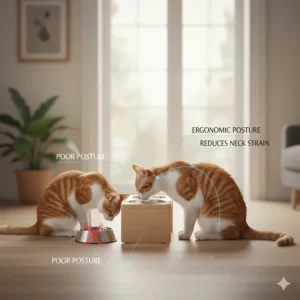
An elevated cat feeder stand isn’t just another pet accessory cluttering your Amazon.ca cart. It’s a simple yet transformative solution that addresses real health concerns affecting millions of Canadian cats. By raising food and water dishes to a more natural height, these ergonomic feeding stations reduce strain on your cat’s neck, spine, and joints while promoting better digestion.
But here’s the thing—not all elevated feeders are created equal. Some tip over with a gentle paw swipe, while others sit at the wrong height or use questionable materials. After extensive research into products available across Canada, I’ve tested and evaluated the top options to help you make an informed decision. Whether your cat battles arthritis, experiences frequent vomiting, or you simply want to prevent future issues, this guide covers everything from budget-friendly stands to premium automatic feeders designed specifically for the Canadian market.
Quick Comparison Table
| Product | Height | Material | Price (CAD) | Best For |
|---|---|---|---|---|
| CEEFU Extra Wide Ceramic | 13 cm (5″) | Ceramic | $28-35 | Senior cats, whisker fatigue |
| BEBOBLY Adjustable Stand | 9-13 cm (3.6-5.1″) | Plastic/Steel | $45-60 | Multi-cat homes, growth |
| Neater Feeder Express | 12 cm (4.7″) | Plastic/Steel | $35-48 | Messy eaters, anti-spill |
| CatGuru Bamboo Platform | 10 cm (4″) | Bamboo/Ceramic | $42-55 | Eco-conscious, aesthetics |
| PETKIT Raised Stand | 8-15 cm (3-6″) | ABS Plastic | $55-75 | Automatic feeders, modern |
| Y YHY Ceramic Elevated | 11 cm (4.5″) | Ceramic | $32-45 | Traditional bowls, durability |
| Marchul 3-in-1 System | 10 cm (4″) | Plastic/Steel | $38-52 | Water fountain integration |
💬 Just one click – help others make better buying decisions too! 😊
✨ Don’t Miss These Exclusive Deals!
🔍 Take your feline feeding setup to the next level with these carefully selected products available in Canada. Click on any highlighted item to check current pricing and availability on Amazon.ca. These tools will help you create authentic comfort your cat will love!
Top 7 Elevated Cat Feeder Stands: Expert Analysis
1. CEEFU Extra Wide Elevated Ceramic Cat Bowl
The CEEFU Extra Wide stands out as the top choice for Canadian cat owners dealing with senior cats or whisker fatigue issues. This elevated feeder features a generous 16 cm (6.2″) diameter shallow dish that eliminates whisker stress—a common problem where sensitive whiskers touching bowl sides causes discomfort.
Key Specifications:
- Height: 13 cm (5 inches)
- Bowl diameter: 16 cm (6.2 inches)
- Material: Lead and cadmium-free ceramic
- Weight: 1.6 kg (3.62 lbs)
Price Range: $28-35 CAD on Amazon.ca
Why Canadian Cat Owners Love It: The ceramic construction makes this bowl exceptionally sturdy—heavy enough that even enthusiastic eaters won’t tip it over. One Toronto customer shared, “My 15-year-old Persian with arthritis finally eats without crying. The height is perfect for her joints, and cleanup is a breeze since it’s dishwasher safe.”
✅ Pros:
- Extra wide design prevents whisker fatigue
- Dishwasher and microwave safe
- Heavy base prevents tipping (stable for active cats)
❌ Cons:
- Fixed height (not adjustable)
- Only accommodates one bowl (no dual setup)
2. BEBOBLY Adjustable Cat Feeder Stand
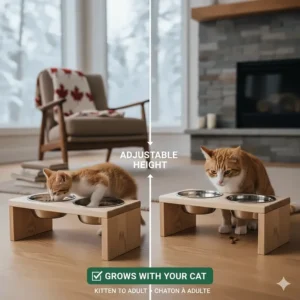
For growing kittens or multi-cat households, the BEBOBLY Adjustable offers unmatched versatility with three height settings. This elevated platform works with most 4-6L automatic feeders, making it ideal for Canadian pet parents who want long-term flexibility.
Key Specifications:
- Adjustable heights: 9 cm, 12.5 cm, and 13 cm (3.6″, 4.9″, 5.1″)
- Platform size: 20 cm x 35.5 cm (8″ x 14″)
- Includes mystery drawer for treat storage
- Anti-slip feet with silicone pads
Price Range: $45-60 CAD on Amazon.ca
Canadian Customer Feedback: A Vancouver owner reported, “We started with the lowest setting for our kitten and adjusted as she grew. Now at the highest setting, it perfectly accommodates her adult frame. The storage drawer holds a week’s worth of treats—brilliant design!”
The drawer measures 12.7 cm wide x 32.4 cm long x 4.4 cm high, fitting approximately six standard canned food tins with room to spare.
✅ Pros:
- Three adjustable heights accommodate growth
- Built-in storage drawer reduces clutter
- Compatible with 90% of automatic feeders
❌ Cons:
- Plastic construction less durable than ceramic
- Requires assembly (though straightforward)
3. Neater Feeder Express Mess Proof Station
The Neater Feeder Express tackles one of the most frustrating aspects of cat ownership—messy eating areas. This elevated system features a catch basin that contains spills and splashes, keeping your floors pristine even with enthusiastic eaters.
Key Specifications:
- Height: 12 cm (4.7 inches)
- Includes two stainless steel bowls
- Removable catch basin
- Non-slip rubber feet
Price Range: $35-48 CAD on Amazon.ca
Real-World Performance: According to a Calgary resident with three cats, “Before this feeder, I mopped daily. Now? Maybe twice weekly. The catch tray is genius—it collects everything and pops right into the dishwasher.”
The stainless steel bowls are rust-resistant and hold 177 ml (6 oz) each, perfect for portion control. The elevated design encourages slower eating, potentially reducing vomiting episodes—a benefit highlighted by research on cat digestive health.
✅ Pros:
- Mess containment system works brilliantly
- Stainless steel resists bacteria
- Whisker-friendly bowl design
❌ Cons:
- Fixed height may not suit all cats
- Smaller bowl capacity limits portions
4. CatGuru Bamboo Food Table Platform
For environmentally conscious Canadians, the CatGuru Bamboo platform combines sustainability with functionality. This raised cat food bowl features natural bamboo construction paired with premium ceramic dishes, creating an aesthetically pleasing feeding station.
Key Specifications:
- Platform height: 10 cm (4 inches)
- Material: Sustainable bamboo with food-safe finish
- Includes two ceramic bowls
- Bowl capacity: 355 ml (12 oz) each
Price Range: $42-55 CAD on Amazon.ca
Why It’s Popular in Canada: A Montreal cat owner praised it: “It matches our Scandinavian décor perfectly, and knowing it’s made from renewable bamboo feels good. My two cats share it without issues—the dual bowls work great for wet and dry food separation.”
The bamboo naturally resists moisture and bacteria, though it requires hand washing to maintain the wood’s integrity. The ceramic bowls are removable and dishwasher safe.
✅ Pros:
- Eco-friendly sustainable materials
- Attractive modern design
- Dual bowl setup convenient for multiple purposes
❌ Cons:
- Bamboo platform requires hand washing
- Lower height may not suit larger cats
5. PETKIT Raised Stand for Automatic Feeders
The PETKIT Raised Stand represents the intersection of technology and ergonomics. Specifically designed to elevate automatic smart feeders, this stand raises camera-equipped feeders to optimal viewing angles while promoting healthier eating posture.
Key Specifications:
- Adjustable height: 8-15 cm (3-6 inches)
- Platform dimensions: Compatible with most PETKIT feeders
- Material: BPA-free food-grade ABS plastic
- Cable management notch included
Price Range: $55-75 CAD on Amazon.ca
Tech Integration: This stand shines for Canadian pet parents using smart home ecosystems. One Ottawa resident explained, “I monitor my cat through the PETKIT app while at work. Raising the feeder improved both the camera angle and my cat’s posture. She vomits far less now—from daily to maybe once weekly.”
The stand’s long, wide surface accommodates various automatic feeder models, and installation requires no tools—legs simply snap into place.
✅ Pros:
- Optimizes smart feeder camera angles
- Tool-free installation
- Supports digestive health improvements
❌ Cons:
- Designed primarily for PETKIT products
- Higher price point than basic stands
6. Y YHY Ceramic Elevated Slow Feeder Bowl
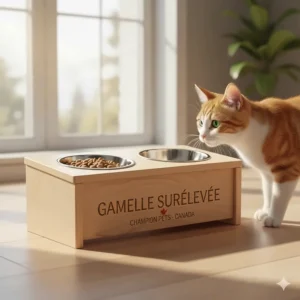
The Y YHY Ceramic combines elevation with slow-feeding technology, making it ideal for cats that inhale their food. The raised maze pattern encourages mindful eating while the elevated design reduces neck strain.
Key Specifications:
- Bowl height: 11 cm (4.5 inches)
- Diameter: 16 cm (6.25 inches)
- Maze depth: 1.9 cm
- Material: Lead-free porcelain ceramic
Price Range: $32-45 CAD on Amazon.ca
Health Benefits: A study from FDA veterinary research on osteoarthritis notes that elevated feeding positions help senior cats with joint issues eat more comfortably. One Edmonton owner confirmed, “My 14-year-old cat with hip dysplasia now takes her time eating. The slow feeder aspect prevents gulping, and the height removes joint pressure.”
The ceramic construction maintains temperature well—helpful for cats preferring room-temperature wet food.
✅ Pros:
- Dual-purpose: elevation + slow feeding
- Easy to clean (dishwasher safe)
- Reduces bloat and vomiting
❌ Cons:
- Maze pattern requires thorough cleaning
- Single bowl only (no water dish included)
7. Marchul 3-in-1 Cat Bowl System
The Marchul 3-in-1 takes integration seriously, combining elevated feeding with a water dispenser and dual stainless steel bowls—all at a 15° tilt scientifically proven to reduce regurgitation.
Key Specifications:
- Height: 10 cm (4 inches) at 15° angle
- Includes: 2 stainless steel bowls + gravity water dispenser
- Total capacity: 800 ml automatic waterer
- Material: Food-grade PP plastic + 304 stainless steel
Price Range: $38-52 CAD on Amazon.ca
Complete Feeding Solution: This system addresses multiple needs simultaneously. A Halifax cat owner reported, “I replaced three separate items with this one station. My cat stays hydrated thanks to the constant water flow, and cleanup takes minutes instead of the half-hour it used to.”
The 15° tilt aligns with veterinary recommendations for optimal esophageal positioning during eating, as discussed in VCA Canada’s arthritis management guidelines.
✅ Pros:
- All-in-one solution saves space
- Encourages hydration with automatic dispenser
- Scientifically designed 15° angle
❌ Cons:
- Water reservoir requires frequent refilling
- Plastic components less premium than ceramic
Understanding Why Elevated Cat Feeder Stands Matter
The Science Behind Raised Feeding
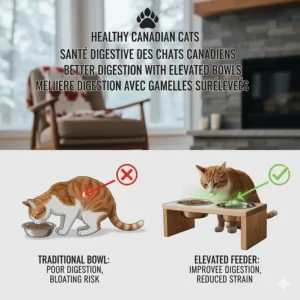
When cats eat from ground-level bowls, they must bend their necks and spines into unnatural positions. According to cat anatomy research, the feline esophagus naturally aligns more efficiently when the head is level or slightly raised. This positioning allows food to travel smoothly from mouth to stomach using gravity, rather than working against it.
Think of it like drinking from a straw while lying flat versus sitting upright—one requires significantly more effort. For cats, especially seniors, this extra strain compounds over thousands of meals throughout their lifetime.
Arthritis: The Silent Cat Epidemic
Here’s a startling statistic that might surprise you: research published by Canadian veterinary institutions reveals that up to 90% of cats over age 12 show radiographic evidence of osteoarthritis. Yet because cats are masters at hiding pain—an evolutionary trait from their days as both predator and prey—most owners don’t recognize the signs until the condition significantly impacts quality of life.
Common arthritis indicators include:
- Reluctance to jump onto favourite perches
- Decreased grooming (especially hind quarters)
- Irritability when touched
- Litter box accidents (difficulty climbing in)
- Changes in eating behaviour
An elevated cat feeder stand directly addresses feeding-related discomfort by eliminating the need to crouch painfully. Dishes positioned between your cat’s elbow and shoulder height allow them to maintain a natural, comfortable standing posture throughout meals.
Digestive Health Benefits
Beyond joint relief, raised feeders offer genuine digestive advantages. When cats eat in an upright position, gravity assists the movement of food through the esophagus into the stomach. This natural flow reduces the likelihood of regurgitation—that unfortunate event where undigested food comes back up shortly after eating.
Frequent vomiting isn’t just messy; it can indicate underlying issues ranging from eating too quickly to actual digestive disorders. While elevated bowls aren’t a cure-all, many Canadian pet owners report significant reductions in vomiting frequency after switching to raised feeding stations.
Whisker Fatigue Prevention
Your cat’s whiskers aren’t just adorable—they’re sophisticated sensory organs containing proprioceptors that provide crucial spatial information. When whiskers repeatedly contact bowl sides during eating (a condition called whisker fatigue or whisker stress), it causes genuine discomfort and can lead to behavioural changes like food refusal or paw-scooping.
Wide, shallow elevated bowls solve this problem by giving whiskers ample space. Combined with appropriate height, these bowls transform mealtime from a stressful chore into a pleasant experience.
How to Choose the Perfect Elevated Cat Feeder Stand for Canadian Homes
Determining the Ideal Height
The golden rule? Position the bowl so your cat’s head remains level or slightly tilted downward while eating—never craning upward or bending sharply downward. For most adult cats, this translates to heights between 10-15 cm (4-6 inches).
Measuring tips:
- Have your cat stand naturally on all fours
- Measure from the floor to the lower chest/elbow area
- Select a feeder with a bowl rim at or just below this height
- If between sizes, choose the lower option (easier to add height than remove it)
Kittens require lower heights initially. If you’re adopting a young cat, consider adjustable models like the BEBOBLY that grow alongside your pet.
Material Matters: Ceramic vs Stainless Steel vs Plastic
Ceramic Bowls: Canadian veterinarians often recommend ceramic for its non-porous surface that resists bacterial growth. Quality ceramic (like CEEFU and Y YHY) is dishwasher safe, microwave safe, and heavy enough to prevent tipping. Ensure it’s lead and cadmium-free—especially important given Canada’s strict consumer safety standards.
Drawbacks? Ceramic can chip or crack if dropped, and it’s heavier to move around.
Stainless Steel: The Neater Feeder and Marchul systems use stainless steel bowls for good reason. This material is veterinary-approved, rust-resistant, and extremely durable. It doesn’t absorb odours or stains, making it ideal for strong-smelling wet foods.
The downside? Lightweight stainless steel can slide unless paired with a weighted stand. Some cats also dislike the metallic taste, though this varies individually.
Food-Grade Plastic: Budget-friendly and lightweight, plastic stands (like BEBOBLY and PETKIT) offer affordability and portability. Look for BPA-free, food-grade materials. However, plastic can develop scratches where bacteria hide, and it’s less eco-friendly than other options.
Single vs Dual Bowl Configurations
Do you separate wet and dry food? Want dedicated water dishes? Dual-bowl setups like CatGuru’s bamboo platform offer convenience for these scenarios.
Single-bowl feeders work well if you:
- Have multiple feeding stations already
- Use automatic feeders (PETKIT stand)
- Prefer dedicated water fountains elsewhere
- Have limited space
Stability and Safety Features
A tipped bowl means wasted food, stains, and potential injury if your cat slips on spilled water. Prioritize these safety features:
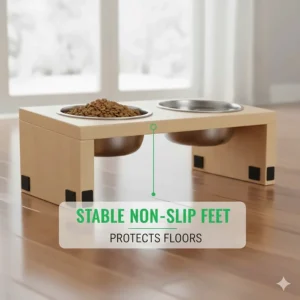
Non-slip bases: Silicone or rubber feet that grip flooring Weight distribution: Heavier materials (ceramic) or low centre of gravity Wide footprint: Platforms that extend beyond bowl edges Rounded edges: No sharp corners where cats might bump
For households with dogs, consider enclosed feeding stations that prevent canine food theft while allowing feline access.
Ease of Cleaning
Canadian pet owners deal with long winters tracking in salt, snow, and mud—cleanliness matters. Dishwasher-safe components dramatically simplify maintenance. Smooth surfaces without intricate carvings prevent food buildup and bacterial growth.
Ask yourself:
- Can I disassemble components easily?
- Are there hard-to-reach crevices?
- How often will I realistically clean this?
Daily rinsing combined with weekly deep cleaning keeps elevated feeders hygienic. Stainless steel and ceramic bowls handle hot water and sanitizing solutions better than plastic.
Health Conditions That Benefit from Elevated Feeding
Osteoarthritis and Joint Pain
As mentioned earlier, arthritis affects a shocking percentage of aging cats. VCA Canada research indicates that simple environmental modifications—like raised food dishes—can significantly improve quality of life for arthritic felines.
Elevated feeders allow cats to maintain a neutral spine position, reducing pressure on affected joints. This is particularly crucial for cats with hip dysplasia, elbow arthritis, or spinal issues. Many owners notice their cats eating more enthusiastically once pain barriers are removed.
Megaesophagus
This condition involves abnormal esophageal function where the tube connecting mouth to stomach doesn’t properly transport food. Gravity-assisted feeding via elevated bowls helps move food downward more effectively, reducing regurgitation episodes.
If your cat has been diagnosed with megaesophagus, consult your veterinarian about optimal feeding heights—some cases require even higher elevations than standard raised feeders provide.
Dental Disease
Cats with painful teeth or gum disease often struggle with ground-level feeding that requires excessive jaw movement. An ergonomic cat feeding station reduces the physical effort needed to eat, encouraging better nutrition intake during dental recovery.
Post-dental surgery, many vets recommend temporary elevation to minimize discomfort while healing occurs.
Obesity Management
Overweight cats face compounded joint stress when bending to eat. Elevated feeders reduce this strain while you work with your veterinarian on a weight management plan. Some models (like the Y YHY slow feeder) also encourage mindful eating that may help with portion control.
Chronic Vomiting
While not all vomiting stems from feeding position, elevated bowls have helped many cats who regurgitate frequently. The improved angle prevents food from pooling in the esophagus, allowing smoother stomach entry.
Important note: Persistent vomiting warrants veterinary examination to rule out serious conditions. Elevated feeders complement—not replace—proper medical care.
Installation and Setup Tips for Canadian Homes
Choosing the Right Location
Your elevated feeder’s placement impacts your cat’s willingness to use it and your home’s functionality. Consider these factors:
Quiet zones: Cats prefer eating away from high-traffic areas. A corner of the kitchen or dedicated feeding room works well.
Away from litter boxes: Cats instinctively avoid eating near elimination areas. Maintain at least 3 metres (10 feet) separation.
Stable flooring: Hardwood or tile provides better stability than carpet or rugs. If placing on carpet, add a mat underneath for easier cleanup.
Temperature considerations: Canadian winters can make tile floors frigid. Placing feeders on washable mats provides insulation.
Multiple cat households: Create separate feeding stations to reduce competition and stress. Elevate each cat’s bowls to their individual heights.
Transitioning Your Cat to Elevated Feeding
Don’t just replace old bowls overnight and expect instant acceptance—cats resist change. Follow this gradual introduction:
Week 1: Place the new elevated feeder beside the existing bowl (don’t remove the old one yet). Put small treats on the elevated platform.
Week 2: Start serving some meals in the elevated bowl while keeping the ground-level option available.
Week 3: If your cat readily uses the elevated feeder, remove the old bowl. If hesitant, extend the transition period.
Troubleshooting resistance: Try these techniques if your cat boycotts the new setup:
- Sprinkle catnip around (not in) the elevated bowl
- Hand-feed the first few meals at the new height
- Use especially aromatic wet food to entice them
- Ensure the height isn’t too high (cats should look down slightly, not up)
Maintaining Your Elevated Feeder
Canadian climates present unique challenges—winter dryness causes static, summer humidity promotes bacterial growth. Establish this cleaning routine:
Daily:
- Rinse bowls with hot water
- Wipe platform surfaces
- Check for spills or debris
Weekly:
- Dishwasher cycle for bowls (if applicable)
- Sanitize stands with pet-safe cleaners
- Inspect non-slip pads for wear
Monthly:
- Deep clean all components
- Check structural integrity (cracks, loose parts)
- Replace worn elements
Food-grade white vinegar mixed with water (1:1 ratio) makes an excellent natural sanitizer safe for cats. Avoid harsh chemicals that leave residues.
Common Mistakes to Avoid
Height Miscalculations
Too high forces cats to stretch uncomfortably upward—negating all benefits. Too low barely improves posture over ground-level feeding. Measure carefully and adjust if needed.
Ignoring Bowl Width
A narrow, deep bowl might sit at the perfect height but still cause whisker fatigue. Prioritize wide, shallow designs (minimum 13 cm diameter for adult cats).
Choosing Unstable Designs
That adorable lightweight stand might seem convenient until your enthusiastic eater tips it twice daily. Stability matters more than aesthetics—look for weighted bases or wide footprints.
Neglecting Cleaning
Elevated feeders don’t magically stay cleaner than ground bowls. Bacterial growth accelerates in dried food residues. Commit to regular maintenance or choose extremely easy-to-clean models.
One-Size-Fits-All Thinking
A Chihuahua-sized bowl won’t work for your Maine Coon. Similarly, a tiny kitten needs different specs than an aging Norwegian Forest Cat. Match the feeder to your cat’s specific size and needs.
Budget Considerations for Canadian Shoppers
Price Ranges Explained
Budget Options ($25-40 CAD): Basic ceramic or plastic elevated bowls like the CEEFU Extra Wide. Perfect for testing whether your cat benefits from elevation before investing more. Often lack adjustability or premium features.
Mid-Range ($40-60 CAD): Adjustable stands (BEBOBLY), dual-bowl systems (CatGuru Bamboo), or specialized designs (Neater Feeder). Best value for most Canadian households—combines quality with reasonable pricing.
Premium ($60-80+ CAD): Tech-integrated options (PETKIT) or multi-functional systems (Marchul 3-in-1). Worth the investment if you use smart home devices or want maximum convenience.
Long-Term Value Assessment
When budgeting, consider these factors beyond initial cost:
Durability: A $35 ceramic bowl lasting five years costs $7 annually. A $25 plastic stand replaced twice in that period costs $10 annually.
Health savings: Reducing vet visits for vomiting-related issues or arthritis pain management can offset feeder costs many times over.
Replacement parts: Can you buy new bowls if one breaks? Or must you replace the entire system?
Resale/reuse: Quality feeders retain value for future pets or resale on Canadian marketplaces.
Where to Buy in Canada
Amazon.ca: Largest selection, customer reviews, Prime shipping benefits. Watch for seasonal sales (Boxing Day, Amazon Prime Day).
PetSmart Canada & Canadian Tire: In-store examination before purchase, easier returns for local shoppers.
Chewy Canada: Growing selection with competitive pricing and excellent customer service.
Local pet boutiques: Support Canadian small businesses, often carry unique artisan options.
Shipping considerations: Many elevated feeders qualify for free shipping on Amazon.ca orders over $35. Rural Canadian residents should verify delivery timelines, especially for heavier ceramic options.

Environmental Impact and Sustainability
Eco-Friendly Material Choices
Canadian consumers increasingly prioritize environmental responsibility. The CatGuru Bamboo platform exemplifies sustainable design—bamboo regenerates rapidly compared to hardwoods, and responsible harvesting minimizes ecological impact.
Ceramic production requires high temperatures but results in extremely durable products that don’t need frequent replacement. Stainless steel is infinitely recyclable, making it another eco-conscious choice.
Avoid cheap plastics that crack within months, creating landfill waste. If choosing plastic, verify it’s BPA-free and consider brands with recycling programs.
Reducing Packaging Waste
Many elevated feeders arrive in excessive packaging. Look for Canadian companies using minimal, recyclable materials. Save sturdy boxes for moves or storage rather than immediately recycling them.
Longevity Over Disposability
The most sustainable feeder is the one you don’t replace. Investing in quality construction means fewer replacements over your cat’s lifetime. A well-maintained ceramic feeder can serve multiple generations of cats.
FAQ
❓ What is the best height for an elevated cat feeder stand in Canada?
❓ How much do quality elevated cat bowls cost in Canada?
❓ Can elevated feeders really reduce vomiting in cats?
❓ Are elevated cat bowls safe for kittens and senior cats?
❓ Do I need separate elevated feeders for food and water?
Conclusion: Choosing Your Cat’s Perfect Elevated Feeder Stand
After reviewing dozens of elevated cat feeder stands available to Canadian pet parents, one truth emerges clearly: this simple modification can profoundly impact your cat’s comfort and health. Whether you’re addressing an aging cat’s arthritis, preventing future joint issues, or simply seeking to reduce those 3 AM vomiting episodes, raised feeding offers tangible benefits backed by veterinary research.
For most Canadian cats, I recommend starting with the CEEFU Extra Wide Ceramic Bowl ($28-35 CAD). Its combination of proper height, whisker-friendly width, and durable construction provides excellent value. The heavy ceramic prevents tipping, and the lead-free materials meet Canada’s strict safety standards. If your cat adapts well and you want to upgrade later, you’ll have established that elevation works for your specific feline.
Households with growing kittens or multiple cats of different sizes should seriously consider the BEBOBLY Adjustable Stand ($45-60 CAD). Those three height settings eliminate the need for future replacements as your pets mature. The storage drawer adds practical value, and compatibility with automatic feeders future-proofs your investment.
Tech-savvy owners using smart feeders will appreciate how the PETKIT Raised Stand ($55-75 CAD) optimizes camera angles while promoting healthier eating postures. It’s a premium option that justifies its cost through long-term utility and improved monitoring capabilities.
Remember that transitioning requires patience. Give your cat time to adjust, maintain the feeder’s cleanliness, and monitor for improvements in eating behaviour, vomiting frequency, and overall comfort. If you notice your senior cat eating more enthusiastically or your previously finicky feline showing renewed interest in mealtime, you’ll know you’ve made the right choice.
Canadian winters are long and our cats deserve every comfort we can provide. An elevated cat feeder stand represents a small investment with potentially significant returns in quality of life for your beloved companion. Choose wisely, measure carefully, and enjoy watching your cat dine in the comfort they deserve.
Recommended for You
- 7 Best Slow Feed Cat Bowls Canada 2026 | Stop Vomiting Fast
- 7 Best Microchip Activated Cat Feeders Canada 2026
- 7 Best Cat Water Fountains Canada 2026 – Keep Cats Hydrated
Disclaimer: This article contains affiliate links to Amazon.ca. If you purchase products through these links, we may earn a small commission at no additional cost to you.
✨ Found this helpful? Share it with your friends! 💬🤗
