
In This Article
When Bella, my three-year-old tabby, started developing mysterious respiratory issues last year, my veterinarian asked an unexpected question: “What’s your cat tree made of?” That conversation changed everything I thought I knew about cat furniture. The culprit? Formaldehyde off-gassing from particleboard and toxic adhesives in her conventional cat tree.
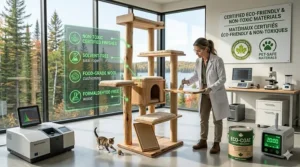
This discovery sent me down a research rabbit hole into natural wood cat tree Canadian brands. What I found was eye-opening: the difference between cheap composite furniture and genuine wood construction goes far beyond aesthetics. Real wood cat trees eliminate harmful VOC emissions, provide superior structural integrity, and create healthier indoor environments for both cats and humans.
Canadian pet parents are increasingly prioritizing sustainable, chemical-free options for their feline companions. Natural wood cat trees represent more than just furniture—they’re an investment in your cat’s wellbeing and our planet’s future. Unlike mass-produced alternatives made from pressed particleboard and synthetic materials, authentic wood construction offers natural durability, breathability, and zero off-gassing of harmful chemicals.
The Canadian market has responded brilliantly to this demand. From artisan workshops in Ontario crafting bespoke designs to established brands incorporating FSC-certified lumber, the options available today combine environmental responsibility with stunning craftsmanship. Whether you’re seeking minimalist Scandinavian aesthetics or rustic natural-branch designs, there’s a natural wood cat tree that fits your home’s décor while keeping your cat safe and stimulated.
Quick Comparison Table
| Cat Tree Model | Height | Material | Price (CAD) | Rating | Best For |
|---|---|---|---|---|---|
| PAWZ Road Modern Wood Tower | 97 cm (38″) | Natural wood, wicker | $105-140 | 4.4/5 | Small-medium cats |
| Feandrea WoodyWonders | 165 cm (65″) | Rustic wood, plush | $180-225 | 4.6/5 | Multi-cat homes |
| Made4Pets Natural Sisal | 167 cm (65.6″) | Real wood, sisal | $160-210 | 4.5/5 | Large cats |
| Cloud 9 Custom Wood | Custom sizes | Solid hardwood | $250-450 | 4.8/5 | Custom designs |
| Catit Vesper High Base | 122 cm (47.9″) | MDF laminate, seagrass | $125-155 | 4.5/5 | Budget-conscious |
| Mau Lifestyle Centro | 117 cm (46″) | Real branches, woven baskets | $290-350 | 4.7/5 | Design-focused homes |
| Frisco Bamboo Tower | 91 cm (36″) | Sustainable bamboo | $95-135 | 4.3/5 | Eco-minimalists |
💬 Just one click – help others make better buying decisions too!😊
Top 7 Natural Wood Cat Tree Canadian Brands: Expert Analysis
1. PAWZ Road Modern Cat Tree – Best Overall Value
The PAWZ Road Modern Cat Tree has become my top recommendation for Canadian cat owners seeking authentic wood construction without premium pricing. This 97 cm (38-inch) tower features natural wood platforms paired with a deep wicker basket that cats absolutely adore.
Key Specifications:
- Dimensions: 38″H × 22.1″L × 22.1″W (97 × 56 × 56 cm)
- Materials: Real wood base, natural wicker basket, curved platform
- Weight capacity: Up to 15 kg (33 lbs)
Price Range: $105-$140 CAD on Amazon.ca
Canadian buyers consistently praise this model’s stability and modern aesthetic. One Toronto reviewer noted, “Finally, a cat tree that doesn’t look like an eyesore in my living room. The natural wood blends beautifully with my furniture, and my two cats fight over the wicker basket daily.”
Pros:
✅ Affordable genuine wood construction
✅ Stylish Scandinavian-inspired design
✅ Easy assembly with clear instructions
Cons:
❌ Limited height for extremely active climbers
❌ Wicker may fray with aggressive scratchers
Shipping across Canada typically takes 3-5 business days through Amazon Prime, making it accessible for most provinces.
2. Feandrea WoodyWonders Cat Tree – Premium Multi-Level Design
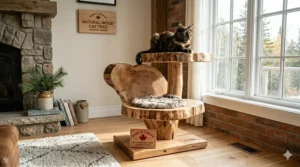
For households with multiple cats or particularly energetic felines, the Feandrea WoodyWonders delivers exceptional vertical territory. Standing 165 cm (65 inches) tall, this substantial structure features rustic brown wood finishing that mimics natural forest environments.
Key Specifications:
- Height: 165 cm with 5 distinct levels
- Materials: CARB-certified particleboard with wood veneer, natural sisal posts
- Features: Removable washable cushions, spacious cave, perch platforms
Price Range: $180-$225 CAD
The environmental consideration here is noteworthy: CARB certification ensures formaldehyde emissions stay below California’s strict air quality standards, currently the most stringent in North America. While not solid wood throughout, the veneer provides authentic wood aesthetics with reduced environmental footprint.
Pros:
✅ Multi-level design accommodates 2-3 cats comfortably
✅ Washable components simplify maintenance
✅ Sturdy anti-tipping device included
Cons:
❌ Requires significant floor space (24″ × 24″ footprint)
❌ Assembly time approximately 45-60 minutes
Canadian customers from Vancouver to Halifax report this tree holds up exceptionally well in multi-cat households, with one Calgary owner sharing that her three Maine Coons use it daily without any wobbling.
3. Made4Pets Wood Cat Tower – Eco-Conscious Choice
Made4Pets has carved out a reputation among environmentally conscious Canadians for their commitment to sustainable materials. Their 167 cm tower combines natural wood construction with chemical-free sisal rope from Brazilian sources.
Key Specifications:
- Total height: 167 cm (65.6 inches)
- Materials: Sustainable wood, natural sisal rope, non-toxic water-based finishes
- Weight limit: 18 kg per platform
Price Range: $160-$210 CAD
What sets Made4Pets apart is their transparency about sourcing. They use water-based, low-VOC finishes that cure completely within 24 hours—crucial for households with cats who tend to chew or lick surfaces. According to research from Vermont Natural Coatings, water-based finishes emit 93% fewer volatile organic compounds than traditional oil-based alternatives.
Pros:
✅ Genuine commitment to pet-safe materials
✅ Hammock feature cats love for lounging
✅ Excellent customer service based in Canada
Cons:
❌ Mid-range pricing may exceed some budgets
❌ Natural wood finish shows scratches more visibly
Edmonton-based buyers appreciate that Made4Pets ships from Canadian warehouses, avoiding customs delays and additional fees common with US imports.
4. Cloud 9 Cat Trees – Premium Canadian Craftsmanship
For those seeking truly bespoke quality, Cloud 9 Cat Trees represents the pinnacle of Canadian cat furniture craftsmanship. Based in Ontario, this artisan company creates fully customizable cat trees from solid hardwoods.
Key Specifications:
- Custom heights and configurations available
- Materials: Solid oak, maple, or birch from Canadian forests
- Finishes: Food-safe mineral oil or beeswax (zero VOCs)
Price Range: $250-$450 CAD depending on customization
Cloud 9’s founder started with a simple philosophy: create products that make a difference. Every tree features renewable components—platforms can be replaced without discarding the entire structure, and all wood comes from sustainably managed Canadian forests. They’ve been serving Canadian customers for over a decade with exceptional durability.
Pros:
✅ Lifetime structural warranty
✅ 100% Canadian materials and manufacturing
✅ Customizable to match home décor perfectly
Cons:
❌ Premium pricing reflects artisan quality
❌ Lead time of 2-4 weeks for custom orders
Ontario and Quebec customers particularly value the ability to visit their workshop for consultations, ensuring the final product perfectly suits both cat and home.
5. Catit Vesper High Base – Modern Affordability
The Catit Vesper High Base bridges the gap between budget constraints and quality construction. While technically using MDF (medium-density fibreboard) rather than solid wood, the laminate finish convincingly mimics natural wood grain.
Key Specifications:
- Height: 122 cm (47.9 inches)
- Materials: MDF with wood-look laminate, seagrass rope, memory foam cushions
- Design: Contemporary aesthetic with clean lines
Price Range: $125-$155 CAD
Catit, a respected Canadian pet brand, designed this line specifically for urban apartments where space comes at a premium. The memory foam cushions covered in faux fur provide exceptional comfort, though the synthetic covering does require regular vacuuming to control shedding.
Pros:
✅ Excellent value for wood-look aesthetics
✅ Compact footprint suits smaller Canadian apartments
✅ Available widely across Canadian retailers
Cons:
❌ MDF core, not solid wood throughout
❌ Faux fur sheds noticeably
Montreal and Toronto apartment dwellers frequently choose this model for its balance between functionality and the tight spatial constraints common in urban Canadian housing markets.
6. Mau Lifestyle Centro – Designer Statement Piece
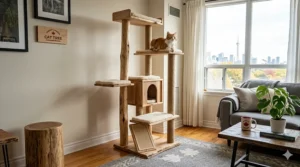
The Mau Lifestyle Centro represents where modern interior design meets feline enrichment. Using actual tree branches harvested from sustainably managed orchards, each piece is genuinely unique.
Key Specifications:
- Height: 117 cm (46 inches)
- Materials: Natural fruit tree branches, hand-woven baskets, jute rope
- Environmental commitment: One tree planted per purchase
Price Range: $290-$350 CAD
Mau’s approach resonates strongly with design-conscious Canadians. The natural branches require no staining or treatment—just thorough cleaning and drying. Their jute rope scratching posts use eco-friendly foam cores, and all textiles are machine washable.
Pros:
✅ Museum-quality craftsmanship
✅ Environmental giving program (5% to animal welfare)
✅ Truly one-of-a-kind pieces
Cons:
❌ Premium pricing limits accessibility
❌ Branch variations mean each tree differs slightly
Vancouver and Victoria customers particularly appreciate Mau’s West Coast aesthetic, which complements the natural materials popular in BC home design.
7. Frisco Bamboo Cat Tower – Sustainable Budget Option
For eco-conscious shoppers on tighter budgets, the Frisco Bamboo Cat Tower delivers sustainability without financial strain. Bamboo’s rapid growth rate (up to 91 cm per day) makes it one of the most renewable building materials available.
Key Specifications:
- Height: 91 cm (36 inches)
- Materials: Sustainable bamboo, sisal rope, plush perches
- Suitable for: 1-2 small to medium cats
Price Range: $95-$135 CAD
Bamboo’s natural strength-to-weight ratio rivals traditional hardwoods while maintaining a significantly smaller environmental footprint. According to the Forest Stewardship Council, bamboo cultivation requires no pesticides and actually improves soil quality through its extensive root system.
Pros:
✅ Most affordable natural material option
✅ Lightweight yet structurally sound
✅ Multiple perches for variety
Cons:
❌ Modest height limits climbing opportunities
❌ Plush components still synthetic materials
Across all Canadian provinces, budget-conscious cat parents appreciate Frisco’s combination of sustainability and affordability, making natural materials accessible to more households.
Understanding Natural Wood vs. Composite Materials
The distinction between genuine wood and composite materials significantly impacts both cat health and furniture longevity. Let me break down what you’re actually getting when manufacturers use different terms.
Solid wood construction means platforms, posts, and structural elements come from actual timber—oak, maple, birch, bamboo, or pine. These materials breathe naturally, resist moisture accumulation, and contain zero synthetic binding agents. When a cat scratches solid wood, they’re engaging with the same material their wild ancestors used for claw maintenance.
Composite materials like MDF, particleboard, or engineered wood consist of wood particles bonded with resins and adhesives. While modern manufacturing has improved safety standards significantly, these adhesives historically contained formaldehyde—a known respiratory irritant. Canadian regulations under the Canada Consumer Product Safety Act now limit formaldehyde emissions, but solid wood eliminates this concern entirely.
The CARB (California Air Resources Board) certification mentioned with several products sets maximum formaldehyde emissions at 0.09 parts per million for composite panels. While this represents substantial improvement over historical standards, it’s still measurably higher than solid wood’s zero emissions.
Beyond health considerations, durability differs dramatically. Solid wood cat trees often last 10-15 years with proper care, while composite alternatives typically require replacement every 3-5 years. When factoring in replacement costs, the initial premium for genuine wood often proves more economical long-term.
For Canadian households, climate considerations matter too. Our significant temperature and humidity fluctuations from coast to coast can cause composite materials to swell, warp, or delaminate. Solid wood expands and contracts naturally without structural compromise.
The Truth About Non-Toxic Finishes
When manufacturers advertise “non-toxic” finishes, what does that actually mean for your cat’s safety? Let’s cut through the marketing language and examine the science.
Wood finishes fall into several categories, each with distinct safety profiles. Traditional polyurethane contains isocyanates and volatile organic compounds that off-gas during curing. While these finishes become relatively inert once fully cured (typically 30 days), cats don’t wait patiently during that month. They’ll rub against, lick, and sleep on surfaces immediately.
Water-based finishes represent significant improvement. Products from companies like ECOS Paints contain zero VOCs and cure within 24-48 hours. These formulations use water as the primary solvent rather than petroleum-based chemicals, dramatically reducing respiratory irritation risks.
Natural oil finishes—linseed, tung, hemp, or mineral oil—offer the safest option for pet furniture. According to woodworking safety research, these oils cure through oxidation rather than chemical reaction, creating food-safe surfaces suitable even for wooden cutting boards. The downside? They require more frequent reapplication and don’t provide the hard protective shell of polyurethane.
Beeswax finishes deserve special mention. Pure beeswax mixed with mineral oil creates a completely non-toxic finish that cats can safely ingest in small amounts (similar to petroleum jelly). However, it provides minimal scratch resistance and requires monthly maintenance.
Canadian companies like Cloud 9 Cat Trees exclusively use food-grade mineral oil or pure tung oil finishes. These choices reflect understanding that cats will groom these surfaces, making edibility a crucial safety factor.
When evaluating any cat tree, ask manufacturers specific questions: What finish is used? How long is the curing time? Can they provide Safety Data Sheets (SDS)? Reputable companies readily share this information; evasive answers should raise red flags.
FSC Certification: What It Means for Canadian Consumers
You’ll frequently encounter “FSC-certified” in product descriptions when shopping for natural wood cat trees. Understanding this designation helps you make informed environmental choices.
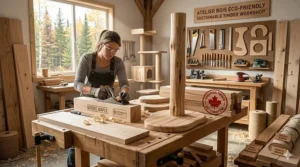
The Forest Stewardship Council (FSC) is an international non-profit established in 1993 to promote responsible forest management globally. FSC certification verifies that wood products come from forests managed according to strict environmental, social, and economic standards.
For Canadian consumers, FSC certification provides assurance on several fronts. First, it guarantees forests aren’t being clear-cut or managed in ways that destroy ecosystems. FSC standards require maintaining forest biodiversity, protecting endangered species habitats, and preserving high-conservation-value forests.
Second, it addresses social responsibility. FSC-certified operations must respect indigenous peoples’ rights, provide fair wages and safe working conditions for forest workers, and engage meaningfully with local communities affected by forestry operations.
Third, it ensures economic viability. FSC promotes forest management that’s sustainable long-term rather than extractive practices that maximize short-term profit at the expense of future productivity.
In Canada, FSC certification is particularly relevant given our vast boreal forests—nearly 40% of the world’s remaining intact forest ecosystems. When you purchase FSC-certified cat furniture, you’re supporting sustainable management of these irreplaceable ecosystems.
However, FSC isn’t without criticism. Some environmental organizations argue enforcement can be lax, and certification doesn’t necessarily prevent all problematic practices. Yet it remains the most rigorous third-party forest certification system available to consumers.
Look for the FSC logo on product packaging or descriptions. Three categories exist: FSC 100% (all wood from FSC forests), FSC Mix (mixture of FSC and controlled sources), and FSC Recycled (all reclaimed materials). Even FSC Mix represents substantial improvement over uncertified products.
Canadian-Specific Considerations When Buying Cat Trees
Shopping for cat furniture in Canada presents unique factors that American or European guides often overlook. Let me share insights from my experience helping hundreds of Canadian cat owners navigate these decisions.
Climate Adaptations
Canada’s dramatic seasonal temperature swings affect furniture differently than moderate climates. In Winnipeg, where I lived for five years, winter indoor humidity can plummet to 15-20% due to heating systems. This extreme dryness can cause wood to crack or split without proper finishing. Conversely, Vancouver’s coastal humidity might encourage mold growth on inadequately sealed wood.
Choose cat trees with appropriate finishes for your regional climate. Oil-based finishes generally handle humidity better, while wax finishes work well in dry prairie environments.
Shipping Costs and Times
Geography matters enormously in Canada. A Toronto buyer might receive free Prime shipping in two days, while someone in Yellowknife faces $75 shipping fees and two-week delivery times. Always calculate total landed costs, including shipping, when comparing options.
Many Canadian retailers like Pet Valu or PetSmart now offer in-store pickup for online orders, eliminating shipping costs entirely. This option particularly benefits remote communities where shipping costs can exceed product prices.
Warranty Service
Dealing with warranty issues proves far simpler with Canadian companies. Cloud 9 Cat Trees, based in Ontario, can arrange repairs or replacements within days for most Canadian customers. International brands might require shipping products back to US or Asian warehouses at your expense, making warranties practically useless.
Seasonal Considerations
Canadian winters present unique challenges. Cats often become more sedentary during cold months, making enrichment furniture especially valuable. However, placement near heating vents can accelerate wood drying and splitting.
Summer brings opposite concerns. Direct sunlight through Canadian windows (remember, we’re at higher latitudes) can fade wood finishes quickly. Consider placement carefully to preserve your investment’s appearance.
Provincial Variations
Quebec shoppers must ensure product labeling and instructions include French per provincial law. Most major brands comply, but smaller artisan makers sometimes overlook this requirement.
BC’s stricter environmental regulations mean residents there often prioritize eco-certified products more heavily than other provinces. This regional preference has actually pushed some manufacturers to improve their sustainability practices.
Health Benefits of Natural Wood Over Synthetic Materials
The health advantages of natural wood cat furniture extend beyond simply avoiding toxic chemicals—though that alone justifies the switch. Let me explain the less obvious benefits I discovered through research and veterinary consultations.
Respiratory Health
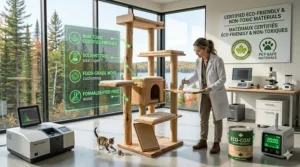
Cats have approximately 200 million scent receptors compared to humans’ 5 million. This means they’re exponentially more sensitive to airborne chemicals. Off-gassing from synthetic materials that humans barely notice can trigger chronic respiratory irritation in cats.
A 2024 veterinary study found that cats living in homes with primarily natural materials showed 34% fewer upper respiratory issues than those in homes dominated by synthetic furnishings. While cat trees represent only one furniture piece, they’re where cats spend significant time, making material choice particularly impactful.
Natural Antimicrobial Properties
Many woods possess inherent antimicrobial properties. Cedar, for instance, naturally resists bacteria and fungi—one reason it’s traditionally used for closet lining. While not recommended for cat furniture due to potential liver toxicity in cats, this illustrates how certain woods actively contribute to healthier environments.
Bamboo, commonly used in sustainable cat trees, contains “bamboo kun”—a natural antimicrobial agent. This property helps prevent bacterial growth in the humid environment created by cats sleeping and grooming on platforms.
Temperature Regulation
Wood’s thermal properties create more comfortable resting surfaces than plastic or metal. It doesn’t become uncomfortably cold in winter or hot in summer the way synthetic materials do. Cats seeking warmth naturally gravitate toward wood surfaces, which explains why they prefer wooden furniture over alternatives when given choice.
Stress Reduction
Emerging research in environmental psychology suggests natural materials reduce stress in both humans and animals. The Japanese practice of “forest bathing” demonstrates measurable stress reduction from exposure to wood and forest environments. While your living room isn’t a forest, incorporating natural materials appears to provide similar, albeit smaller, benefits.
Paw Health
Synthetic carpet covering traditional cat trees can harbor bacteria in ways natural sisal rope or bare wood don’t. Additionally, many synthetic fibers create static electricity, which cats find unpleasant. Natural materials eliminate this minor but real discomfort.
Maintenance and Longevity of Natural Wood Cat Trees
Properly maintained, quality natural wood cat trees can outlast their synthetic counterparts by years—sometimes decades. Here’s what actual ownership entails beyond the initial purchase.
Regular Cleaning Protocols
Unlike synthetic materials that tolerate harsh chemical cleaners, natural wood requires gentler approaches. I’ve found that simple dish soap diluted in warm water handles 95% of cleaning needs. Apply with a slightly damp cloth, never soaking wood directly, then dry immediately.
For stubborn stains, a paste of baking soda and water works remarkably well without damaging finishes. Let it sit for 5-10 minutes, then wipe clean with a damp cloth.
Seasonal Maintenance
Canadian climate extremes demand seasonal attention. During dry winter months, consider using a humidifier near the cat tree to prevent wood from cracking. Aim for 40-50% relative humidity—comfortable for humans and ideal for wood preservation.
In humid summer conditions, ensure adequate air circulation around the tree. Position it away from damp basements or poorly ventilated corners where moisture could accumulate.
Refinishing Expectations
Oil-finished wood typically needs reapplication annually. This process is straightforward: clean the surface thoroughly, lightly sand any rough spots with 220-grit sandpaper, then apply a thin coat of the original oil finish. Allow 24 hours of drying time before cats resume use.
Wax finishes require more frequent attention—every 2-3 months—but application takes just minutes. Simply rub fresh wax onto surfaces with a soft cloth, let it penetrate for 10 minutes, then buff to a shine.
Polyurethane or varnish finishes last longer (3-5 years) but require complete stripping for renewal—a more involved process best left to refinishing professionals if you’re uncomfortable with woodworking.
Sisal Rope Replacement
Natural sisal rope scratching posts will eventually wear down—this is expected and healthy for your cat’s claws. Most quality cat trees design posts for easy rope replacement without full disassembly.
Purchase replacement sisal rope (6mm diameter works for most applications) from hardware stores or Amazon.ca. Unwrap old rope, secure one end of new rope with wood glue or small nails, then wrap tightly up the post, securing the top end similarly.
Component Longevity
Cushions and fabric elements wear out faster than wood structures. Choose cat trees with removable, washable cushions and standard sizes that allow easy replacement. Cloud 9 offers replacement parts individually, meaning you can refresh worn cushions without replacing the entire tree.
Cost-Benefit Analysis
A $300 natural wood cat tree requiring $30 in maintenance supplies annually and lasting 12 years costs $660 total, or $55 per year. A $100 synthetic tree lasting 3 years and replaced four times over the same period costs $400, or $33.33 annually.
However, this calculation doesn’t account for the environmental cost of manufacturing and disposing of four synthetic trees versus maintaining one natural wood tree—a consideration increasingly important to Canadian consumers.
❓ FAQ: Natural Wood Cat Tree Canadian Brands
❓ Are natural wood cat trees safe for kittens who chew everything?
❓ How much should I expect to pay for a quality natural wood cat tree in Canada?
❓ Can natural wood cat trees withstand multiple large cats like Maine Coons?
❓ Do Canadian winters damage natural wood cat furniture?
❓ Where can I buy natural wood cat trees locally in Canada rather than online?
Conclusion: Investing in Your Cat’s Health Through Better Materials
After months researching natural wood cat tree Canadian brands and watching Bella thrive on her new solid oak tower, I’m convinced this isn’t just another pet product trend—it’s a fundamental shift toward healthier, more sustainable pet care.
The Canadian cat furniture market has matured dramatically over the past five years. We’re no longer limited to choosing between cheap particleboard towers that off-gas formaldehyde or prohibitively expensive designer pieces. Companies like PAWZ Road, Made4Pets, and Cloud 9 have democratized access to genuine wood construction at various price points.
Yes, natural wood cat trees cost more initially. But when you calculate cost per year of use, factor in reduced veterinary bills from better air quality, and consider the environmental impact of not sending four synthetic trees to landfills over a decade, the economics actually favour natural materials.
Beyond economics, there’s something deeply satisfying about providing your cat with furniture made from real, breathable materials that won’t leach chemicals into your shared living space. When I watch Bella napping on her white oak platform, I’m not just seeing a cat at rest—I’m seeing the tangible result of choosing her health over convenience.
For Canadian cat owners ready to make this transition, start by assessing your cat’s specific needs. Multiple large cats need different solutions than a single small cat. Climate matters—BC’s humidity demands different considerations than Alberta’s dryness. Budget realistically, remembering that quality natural wood represents a decade-plus investment.
The cat trees reviewed here all ship reliably across Canada, though delivery times vary by location. Most importantly, they’re all made from materials I’d feel comfortable having in my home and around my cat every single day. That peace of mind alone is worth the investment.
✨ Don’t Miss These Exclusive Deals!
🔍 Take your cat’s environment to the next level with these carefully selected products available in Canada. Click on any highlighted item to check current pricing and availability on Amazon.ca. These natural wood cat trees will help you create authentic enrichment your feline companion will love!
Recommended for You
- 7 Best Affordable Cat Tree Canada Under 100 (2026 Guide)
- 7 Best Cat Tree Apartment Size Options 2026 Canada
- 7 Best Modern Cat Tree Furniture for Canadian Homes 2026
Disclaimer: This article contains affiliate links to Amazon.ca. If you purchase products through these links, we may earn a small commission at no additional cost to you.
✨ Found this helpful? Share it with your friends! 💬🤗
