
In This Article
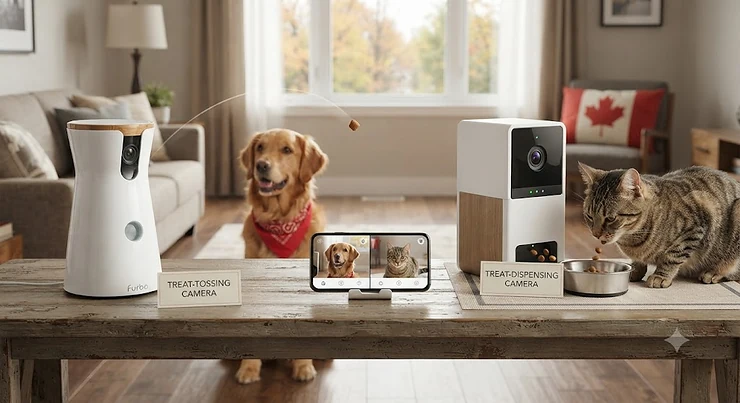
Somewhere between “watch my dog nap” and “actually reward good behaviour from my desk,” pet owners run into a genuinely confusing fork in the road: treat tossing camera vs treat dispensing camera. They sound like the same gadget wearing two different hats, and honestly, a lot of marketing copy treats them that way. They aren’t. A treat tossing camera physically launches a treat across the room the instant you tap a button, mimicking a spontaneous reward the way a trainer would toss a piece of kibble mid-session. A treat dispensing camera, by contrast, usually drops or releases a portion into a bowl or tray on a schedule, closer in spirit to a smart feeder that happens to have a lens attached.
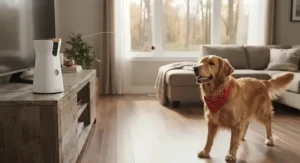
That distinction matters more than it looks like on a spec sheet. If your dog paces near the door at 3 p.m. and you want to catch that exact moment with an actual reward, a launcher is the tool built for it. If your cat needs a consistent, portion-controlled 7 a.m. meal whether you’re awake or not, a scheduled dispenser is doing an entirely different job, and asking a launcher-style camera to do it usually ends in frustration and a jammed hopper.
We looked at seven real, currently available products sold to Canadian shoppers — five built around a mechanical toss, two built around portion-controlled dispensing — using manufacturer specifications and aggregated customer feedback rather than rewritten marketing copy. Along the way, we’ll get specific about mechanical toss distance, why treat jam issues happen more with some mechanisms than others, and where a treat dispensing camera vs automatic feeder distinction actually splits into two different product categories entirely. No exact prices here, per Amazon’s own policies — just honest Canadian-dollar ranges so you know roughly what you’re signing up for before you compare listings.
What Is a Treat Tossing Camera vs a Treat Dispensing Camera?
A treat tossing camera is a Wi-Fi pet camera with a spring-loaded or motorized launcher that physically flings a treat toward your pet on command, from anywhere with an app connection. A treat dispensing camera is a Wi-Fi camera paired with a portion-controlled hopper that releases treats or meals into a tray, either on a schedule or on demand, without launching them anywhere.
Both categories overlap enough in marketing that “treat dispensing pet camera” has become something of a catch-all term, even when the product underneath is really a launcher. Understanding which mechanism you’re actually buying is the difference between a device that solves your problem and one that jams the first week. Worth flagging up front, too: because every product below is fundamentally an internet-connected camera aimed into your living space, it’s a genuinely different category of device than a plain treat jar, and a CBC Marketplace investigation that hired ethical hackers to break into a family’s smart home is worth a read before mounting any Wi-Fi camera permanently, mechanism aside.
Quick Comparison Table: Tossing vs Dispensing Cameras at a Glance
| Product | Mechanism | Best For | Price Range (CAD) |
|---|---|---|---|
| Furbo 360° Dog Camera | Tossing | Best overall rotating toss for dogs | C$230–C$260 |
| Furbo 360° Cat Camera | Tossing | Top rated treat tossing cat camera Canada pick | C$180–C$230 |
| Petcube Bites 2 | Tossing | Best adjustable toss distance control | C$190–C$230 |
| Skymee Petalk AI II | Tossing | Longest mechanical toss distance on a budget | C$100–C$140 |
| Furbo Mini 360° | Tossing | Most compact, subscription-free toss | C$150–C$180 |
| WOPET Smart Pet Camera D01 Plus | Dispensing | Best simple kibble-style dispensing | C$140–C$170 |
| PetLibro Granary Camera Feeder | Dispensing | Best true scheduled feeding, closest to an automatic feeder | C$170–C$210 |
Read across this table and the split is obvious before you even open a single product page: five of these seven cameras are built around a mechanical launcher, and only two are built around portion-controlled dispensing without a toss at all. That imbalance isn’t an accident — launcher-style cameras dominate this category because “watch me toss you a treat from work” is the flashier pitch, while genuine scheduled dispensing tends to live in feeder-first products like the PetLibro Granary Camera Feeder that happen to bolt a camera onto a job feeders have done for years.
💬 Just one click — help others make better buying decisions too!😊
Top 7 Treat Tossing and Treat Dispensing Cameras: Expert Analysis
The first five products below are built around a mechanical toss; the last two are built around portion-controlled dispensing. Every product name stays bolded on every mention so you can scan for the one you’re weighing.
1. Furbo 360° Dog Camera — best overall rotating toss for dogs
The standout here is motorized 360° rotation paired with automatic dog tracking, so the camera physically turns to follow your dog around the room rather than leaving you staring at an empty corner between tosses. Under the hood you get a 1080p Full HD sensor, a 132° wide-angle lens, 4x digital zoom, and colour night vision — a real upgrade over the greenish infrared most rivals still use. The windmill-style launcher works best with small, round, hard treats under about 1.3 cm (0.5 inches), with two dispensing-size settings meant to reduce jams.
Based on the spec comparison, this is the pick if your dog roams between rooms, since fixed-lens rivals simply can’t keep up with that kind of movement. Reviewers consistently report the rotation and colour night vision as the two features that most justify the price, while a common complaint is that advanced AI alerts sit behind the optional Furbo Nanny subscription, roughly C$7–C$9 a month. A recurring theme in aggregated feedback is that the 2.4GHz-only Wi-Fi can struggle on congested condo networks.
Pros:
- ✅ 360° motorized rotation keeps an active dog in frame automatically
- ✅ Colour night vision outperforms typical infrared cameras
- ✅ Two dispensing-size settings help reduce launcher jams
Cons:
- ❌ Advanced bark and person alerts sit behind a paid subscription
- ❌ 2.4GHz-only Wi-Fi can struggle on crowded condo networks
At around C$230–C$260, the Furbo 360° Dog Camera is a legitimate flagship buy if rotation and mechanical toss reliability are non-negotiable.
2. Furbo 360° Cat Camera — top rated treat tossing cat camera Canada pick
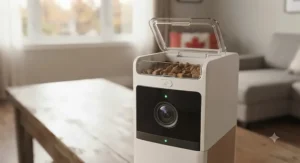
Built specifically around feline behaviour rather than repurposed from a dog product, the standout feature on the Furbo 360° Cat Camera is meowing-detection alerts that flag distress vocalizations distinct from ordinary chatter, pushing a notification so you can respond with a calming voice message or a well-timed toss. It shares the 360° rotation and colour night vision of its canine sibling, plus the same treat-launching mechanism, with core see-talk-toss functions working without any subscription.
For anyone specifically searching for the top rated treat tossing cat camera Canada shoppers can actually buy today, this is the model built around that exact use case rather than a dog camera with a cat sticker slapped on. What most owners overlook is that a cat sleeping sixteen to twenty hours a day simply won’t trigger every alert type as often as an active dog, so some AI features feel underused unless your cat’s anxiety shows up as vocal distress specifically. Reviewers generally praise the meowing-alert accuracy, while flagging that extended distress-pattern alerts sit behind an optional subscription running roughly C$9–C$13 a month.
Pros:
- ✅ Meowing-detection alerts flag distress vocalizations in real time
- ✅ 360° rotation tracks a pacing or climbing cat automatically
- ✅ Core toss-and-talk features need no subscription at all
Cons:
- ❌ Best suited to vocal anxiety, less so to quiet hiding behaviour
- ❌ Advanced distress-pattern history requires an optional monthly plan
At roughly C$180–C$230, the Furbo 360° Cat Camera earns its spot as the clearest cat-specific answer in this whole comparison.
3. Petcube Bites 2 — best adjustable toss distance control
What stands out first with the Petcube Bites 2 is an app-adjustable toss distance, letting you dial the launch power down for a small condo living room or up for a sprawling basement rec room — a genuine point of control most rivals simply don’t offer. Specs-wise, you’re looking at 1080p through a 160° wide-angle lens, Alexa built in, full-duplex two-way audio, and a launcher that accepts reasonably round treats up to about 2.5 cm (1 inch).
What most buyers overlook about this model is that adjustable toss power isn’t just a nice-to-have — it’s a direct answer to the mismatched-mechanical-toss-distance problem that causes so many launcher complaints elsewhere in this category, where a fixed-power toss either undershoots a big room or overshoots a small one. Reviewers consistently rate the audio and video fidelity among the best in this category. A recurring theme in the feedback is that the free tier only offers live viewing, with video history requiring the Optimal or Premium subscription, roughly C$6–C$10 a month.
Pros:
- ✅ App-adjustable toss distance suits small and large rooms alike
- ✅ Full-duplex audio feels like a real conversation, not a walkie-talkie
- ✅ Built-in vet chat access on paid tiers adds real value
Cons:
- ❌ Extended video history requires an ongoing subscription
- ❌ 2.4GHz-only connectivity limits placement away from the router
Priced in the C$190–C$230 range, the Petcube Bites 2 is the strongest pick specifically for anyone frustrated by a one-size-fits-all launcher.
4. Skymee Petalk AI II — longest mechanical toss distance on a budget
The Skymee Petalk AI II‘s calling card is mechanical toss distance — its launcher can reportedly send a treat roughly 1.5 metres (about 5 feet) across a room, noticeably farther than several pricier rivals. It offers 180° pan for full-room coverage, 1080p video, night vision, and two-way audio, and the no-subscription version keeps every core feature usable without a recurring fee.
What most buyers overlook about a longer mechanical toss distance is that it’s a double-edged upgrade: great for a large living room, but that extra launch power also means the dispensing motor runs louder, which aggregated reviews note can genuinely startle a noise-sensitive dog rather than reward it. A recurring theme in customer feedback is that this mechanism is picky about treat size and shape, with real treat jam issues reported when owners load treats outside the recommended range — worth testing with a small batch before committing a full hopper.
Pros:
- ✅ Treats can be tossed up to roughly 1.5 metres (about 5 feet)
- ✅ Works fully without a monthly subscription
- ✅ Wide 180° pan view covers most living rooms
Cons:
- ❌ Dispensing motor runs loud enough to startle nervous pets
- ❌ Prone to treat jam issues when treats don’t match the recommended size
Priced around C$100–C$140, the Skymee Petalk AI II is the smart pick for confident, food-driven pets in larger rooms, and a riskier one for anxious ones.
5. Furbo Mini 360° — most compact, subscription-free toss
The headline feature on the Furbo Mini 360° is that it crams 2K QHD resolution and 360° rotation into a noticeably smaller footprint than its full-size sibling — sharper video, smaller device. Core see-talk-toss functionality is fully usable without any paid plan, a meaningful shift from earlier Furbo models that nudged more features behind a subscription wall.
Here’s what the spec sheet won’t tell you outright: that compact size comes with a smaller treat hopper, so it’s genuinely better suited to shorter absences than a full workday, and it skips the automatic tracking found on the full Furbo 360°, meaning a wandering pet will simply drift out of frame. Early user reports frame it as the sensible pick for condo dwellers who want a Furbo-branded launcher without the subscription commitment or full-size footprint, though a common critique is that the smaller hopper needs topping up more frequently.
Pros:
- ✅ Sharper 2K QHD picture than most cameras twice its price
- ✅ Compact footprint fits condos and small apartments easily
- ✅ Core toss-and-talk features work with no subscription required
Cons:
- ❌ Smaller treat hopper needs refilling more often than full-size models
- ❌ Skips auto-tracking, so a wandering pet can walk out of frame
Sitting at roughly C$150–C$180, the Furbo Mini 360° is arguably the smartest entry point into mechanical tossing for anyone who doesn’t need full auto-tracking.
6. WOPET Smart Pet Camera D01 Plus — best simple kibble-style dispensing
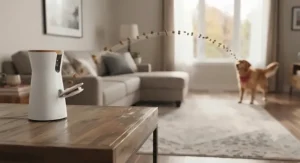
The simplest way to describe the WOPET Smart Pet Camera D01 Plus is “no-fuss dispensing” — rather than launching a treat across the room, it drops one to three kibble-sized pieces at a time, with a hard limit of roughly 0.6 cm (about 1/4 inch) per piece. Its camera tops out at 720p, a step behind the 1080p standard most competitors have settled on, but setup reportedly takes about three minutes flat.
This is the cleanest illustration of treat tossing camera vs treat dispensing camera in practice: there’s no launcher motor here at all, just a controlled release into a small tray, which sidesteps the jam-and-distance questions that dominate the launcher-style products above entirely. Reviewers singled out the genuinely live (not looped) two-way audio as feeling more personal than competing cameras, and one review roundup landed on an aggregate score of roughly 4.3 out of 5, citing ease of setup as the main driver, while flagging the small maximum treat size as the device’s most consistent limitation.
Pros:
- ✅ Straightforward setup most owners finish in about three minutes
- ✅ Live two-way talk instead of prerecorded phrases
- ✅ No subscription needed for any core feature
Cons:
- ❌ 720p video resolution trails well behind 1080p competitors
- ❌ Treats must be smaller than about 0.6 cm to dispense cleanly
At roughly C$140–C$170, the WOPET Smart Pet Camera D01 Plus makes the most sense for small dogs or cats already happy with kibble-sized rewards.
7. PetLibro Granary Camera Feeder — closest thing here to a true automatic feeder
Where every other product in this roundup is fundamentally a camera with a treat feature bolted on, the PetLibro Granary Camera Feeder flips that script: it’s a genuine dual-tray, 5-litre stainless steel automatic feeder built for two pets, with a camera layered on top rather than the other way around. It runs on dual-band 2.4GHz/5GHz Wi-Fi, records 1080p HD video with night vision, and supports scheduled portion-controlled meals in grams rather than a single button-press toss.
Based on the spec comparison, this is the product that most directly answers the treat dispensing camera vs automatic feeder question, because it genuinely straddles both categories — it can log a “treat” moment on demand, but its real job is consistent, scheduled meal delivery whether you’re home or not. Its low-food and blockage alerts are a meaningful practical addition over simpler dispensers, and aggregated feedback highlights the dual-tray design as genuinely useful for two-cat households eating on separate schedules, while a recurring critique is that the stainless steel trays require more frequent hand-washing than plastic alternatives.
Pros:
- ✅ True scheduled, portion-controlled feeding in grams, not just a toss
- ✅ Dual 5L trays suit two-pet households on different schedules
- ✅ Low-food and blockage alerts catch problems before a missed meal
Cons:
- ❌ Stainless steel trays need more frequent hand-washing
- ❌ No mechanical toss feature for pets who respond better to a launch
At around C$170–C$210, the PetLibro Granary Camera Feeder is less a treat gadget and more the automatic-feeder half of this comparison, camera included.
The Full Spec Showdown: All 7 Cameras Side by Side
| Product | Mechanism | Toss Distance / Portion Control | Connectivity | Subscription | Price Range (CAD) |
|---|---|---|---|---|---|
| Furbo 360° Dog Camera | Tossing | Adjustable, 2 size settings | 2.4GHz Wi-Fi | Optional (AI alerts) | C$230–C$260 |
| Furbo 360° Cat Camera | Tossing | Standard toss, no distance control | 2.4GHz Wi-Fi | Optional (alerts) | C$180–C$230 |
| Petcube Bites 2 | Tossing | App-adjustable, up to ~2.5 cm treats | 2.4GHz Wi-Fi | Optional (history/vet chat) | C$190–C$230 |
| Skymee Petalk AI II | Tossing | ~1.5 m (5 ft) fixed toss | 2.4GHz/5GHz Wi-Fi | None required | C$100–C$140 |
| Furbo Mini 360° | Tossing | Standard toss, smaller hopper | 2.4GHz Wi-Fi | None required (core) | C$150–C$180 |
| WOPET D01 Plus | Dispensing | 1–3 kibble pieces, ~0.6 cm max | Wi-Fi | None required | C$140–C$170 |
| PetLibro Granary Camera Feeder | Dispensing | Scheduled gram-based portions, dual 5L trays | 2.4GHz/5GHz Wi-Fi | Optional (video cloud) | C$170–C$210 |
A pattern jumps out immediately: only the PetLibro Granary Camera Feeder and Skymee Petalk AI II run dual-band Wi-Fi, which matters if your router already prioritizes 5GHz for less congestion. Notice, too, that subscription requirements track more closely with how much AI processing a camera claims than with core mechanism reliability — the Skymee Petalk AI II, Furbo Mini 360°, and WOPET D01 Plus all need nothing extra to function fully. If mechanical reliability matters more to you than AI extras, the subscription-free options deserve a serious look before a flashier feature list wins you over.
Treat Tossing Camera vs Treat Dispensing Camera: The Mechanism Breakdown
Understanding how each mechanism physically works underneath the marketing copy is what actually resolves the treat tossing camera vs treat dispensing camera question, so here’s the honest breakdown before we get into outcomes like jams and cost.
A tossing mechanism, like the one in the Furbo 360° Dog Camera or Petcube Bites 2, uses a spring-loaded or motorized wheel to physically launch a treat outward, typically 0.5 to 1.5 metres depending on the model and its settings. Mechanical toss distance is the single spec that separates these five products the most: the Skymee Petalk AI II pushes roughly 1.5 metres, while models without adjustable power settings simply toss at a fixed, factory-set distance regardless of room size. That distance is a genuine trade-off, not a pure upgrade — a longer, more forceful toss also means a louder motor and a narrower margin for error on treat size, which is exactly why the Skymee Petalk AI II and similar long-range launchers see more reported treat jam issues than gentler, shorter-range models.
A dispensing mechanism, like the one in the WOPET Smart Pet Camera D01 Plus or PetLibro Granary Camera Feeder, skips the launch entirely and simply releases a measured portion — by piece count or by gram weight — into a tray directly below or beside the camera. There’s no mechanical toss distance to speak of, and no motor forcing a treat through the air, which removes the single biggest cause of jams in the tossing category. The trade-off is obvious the moment you think about it: a dispensed treat sits exactly where the unit is mounted, so if your pet isn’t already near the device, dispensing does nothing for reward-based training the way a launch across the room can.
| Factor | Tossing Mechanism | Dispensing Mechanism | Winner |
|---|---|---|---|
| Reward-from-a-distance training | Yes, genuine launch | No, treat stays local | Tossing |
| Treat jam issues | More common, especially long-range models | Rare, since nothing is launched | Dispensing |
| Suitable treat shapes | Round, hard, size-specific | More flexible, piece or gram based | Dispensing |
| Mechanical complexity | Higher (motor, launch wheel) | Lower (auger or gate release) | Dispensing |
| Novelty/engagement factor | High | Lower | Tossing |
Reading this table honestly, dispensing wins on reliability and treat flexibility, while tossing wins on the specific job of rewarding a behaviour you’re watching happen live, at a distance. Neither mechanism is objectively superior — they’re solving different problems, and picking the wrong one for your actual use case is the single most common regret in this category.
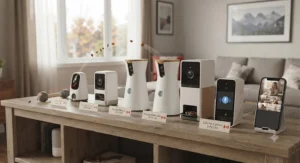
Treat Dispensing Camera vs Automatic Feeder: What’s Actually Different
The treat dispensing camera vs automatic feeder question trips up more shoppers than it should, mostly because product listings use the terms almost interchangeably. In practice, the distinction comes down to portion size and purpose: a treat dispensing camera like the WOPET Smart Pet Camera D01 Plus releases small, snack-sized rewards on demand or on a light schedule, while a true automatic feeder, like the PetLibro Granary Camera Feeder, is built to deliver full, nutritionally significant meals in precise gram quantities at set times, whether or not you’re watching.
That distinction matters practically. If you’re trying to solve “I want to reward my dog for staying calm during a thunderstorm while I’m at work,” a treat dispensing camera is the right tool, since it’s built around small, occasional portions tied to a specific moment. If you’re trying to solve “my cat needs breakfast at 7 a.m. and dinner at 6 p.m. whether I’m home or travelling,” you actually need an automatic feeder, and a camera is a nice-to-have layered on top, not the core function. The PetLibro Granary Camera Feeder is the one product in this comparison built primarily as a feeder first, which is exactly why it supports gram-based portions and dual trays rather than a one-tap toss.
✨ Don’t Miss These Exclusive Deals! 🔍
Take your pet reward routine to the next level with these carefully compared picks. Click on any highlighted product to check current pricing and availability before you decide!
Scheduled Feeding vs Reward Tossing: A Buyer’s Decision Framework
Scheduled feeding vs reward tossing is really a question of what problem you’re trying to solve, and it’s worth answering honestly before you shop rather than after a launcher jams for the third time this month.
If your pet’s biggest need is consistent, predictable nutrition — meals at the same time daily, in the same measured portion, regardless of your schedule — scheduled feeding is what you actually want, and the PetLibro Granary Camera Feeder or a similar dedicated feeder should lead your shortlist. If your pet’s biggest need is emotional reassurance or in-the-moment behavioural reward — catching a calm moment during a thunderstorm, or reinforcing “stay off the counter” the instant it happens — reward tossing is the better-matched tool, and one of the five launcher-style cameras above will serve you far better than any scheduled feeder ever could.
Here’s a simple framework: if you already own a food bowl your pet eats from reliably and you’re shopping purely for engagement and reward, choose a tossing camera. If mealtime itself is the unsolved problem — inconsistent portions, a pet-sitter situation, or a multi-pet household eating on different schedules — choose a dispensing-first product like the PetLibro Granary Camera Feeder. Plenty of households genuinely benefit from both, using a feeder for real meals and a launcher camera purely for between-meal engagement, which is worth budgeting for as two separate purchases rather than expecting one device to do both jobs well.
Whichever side of this framework you land on, portion math still matters. Pet nutrition researchers at the University of Guelph’s Ontario Veterinary College have emphasized that treats and extras should stay a modest slice of a pet’s daily intake rather than a meaningful share of it, which is easy to forget when a launcher makes tossing rewards so effortless and, frankly, so fun. Checking your treat bag’s calorie-per-piece information before setting a daily toss or dispense limit in the app is a five-minute step most buyers skip entirely.
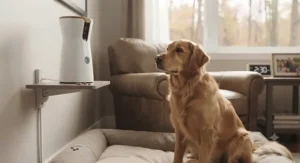
Treat Jam Issues: Why They Happen and How to Prevent Them
Treat jam issues are the single most common complaint across every launcher-style camera in this comparison, and they’re rarely a manufacturing defect so much as a mismatch between the treat you loaded and the mechanism’s tolerances. Reviewers consistently note that irregularly shaped, soft, or oversized treats are the leading cause of jams, regardless of price point or brand.
The fix is almost always the same three steps. First, check the manufacturer’s stated maximum treat size before buying a bag of anything — the Furbo 360° Dog Camera wants treats under 1.3 cm, while the WOPET Smart Pet Camera D01 Plus requires pieces under roughly 0.6 cm, and using a treat sized for one on the other is a near-guaranteed jam. Second, test a small sample batch through the mechanism before committing to a full bag, since a treat that looks round in the package can still be irregular enough to catch. Third, keep the hopper and treat chute clean — a buildup of crumbs from soft or crumbly treats is a recurring, preventable cause of jams that has nothing to do with the current batch of treats at all. Dispensing-mechanism products like the PetLibro Granary Camera Feeder largely sidestep this entire problem, which is worth weighing heavily if jams have already soured you on the category once before.
If you’re sourcing treats specifically for use with one of these mechanisms, it’s worth knowing that imported pet treats and chews sold in Canada fall under specific import and labelling rules enforced by the Canadian Food Inspection Agency, which is a useful starting point if you’re comparing unfamiliar treat brands for both nutritional quality and mechanical compatibility with a launcher.
Setting Up Your Camera Right: The First 30 Days
Getting a new tossing or dispensing camera right in the first month makes a real difference in whether your pet actually engages with it or gets startled and ignores it. Setup itself is usually quick — most owners report completing Wi-Fi pairing and app registration in under ten minutes — but the behavioural introduction deserves more patience than the tech side does.
Mount the camera at a height and angle that captures your pet’s usual resting spots without pointing directly at a bright window, since backlighting washes out both daytime footage and night vision. For the first few days, trigger a toss or dispense while you’re still home, so you can watch your pet’s reaction in person; a startled flinch at the launching sound is common on the five tossing-mechanism products above and worth desensitizing gently rather than immediately leaving your pet alone with something that’s clearly scaring them. Pairing a toss or dispense with calm, consistent timing lines up with the same core idea behind the BC SPCA’s guidance on humane, reward-based training: a reward that arrives predictably, right after the behaviour you want, teaches faster than one delivered inconsistently or out of guilt. Common first-month mistakes include overfilling a launcher’s hopper with treats outside the recommended size, setting a dispensing schedule too frequently out of guilt, and skipping a basic Wi-Fi signal check at the exact spot where the unit will live permanently. By week two, most pets have connected the toss or dispense sound with a reward and respond to the camera’s cue on their own — a functioning line of remote communication, not just a novelty gadget bolted to the wall.
Real-World Scenarios: Matching the Right Camera to Your Household
Rather than picking based on spec sheets alone, it helps to see where each product actually fits into a real daily routine.
The condo-dwelling professional working full days with a mildly anxious dog needs something compact with enough hopper capacity to last the day; the Furbo Mini 360° fits that profile well, offering sharp video and a reasonable toss without the bulk of a full-size flagship. The multi-cat household running on staggered feeding schedules needs consistent, portion-controlled meals more than novelty engagement, which is exactly the job the PetLibro Granary Camera Feeder‘s dual trays and gram-based scheduling are built for. The owner whose cat cries out specifically at departure time, rather than simply hiding, is better served by the Furbo 360° Cat Camera‘s meowing-detection alerts than by any generic dispensing product on this list. And the budget-conscious first-time buyer who isn’t sure their pet will even respond to a remote-tossed treat shouldn’t sink C$230 into finding out — starting with the Skymee Petalk AI II or WOPET Smart Pet Camera D01 Plus at the lower end of the price spectrum is the financially sensible way to test the concept first.
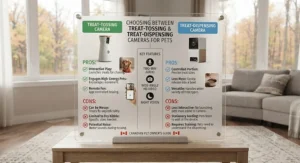
How to Choose Between a Treat Tossing Camera and a Treat Dispensing Camera
Picking between seven genuinely different mechanisms gets easier once you break the decision into a short checklist rather than comparing every spec simultaneously.
- Identify the actual problem first. In-the-moment behavioural reward calls for a tossing camera; consistent meal delivery calls for a dispensing-first product like the PetLibro Granary Camera Feeder.
- Match treat size to your pet’s usual snacks. Small, hard kibble suits the WOPET Smart Pet Camera D01 Plus; larger round treats need a launcher built for them, like the Petcube Bites 2.
- Weigh mechanical toss distance against your actual room size. A small apartment rarely needs the Skymee Petalk AI II‘s full 1.5-metre range; a larger open-concept home benefits from it.
- Decide how you feel about treat jam issues up front. If jams have burned you before, a dispensing mechanism sidesteps the problem almost entirely.
- Check whether you need scheduled feeding vs reward tossing, or genuinely both. Some households need a dedicated feeder and a separate engagement camera, not one device pretending to be both.
- Confirm Wi-Fi band compatibility with your router, since only two of these seven support 5GHz.
- Factor in subscription costs honestly, since several of these cameras reserve their best AI alerts for a paid tier.
Common Mistakes When Buying a Treat Tossing or Treat Dispensing Camera
The most common mistake is choosing based on camera resolution alone while ignoring mechanism and treat compatibility entirely, only to discover after purchase that a favourite treat is too soft, too large, or too irregularly shaped for the mechanism bought. A close second is assuming “treat dispensing camera” and “automatic feeder” mean the same thing, then being disappointed when a snack-sized launcher can’t reliably handle full meals.
Another frequent misstep is underestimating subscription costs, where a camera that looks like the cheapest option on the shelf can end up costing more over two years than a pricier subscription-free alternative once monthly fees are factored in. Buyers also commonly skip testing treat sizes with a small sample batch before committing to a full bag, which is the single most preventable cause of treat jam issues during the crucial first week. Finally, some owners set dispensing or tossing schedules too aggressively out of guilt about leaving a pet alone, which risks the exact overfeeding problem that thoughtful portion control is designed to prevent in the first place.
Wi-Fi, Privacy & Long-Term Cost: What Canadian Owners Should Know
Nearly every camera in this comparison runs primarily on 2.4GHz Wi-Fi, which has better wall penetration but a more crowded frequency range, especially in condo buildings where dozens of neighbouring networks overlap; if a live stream lags, checking your router’s 2.4GHz channel congestion is a worthwhile first troubleshooting step before assuming the camera is defective. On the privacy side, treat that reminder from earlier seriously: a camera mounted permanently in a living room deserves the same scrutiny as any other always-on smart home device, regardless of which mechanism sits underneath it.
Total cost of ownership extends well beyond the sticker price, too. A C$230 camera with an optional C$9-a-month subscription costs roughly C$338 over the first year if you opt in, compared to a C$120 subscription-free camera that costs exactly C$120 for the same period — a gap that only widens the longer you keep the device. Maintenance stays fairly light across the board regardless of mechanism: occasional lens wiping, a periodic check of the treat chute or auger for stuck crumbs, and firmware updates pushed automatically through the app. On balance, for households genuinely torn between mechanisms, the investment tends to pay for itself in either peace of mind or fewer missed meals fairly quickly, depending on which problem you actually bought the camera to solve.
Frequently Asked Questions
❓ What is the main difference between a treat tossing camera and a treat dispensing camera?
❓ What is the top rated treat tossing cat camera Canada shoppers should consider?
❓ How far can a mechanical toss distance actually reach?
❓ Is a treat dispensing camera the same as an automatic feeder?
❓ How do I avoid treat jam issues with a launcher-style camera?
Conclusion
Seven products, two genuinely different mechanisms, and one honest takeaway: treat tossing camera vs treat dispensing camera isn’t a contest with a universal winner, it’s a question of which specific problem you’re trying to solve. The Furbo 360° Dog Camera, Furbo 360° Cat Camera, Petcube Bites 2, Skymee Petalk AI II, and Furbo Mini 360° all excel at in-the-moment reward tossing, each with its own trade-off between mechanical toss distance, price, and how prone it is to jamming. The WOPET Smart Pet Camera D01 Plus and PetLibro Granary Camera Feeder, meanwhile, prove that skipping the launch entirely in favour of controlled dispensing solves a genuinely different problem — consistent nutrition rather than novelty engagement.
Whichever mechanism you land on, the honest advice holds across all seven: match the treat size to the mechanism’s real tolerances before you buy a full bag, decide up front whether you need scheduled feeding vs reward tossing or genuinely both, and check current pricing on Amazon.ca before ordering, since these listings shift more often than the spec sheets suggest.
✨ Ready to reward or feed your pet the smarter way? Compare current prices on the seven picks above and pick the mechanism built for the problem you actually have. 💬🤗
Recommended for You
- Treat Dispensing Pet Camera: 7 Best Picks in Canada (2026)
- Interactive Camera for Anxious Cats: 7 Calming Picks (2026)
- Interactive Camera for Bored Indoor Cats: 7 Top Picks 2026
Disclaimer: This article contains affiliate links. As an Amazon Associate, I earn from qualifying purchases. If you purchase products through these links, we may earn a small commission at no additional cost to you.
✨ Found this helpful? Share it with your friends! 💬🤗
