
In This Article
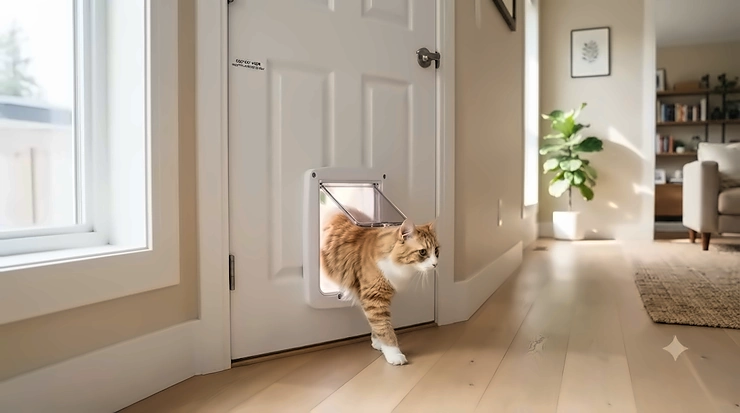
Somewhere in your house, there’s a door standing between your cat and something they desperately want — the litter box, a sunny windowsill, a quiet nap spot away from the dog. A cat door for interior door installations solves this in about twenty minutes flat, and it’s one of those small home upgrades that quietly improves everyone’s day, human included. No more waking up at 3 a.m. to the sound of a paw scratching wood like it owes your cat money.
Here’s the thing nobody tells you before you start scrolling through listings: not all interior cat doors are built the same, and the “best” one depends entirely on your door type, your cat’s size, and whether you’re willing to pick up a jigsaw. A cat door for interior door is essentially a small, purpose-built opening — flapped, flapless, or latch-based — installed into an existing hollow or solid interior door so a cat can pass through freely while the door itself stays closed to people, dogs, or curious toddlers.
This guide breaks down seven real, currently available products sold through amazon.ca, from no-tools latches to whimsical no-flap portals, with honest analysis of who each one actually suits. We’ll dig into installation realities, sizing math, magnetic versus flapless mechanisms, and the specific situations — bedrooms, basements, small breeds — where one option clearly beats another. According to the Oxford English Dictionary, the term “cat flap” first appeared in print in 1957, though as Wikipedia’s history of the pet door notes, cats have been slipping through purpose-cut openings for centuries. This is simply the modern, renter-friendly, better-engineered version of that very old idea.
Quick Comparison Table
| Product | Best For | Mechanism | Price Range (CAD) |
|---|---|---|---|
| PetSafe Interior 2-Way Locking Cat Door | All-around budget pick | Magnetic flap | C$25-C$35 |
| CEESC Magnetic Cat Flap | Small cat flap interior door | Magnetic flap | C$20-C$30 |
| Cat Mate 4-Way Locking Cat Flap (235) | Thin/hollow doors | Magnetic flap | C$35-C$50 |
| Door Buddy Pet Door Latch | Cat door without installation | Adjustable strap latch | C$20-C$30 |
| The Kitty Pass Interior Cat Door | Cat door basement access | No-flap opening | C$45-C$65 |
| Purrfect Portal Meow Manor | Bigger cats, no-flap privacy | No-flap opening | C$55-C$75 |
| Gnome® Door | Stylish statement piece | No-flap opening | C$55-C$80 |
Looking at the spread above, the split really comes down to mechanism, not just price: flapped doors like the PetSafe Interior 2-Way Locking Cat Door and Cat Mate 4-Way Locking Cat Flap (235) cost less but need occasional cleaning and can startle nervous cats at first, while no-flap portals like the Purrfect Portal Meow Manor and Gnome® Door cost more but skip training altogether. Renters or anyone unwilling to cut a hole should look straight at the Door Buddy Pet Door Latch, since it’s the only entry here that touches zero wood.
💬 Just one click — help others make better buying decisions too!😊
Top 7 Cat Door for Interior Door Options: Expert Analysis
1. PetSafe Interior 2-Way Locking Cat Door — best all-around budget pick
The PetSafe Interior 2-Way Locking Cat Door is the option most Canadian pet owners land on first, and there’s a reason for that: it’s cheap, it’s everywhere, and it does the one job well. The transparent, magnetically-closed flap measures 14.6 cm × 14.6 cm, fitting an outer frame of roughly 19 cm × 20 cm, and it’s rated for cats and dogs up to 15 lb. That 15 lb ceiling matters practically — a chonky Maine Coon mix may not squeeze through comfortably, so measure your cat’s shoulder width before buying.
Based on the spec comparison, the sliding 2-way lock is what separates this from a plain flap: you get “open” and “locked” settings, letting you seal off the litter box room when guests are over without removing anything. It fits interior doors 1/2 to 2 inches thick, which covers the vast majority of Canadian hollow-core doors. Reviewers consistently note the magnetic closure keeps drafts and litter dust from drifting through, and one long-time buyer on Chewy specifically praised the magnetic base for keeping the door closed reliably. This is the pick for anyone who just wants a done-in-a-weekend solution without overthinking it.
Pros:
- ✅ Genuinely low price point for a name-brand pet door
- ✅ Transparent flap helps nervous cats see through before pushing
- ✅ 2-way lock adds real control without extra hardware
Cons:
- ❌ 15 lb weight cap excludes larger cat breeds
- ❌ Flap noise can bother light sleepers at night
Price sits around C$25-C$35 at the time of research, and for a first-time interior cat door, it’s tough to argue with the value here.
2. CEESC Magnetic Cat Flap — best small cat flap interior door
If you’ve got a petite cat or a kitten still growing into their adult body, the CEESC Magnetic Cat Flap in its medium size is worth a serious look. The inner opening measures a snug 6.18″ (W) × 6.30″ (H), designed for cats lighter than 15.43 lb with a waist circumference shorter than 15.75 inches. What most buyers overlook about small flaps like this one is that a tighter opening actually reduces draft loss and rattling compared to oversized doors — less air gap means less wasted heat in a Canadian winter.
The 4-way switch (out, in, both, or fully locked) is controlled by simple red-and-green tabs rather than a sliding bar, and the polished inner frame edge is a small but thoughtful touch that keeps whiskers and paws from catching on rough plastic. Because it’s built from ABS plastic rather than the higher-impact polymer used in pricier models, don’t expect it to survive a determined 90 lb dog leaning on it — this is a cat-specific product through and through.
Pros:
- ✅ Compact size ideal for kittens and small breeds
- ✅ Full 4-way lock control at a budget price
- ✅ Transparent flap reduces hesitation during training
Cons:
- ❌ Not rated for larger cats or dogs
- ❌ ABS frame feels less rugged than metal-reinforced options
Expect to pay in the C$20-C$30 range, making this one of the most affordable ways to get proper 4-way locking control.
3. Cat Mate 4-Way Locking Cat Flap (235) — best for thin and hollow interior doors
The Cat Mate 4-Way Locking Cat Flap (235) solves a problem the plastic budget models don’t: what happens when your door is thinner or thicker than average. Its self-lining design accommodates panels up to 50 mm (about 2 inches) thick, and the trimmable liner can be cut down for slim hollow-core doors, which is exactly the kind of detail that separates a UK-engineered product from a generic import. The flap opening comes in at 145 mm × 145 mm, comparable to the PetSafe unit, with an overall footprint of roughly 192 mm × 200 mm.
Here’s what the spec sheet won’t tell you outright: the 4-way lock (in-only, out-only, open, or fully locked) is genuinely useful if you’re managing multiple pets, letting a cat leave a room without letting a dog back in. Reviewers on Amazon frequently mention the magnetic closure and brush seal noticeably cut down on the rattling that cheaper flaps produce in a draft, which matters more than people expect once winter winds start finding every gap in an older Canadian home.
Pros:
- ✅ Trimmable liner adapts to unusually thin or thick doors
- ✅ Full 4-way locking beats basic 2-way models
- ✅ Brush-sealed flap noticeably quieter in drafts
Cons:
- ❌ Higher price than comparable plastic-only models
- ❌ Requires more precise cutting for a snug liner fit
Priced around C$35-C$50, this is the pragmatic mid-range choice for anyone whose door doesn’t match “standard” dimensions.
4. Door Buddy Pet Door Latch — best cat door without installation
Not every renter wants to cut a hole in a door they don’t own, and that’s precisely the gap the Door Buddy Pet Door Latch fills. Instead of a flap or a cut-out opening, it’s an adjustable strike-plate-and-strap system that simply props the door ajar by 3 to 5.5 inches — wide enough for a cat, narrow enough to keep out dogs up to 120 lb. One version swaps your existing door strike plate for a patented latch using the original screws, while an adhesive strap version installs with 3M adhesive in seconds without any drilling.
Based on the spec comparison, this is less a “cat door” in the traditional sense and more a smart door-prop alternative — and that’s exactly the appeal. It answers the cat door without installation search directly: there’s no jigsaw, no template, no committing to a permanent hole. The trade-off is that the door can never fully close, so it won’t work for anyone needing complete visual privacy or sound isolation. Reviewers consistently flag it as ideal for lease agreements where cutting doors is explicitly against the rules — a real concern given how CBC News has reported on the friction between pet-owning tenants and Canadian landlords in recent years.
Pros:
- ✅ Zero cutting, zero permanent modification to the door
- ✅ Adjustable gap width fits different cat sizes
- ✅ Ideal for rental units and lease-restricted homes
Cons:
- ❌ Door can never fully close for privacy or sound
- ❌ Strap version relies on adhesive strength over time
Pricing generally falls in the C$20-C$30 range, and for renters specifically, it may be the single most practical option on this list.
5. The Kitty Pass Interior Cat Door — best for cat door basement access
Basement stairs present a specific hazard: cats need access to litter boxes or laundry-room feeding stations down there, but an open basement door invites drafts, escaped kittens, and the occasional loose dog tumbling down steps. The Kitty Pass Interior Cat Door was practically made for this scenario. Its no-flap opening measures 7.5″ wide × 6.5″ high (or 9″ × 8″ in the XL), fitting standard interior doors 1.25 to 1.75 inches thick, with a whimsical cat-ear silhouette that reads as a design feature rather than a hardware installation.
What most buyers overlook here is the “no training needed” angle: because there’s no flap to push, cats — including ones nervous about swinging plastic — use it immediately. A Chewy reviewer confirmed this directly, noting a basement installation on a hollow-core door held up well even for a larger cat needing basement access. On paper, this means less trial-and-error than flap-based alternatives, though the trade-off is there’s no lock on the standard model, so it won’t keep a determined dog from following a cat down the stairs.
Pros:
- ✅ No-flap design eliminates any training period
- ✅ Cat-ear silhouette suits basement or laundry doors well
- ✅ Handles hollow-core basement doors reliably per reviews
Cons:
- ❌ Standard version has no locking mechanism
- ❌ Requires a jigsaw for the semicircular cut-out
Expect a price in the C$45-C$65 range depending on size, which is a fair trade for a purpose-built basement solution.
6. Purrfect Portal Meow Manor — best no-flap door for bigger cats
For cats on the larger end — up to roughly 20 lb — the Purrfect Portal Meow Manor solves the sizing squeeze that trips up flap-based doors. The opening measures a spacious 9.25″ × 9″ wide, and the patented flapless design means there’s genuinely nothing for paws to get caught in, addressing a real safety complaint with cheaper flap hinges. Installation uses screws rather than tape, on doors 1.25 to 1.75 inches thick, taking about 15 to 25 minutes.
Here’s what the marketing copy underplays: this is also a lockable door, meaning you get the no-training benefit of a flapless design plus the privacy control of a traditional locking flap — a genuine best-of-both scenario. Aggregated customer sentiment on Chewy repeatedly highlights how easy the installation was, with one buyer specifically noting they finished in under twenty minutes including the time spent hunting for tools. The main criticism that surfaces in reviews concerns the cutting template running slightly large on certain doors, so double-check your measurements before committing to the saw.
Pros:
- ✅ Spacious 9.25″ x 9″ opening suits larger cat breeds
- ✅ No-flap design removes any risk to paws or tails
- ✅ Lockable for full privacy control when needed
Cons:
- ❌ Cutting template can run larger than the actual unit
- ❌ Higher price point than basic flap alternatives
Priced around C$55-C$75, it’s a premium pick that earns its cost through size flexibility and paw safety.
7. Gnome® Door — best stylish statement interior cat door
Sometimes a cat door for interior door installations doesn’t need to hide — it can be the feature. The Gnome® Door replicates a whimsical hobbit-style doorway, and while that sounds purely decorative, the underlying mechanics are identical to other flapless portals on this list: a lockable opening that works on hollow or solid core doors 1.25 to 1.75 inches thick, sized for cats up to 20 lb, with dimensions around 11.48″ wide by 9.54″ tall.
Reviewers consistently mention that the appeal here is genuinely about aesthetics — one Chewy customer noted it “took my kittens all of 5 seconds to figure out” once installed, which tracks with the no-flap category generally. On paper, paying a premium for a design element feels indulgent, but for a laundry room or mudroom door that’s visible to guests, it converts a “pet accommodation” into a genuine conversation piece. The lockable design also means you’re not sacrificing function for looks, which is the whole point of good design.
Pros:
- ✅ Distinctive design doubles as a decor feature
- ✅ Lockable no-flap mechanism matches premium competitors
- ✅ Works on both hollow and solid core doors
Cons:
- ❌ Premium styling comes with a premium price tag
- ❌ Novelty design won’t suit every home’s decor style
Pricing runs roughly C$55-C$80, positioning it alongside the Purrfect Portal Meow Manor as a top-tier, style-forward choice.
Practical Installation & Setup Guide
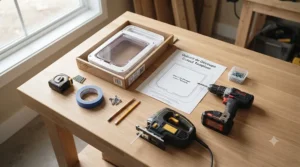
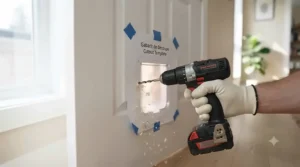
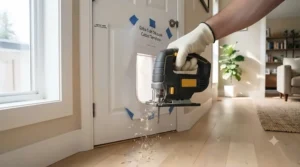
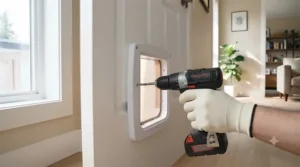
Installing a cat door for interior door products follows a similar rhythm regardless of brand. First, measure your cat at the shoulder — the widest point when walking — and add roughly 1-2 cm of clearance; this single step avoids the most common return reason, a door that’s technically the right “size category” but too tight for a specific cat’s build. Second, remove the door from its hinges before cutting. Every no-flap manufacturer, including Purrfect Portal, recommends removing the door to cut the template hole rather than leaving it hung, since a hung door flexes under drill pressure and throws off your line.
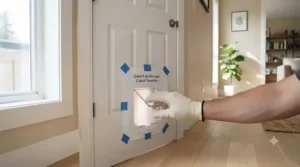
Third, use the included cardboard template and trace it in pencil before touching a jigsaw — measure twice, as the saying goes, because a semicircular cut-out can’t be undone if you’re off by a centimetre. Fourth, for hollow-core doors specifically, expect the interior honeycomb structure to feel flimsy right at the cut edge; most kits include a rigid plastic frame specifically to reinforce that gap, so don’t skip attaching both sides of the frame even if the fit looks tight. Finally, common first-30-days mistakes include leaving the flap “locked” while cats are still learning the mechanism (defeating the entire point) and forgetting to smooth any leftover cut edges, which can snag fur on solid wood doors in particular.
Real-World Scenarios: Matching the Right Door to Your Home
The condo renter with one indoor cat: If you’re renting and can’t modify doors, the Door Buddy Pet Door Latch is close to a no-brainer — it needs no cutting, and most leases that ban permanent alterations don’t cover a strike-plate swap that reverses in minutes.
The multi-level house with a basement litter box: For anyone managing stairs and a cat that needs unsupervised basement access several times daily, The Kitty Pass Interior Cat Door or a locking flap like the Cat Mate 4-Way Locking Cat Flap (235) both work, but the Kitty Pass wins on ease of use since there’s no flap for a nervous cat to hesitate at halfway down a dark staircase.
The multi-pet household with a food-motivated dog: Here, weight capacity and locking control matter more than style. The PetSafe Interior 2-Way Locking Cat Door rated to 15 lb keeps most small dogs out entirely, while the 4-way options let you fine-tune access windows — useful if your dog only raids the litter box when you’re not watching.
Problem → Solution: Common Interior Cat Door Issues
Problem: My cat won’t use the flap. Most hesitation comes from an opaque or stiff flap. Solution: choose a transparent-flap model like the PetSafe Interior 2-Way Locking Cat Door, and prop it open with tape for the first few days so the cat learns the shape without pushing through resistance.
Problem: The door rattles in a draft. This is almost always a weak or absent magnetic seal. Solution: the Cat Mate 4-Way Locking Cat Flap (235)‘s brush-sealed design specifically addresses draft-driven rattling better than basic plastic flaps.
Problem: My cat is too big for standard sizes. Solution: go flapless and oversized with the Purrfect Portal Meow Manor, whose 9.25″ x 9″ opening comfortably fits cats up to 20 lb.
Problem: I can’t cut my rental’s door. Solution: skip cutting altogether with the Door Buddy Pet Door Latch.
Problem: The cut-out looks unfinished or ugly. Solution: pick a design-forward no-flap option like the Gnome® Door, which turns the necessary opening into a decorative feature rather than an eyesore.
How to Choose a Cat Door for Interior Door
A cat door for interior door is a small opening — flapped or flapless — cut or latched into an existing interior door so a cat can pass through freely while the door stays closed to people or other pets. Choosing the right one comes down to seven practical steps:
- Measure your cat’s shoulder width and weight before shopping — most listed capacities (15 lb, 20 lb, 30 lb) are hard limits, not suggestions.
- Check your door’s thickness. Standard Canadian interior doors run 1.25 to 1.75 inches, but older solid-core doors can run thicker, ruling out self-lining models unless they’re trimmable.
- Decide flap versus flapless. Flaps cost less and seal drafts better; flapless portals need zero training but cost more.
- Confirm locking needs. If other pets share the home, a 4-way lock (in-only, out-only, both, locked) offers far more control than a basic 2-way model.
- Weigh installation tolerance. Renters or anyone avoiding permanent cuts should default to a latch-style product instead.
- Match style to visibility. A laundry room door hidden from guests doesn’t need the same design investment as a mudroom entry everyone sees.
- Budget for tools. A jigsaw, drill, and cutting template are standard requirements for every cut-in model on this list — factor that into total cost if you don’t already own one.
Cat Flap for Bedroom Door: What to Look For
A cat flap for bedroom door use has slightly different priorities than a litter-box-room installation. Noise matters more here, since the flap will open and close at 2 a.m. when your cat decides it’s time to patrol the hallway. Reviewers consistently note that brush-sealed, magnetic-closure designs like the Cat Mate 4-Way Locking Cat Flap (235) are noticeably quieter than basic snap-closure flaps, which matters if you’re a light sleeper. Privacy is the second factor: a 2-way or 4-way lock lets you seal the bedroom entirely on nights you’d rather not have a cat parkour across your chest at dawn. For anyone renting a room specifically, the Door Buddy Pet Door Latch sidesteps the whole cutting question, propping the bedroom door just wide enough for feline traffic without a permanent modification.
Cat Door Basement Access: Special Considerations
Basements introduce two problems flap doors on main-floor rooms don’t: temperature differential and stair safety. Basements in Canadian homes often run several degrees cooler, so a well-sealed magnetic flap — like the one on the PetSafe Interior 2-Way Locking Cat Door — helps limit cold air rising through the gap. Stair safety is the bigger concern: a locking mechanism prevents a curious dog or toddler from following a cat down an unlit staircase, which is exactly why The Kitty Pass Interior Cat Door‘s wide, unobstructed opening pairs well with a supplementary latch if young children are in the home. If odour control from a basement litter box is the primary motivation, any of the sealed, brush-lined options on this list will meaningfully reduce smell migration compared to simply propping the door open with a shoe.
Small Cat Flap Interior Door vs Large: Sizing Guide
Sizing a small cat flap interior door correctly comes down to more than just cat weight — shoulder width, at the widest point of the ribcage, is the real limiting measurement. The CEESC Magnetic Cat Flap‘s medium size, at 6.18″ × 6.30″, suits cats under roughly 15.43 lb comfortably, but a stocky 12 lb cat with a broad chest can still find that tight. What most buyers overlook is that going one size up rarely causes problems — a larger opening simply means slightly less draft-sealing efficiency — while going one size down can mean a cat refuses to use the door at all after one uncomfortable squeeze. If in doubt between two sizes, the analysis consistently favours sizing up.
Magnetic Interior Cat Flap vs No-Flap Design
The core trade-off across this entire category is magnetic flap versus flapless portal, and neither is objectively better — they suit different priorities. A magnetic interior cat flap, like those on the PetSafe Interior 2-Way Locking Cat Door or Cat Mate 4-Way Locking Cat Flap (235), seals against drafts far better since the magnet pulls the flap flush after each pass, and it typically costs less. The trade-off is a training period — some cats push tentatively at first, and a stiff or opaque flap can extend that adjustment. A no-flap portal, like the Purrfect Portal Meow Manor or Gnome® Door, removes training entirely since there’s nothing to push, but sacrifices some draft-sealing and generally costs more. According to a BC SPCA position statement on cat welfare, providing cats with low-stress, independent access to essential resources like litter areas supports better overall wellbeing — which is really the underlying argument for either mechanism over simply leaving a door ajar.
Cat Door Without Installation: The No-Cut Alternative
For anyone who can’t or won’t cut into a door — renters, condo owners under a strict bylaw, or people who just don’t own a jigsaw — a cat door without installation solution like the Door Buddy Pet Door Latch is the entire category’s answer to that constraint. It swaps a door’s strike plate for an adjustable one using the same screw holes, or sticks on with heavy-duty adhesive, and either way it leaves no permanent trace once removed. This matters more than it might seem: Quebec’s rental tribunal recently ruled that a no-pet lease clause violated tenant rights, but that ruling says nothing about a landlord’s separate right to restrict permanent alterations like door cutting — so a latch-based, reversible option remains the safer bet for renters regardless of pet-friendly lease terms.
Common Mistakes When Buying an Interior Cat Door
The most frequent mistake is buying based on cat breed assumptions rather than actual measurements — a “large cat” model might still be too tight for a broad-chested but average-weight cat. The second mistake is skipping the door-thickness check; a self-lining flap rated to 2 inches simply won’t seal properly on an unusually thick solid-core door without extra shimming. Third, buyers often underestimate installation time, assuming a cut-in door takes five minutes when 15-25 minutes is the realistic range once you include template tracing and cleanup. Fourth, some owners skip the lock feature to save a few dollars, then regret it the first time a dog or child needs to be kept out of a room entirely. Finally, ignoring aggregated review patterns around a specific model’s common complaint — like a cutting template running large — is an easily avoidable error that a few extra minutes of research prevents.
Long-Term Cost & Maintenance
Most interior cat doors require minimal upkeep: wiping the flap and frame with a damp cloth periodically keeps the mechanism smooth, and checking the magnetic strips annually ensures the seal hasn’t degraded. Over a five-year ownership period, a budget flap door at C$25-C$35 works out to roughly C$5-C$7 per year in amortized cost, assuming no replacement parts are needed — which is realistic, since these are largely mechanical, low-wear products. Premium no-flap portals at C$55-C$80 cost more upfront but have effectively nothing to wear out, since there’s no hinge or flap material to degrade over time, making their long-term cost-per-year comparable once you factor in a potentially longer usable lifespan. The main ongoing cost across every option here is simply your own time: a five-minute wipe-down every few weeks is the entirety of routine maintenance for this product category.
Safety & Renter-Friendly Considerations in Canada
Beyond weight capacity, safety in this category mostly concerns sharp cut edges and pinch points. No-flap portals eliminate the pinch risk entirely since there’s no hinge, which is worth weighing if you have a particularly playful kitten prone to batting at moving parts. For renters specifically, Canadian tenancy rules vary meaningfully by province — Ontario’s Residential Tenancies Act voids most “no pet” clauses outright, while other provinces still allow landlords broader discretion — but none of that addresses permanent physical alterations like cutting a door, which typically falls under separate damage-deposit and lease-condition clauses regardless of pet policy. When in doubt, a reversible option like the Door Buddy Pet Door Latch avoids the question entirely by leaving the door structurally untouched.
Frequently Asked Questions
❓ How big should a cat door for interior door be for an average cat?
❓ Can I install a cat door on a hollow-core door myself?
❓ Do interior cat flaps need locks?
❓ Is a no-flap cat door safe for kittens?
❓ Will a cat door let drafts into my home?
Conclusion
Choosing the right cat door for interior door setup really comes down to three honest questions: how big is your cat, how much control do you need over access, and are you willing to cut into a door at all. Budget-conscious owners with an average-sized cat do well with the PetSafe Interior 2-Way Locking Cat Door, while anyone managing a multi-pet household benefits from the extra control of a 4-way locking model like the Cat Mate 4-Way Locking Cat Flap (235). Bigger cats and design-conscious buyers lean toward flapless portals — the Purrfect Portal Meow Manor or the Gnome® Door — and renters who simply can’t cut a door have a genuinely solid answer in the Door Buddy Pet Door Latch. Whichever you choose, the underlying goal is the same: giving your cat independent, low-stress access to the spaces they need, without leaving a door cracked open for the rest of the household to deal with.
✨ Don’t Miss These Exclusive Deals!
🔍 Take your cat door for interior door shopping to the next level with these carefully selected picks. Click on any highlighted item to check current pricing and availability on amazon.ca. These options will help you create a happier, more independent home for the cat you love!
Recommended for You
- Cat Door for Exterior Door: 7 Best Picks for Canadian Homes (2026)
- How to Install Cat Door in Window: 7 Best Picks for 2026
- Window Cat Door: 7 Best Picks for Canadian Homes in 2026
Disclaimer: This article contains affiliate links. As an Amazon Associate, I earn from qualifying purchases. If you purchase products through these links, we may earn a small commission at no additional cost to you.
✨ Found this helpful? Share it with your friends! 💬🤗
