
In This Article
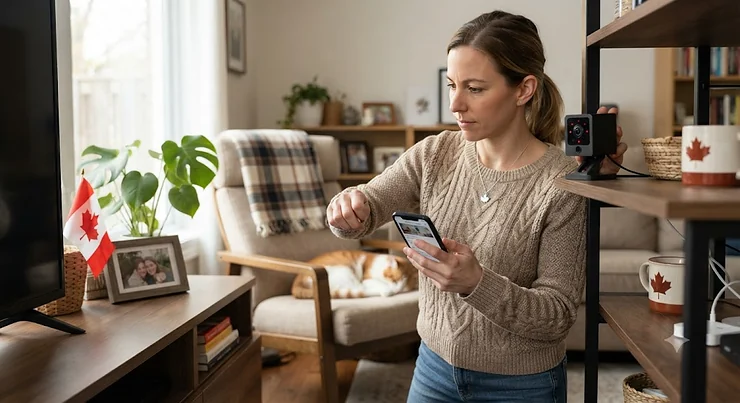
It’s 2 a.m., something crashes in the living room, and your cat is nowhere in her daytime nap spot. A night vision camera for nocturnal cats is a Wi-Fi-connected pet camera built with infrared or colour low-light sensors so it can film clearly in near-total darkness, letting you watch, record, and review your cat’s overnight activity from your phone. If you’ve ever squinted at a black rectangle on your phone screen at 3 a.m., wondering whether that blob is your cat or a shadow, you already know why the “night vision” part of this purchase matters more than almost any other spec.
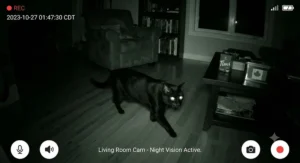
Cats are famously crepuscular rather than fully nocturnal — most active at dawn and dusk — but plenty of indoor cats flip that script entirely, especially in Canadian winters when daylight is scarce and routines get scrambled. Sorting out whether your cat is having harmless zoomies or something worth a vet call means actually seeing what happens after the lights go off, not guessing from the evidence left behind on the kitchen counter.
This guide breaks down seven real, currently available pet cameras with genuinely different night vision performance — from budget infrared units to premium models with true colour night vision — plus how to read the specs that actually matter, how storage and continuous recording work, and what Canadian privacy rules apply to a camera pointed at your own living room. Every product mention here reflects real specifications and aggregated review sentiment gathered during research, not guesswork, and prices are given as ranges in Canadian dollars since exact Amazon pricing shifts too often to quote reliably.
Quick Comparison: Best Night Vision Cameras for Nocturnal Cats
| Category | Camera | Night Vision Type | Best For |
|---|---|---|---|
| Best Overall | eufy Security Indoor Cam E220 | Infrared, 2K detail | Sharp detail with local-only storage |
| Best Budget | Wyze Cam Pan v3 | Infrared, 360° coverage | First-time buyers on a tight budget |
| Best for Continuous Recording | Reolink E1 Pro | Enhanced infrared (F1.6 aperture) | Non-stop overnight recording without fees |
| Clearest Dark-Room Footage | Arlo Pro 5S 2K | True colour night vision | Rooms with zero ambient light |
| Best Cat-Specific Features | Furbo 360 Cat Camera | Infrared, 360° rotation | Meowing alerts and behaviour tracking |
Reading across this table, the split between infrared and colour night vision is the single biggest factor separating these cameras — infrared units like the Wyze Cam Pan v3 and Reolink E1 Pro give you classic black-and-white footage that’s reliable but flattens detail, while the Arlo Pro 5S 2K uses an active light source to render genuine colour in the dark, at a real cost premium. Storage philosophy is the second major fork in the road: cameras like the eufy Security Indoor Cam E220 and Reolink E1 Pro lean toward local, subscription-free storage, while the Furbo 360 Cat Camera and Arlo Pro 5S 2K push you toward a monthly cloud plan for full functionality. Neither approach is objectively better — it depends on whether you want zero ongoing cost or the convenience of cloud backup you can access from anywhere.
💬 Just one click — help others make better buying decisions too!😊
Top 7 Night Vision Cameras for Nocturnal Cats: Expert Analysis
These seven picks reflect the top rated night vision pet monitor Canada shoppers currently have access to on Amazon.ca, selected specifically for documented after-dark performance rather than marketing claims alone — a mix of budget, mid-range, and premium options across pan-tilt, fixed-lens, infrared, and colour night vision designs.
1. Wyze Cam Pan v3 — budget-friendly 360° coverage with true night vision
The Wyze Cam Pan v3 rotates a full 360 degrees and tilts 180 degrees, so one camera mounted in a hallway or main room can sweep the whole space instead of staring at one fixed corner all night. Its infrared night vision kicks in automatically once ambient light drops, and the pan-tilt motor means you can physically steer the lens toward a specific corner where your cat likes to knock things off shelves at 4 a.m. Storage runs through a rolling 14-day free cloud window plus optional local microSD recording, so you’re not locked into a subscription just to see clips from the last two weeks.
Based on the spec comparison, this is the camera to buy first if you’ve never owned a pet camera and aren’t sure how much use you’ll actually get out of one — the price point makes it low-risk, and the pan-tilt motor compensates for imperfect placement in a way fixed-lens budget cameras can’t. Reviewers consistently report strong low-light clarity for the price, describing themselves as “blown away with the camera’s performance,” though a recurring complaint centres on audio quality being noticeably weaker than the video feed, which matters if you’re relying on sound alerts to catch nighttime yowling.
Pros:
- ✅ 360° pan and 180° tilt covers a whole room from one mount
- ✅ No subscription required for 14-day rolling cloud history
- ✅ Very low price point for genuinely capable night vision
Cons:
- ❌ Audio pickup is noticeably weaker than the video quality
- ❌ Local SD recording setup is fiddlier than plug-and-play cloud options
Expect to pay in the C$55-C$75 range at the time of research — for that price, the pan-tilt motor alone makes this one of the better value picks on this list, provided you’re comfortable with infrared (not colour) night vision.
2. eufy Security Indoor Cam E220 — sharp 2K detail with local-only storage
The eufy Security Indoor Cam E220 shoots in 2K resolution with pan-and-tilt motion tracking, which sounds like a marketing number until you’re trying to identify whether your cat swallowed something off the floor at midnight — the extra resolution genuinely helps you zoom into footage after the fact without it turning into mush. Its AI-based human and pet detection separates real activity from a curtain fluttering in a draft, cutting down on false-alert fatigue that plagues cheaper motion-triggered cameras. Storage runs locally through eufy’s HomeBase system or a compatible microSD setup rather than defaulting to a cloud plan, which is the standout feature of this whole product line.
What most buyers overlook about local-storage cameras like this one is that they trade a small amount of remote-access convenience for a real, ongoing cost saving — no monthly fee, and your footage never leaves your own network unless you choose to share it. Aggregated review sentiment describes the human detection as excellent, though several reviewers noted that pet-specific detection “doesn’t work as well” as the human-tracking mode, meaning you may still get occasional false triggers from a cat versus a person walking by.
Pros:
- ✅ 2K resolution captures fine detail even in cropped playback
- ✅ Local storage option with no mandatory monthly subscription
- ✅ AI motion tracking follows movement around the room
Cons:
- ❌ Pet-specific AI detection is less reliable than human detection
- ❌ Full smart-home integration favours the wider eufy ecosystem
Pricing typically lands in the C$70-C$100 range, and for buyers who specifically want to avoid a monthly bill while still getting sharp night footage, this is close to the best trade-off on the market right now.
3. Reolink E1 Pro — enhanced-aperture night vision built for continuous recording
The Reolink E1 Pro uses a wider F1.6 aperture lens paired with 5MP resolution specifically to pull in more available light before its infrared kicks in, which in practice means noticeably less grain in near-dark footage compared to cheaper cameras relying on infrared alone. Auto-tracking follows movement across the room, and the camera supports true continuous 24/7 recording to a local microSD card with no subscription requirement at all — a meaningful distinction if “continuous recording” is specifically what you’re shopping for rather than motion-triggered clips.
Here’s what to weigh with continuous-recording setups: they use significantly more storage than motion-only recording, so the practical ceiling on how many days of footage you can keep depends entirely on the card size you install, not the camera itself. Reviewers frequently cite Reolink’s night-vision clarity as a standout at this price tier, with the enhanced aperture specifically called out as delivering less washed-out footage than typical infrared-only competitors, though a few note the companion app’s interface feels dated next to Wyze or eufy’s smoother designs.
Pros:
- ✅ F1.6 aperture noticeably reduces grain in near-dark footage
- ✅ True 24/7 continuous local recording with zero subscription cost
- ✅ Auto-tracking follows a moving cat across the frame
Cons:
- ❌ Continuous recording eats through microSD storage quickly
- ❌ App interface feels less polished than newer competitors
Expect a price in the C$65-C$90 range, making this the strongest pick specifically for anyone whose main priority is genuine round-the-clock recording rather than occasional motion clips.
4. Petcube Cam HD — simplest fixed-lens option for tight budgets
The Petcube Cam HD strips things down to a fixed 1080p wide-angle lens with no pan or tilt motor, which sounds like a limitation until you realize it also means one less moving part to fail and a genuinely low price tag. Its night vision reaches roughly 9 metres (about 30 feet), which comfortably covers most living rooms or bedrooms in a typical Canadian apartment or townhouse from a single mount point. A built-in sound sensor can detect meows and other noise, and the camera includes an option to connect with a licensed veterinarian through the app if something in the footage worries you.
Based on the spec comparison, this is the camera for someone who wants a “set it and forget it” solution in one specific room rather than whole-house coverage — the lack of pan-tilt actually simplifies mounting since there’s no motor noise or drift to account for. Aggregated review sentiment calls out the night-vision performance specifically as strong for the price, describing it as offering “great nighttime vision,” though the fixed field of view means placement planning matters more here than with rotating cameras.
Pros:
- ✅ Night vision range of roughly 9 metres at a budget price
- ✅ No moving parts to wear out or malfunction over time
- ✅ Meow and sound detection built in
Cons:
- ❌ Fixed lens means no remote panning if your cat wanders off-frame
- ❌ Video history requires an optional paid subscription
Pricing generally sits in the C$35-C$55 range, which makes it one of the most affordable ways to get genuinely reliable night vision into a single room without extra features you may not need.
5. Petcube Bites 2 Lite — treat-tossing camera with 8x zoom reach
The Petcube Bites 2 Lite combines a 1080p HD camera with an automatic treat dispenser and 8x digital zoom, letting you both toss a treat and zoom in close enough to check on a cat curled up in a far corner of the room during a 2 a.m. check-in. Night vision performance mirrors its sibling the Petcube Cam HD, reaching a comparable range in low light, and the wide 160-degree field of view means fewer dead zones than narrower fixed cameras. Two-way audio lets you talk your cat down from whatever 3 a.m. mischief is in progress, which matters more than it sounds for anxious or vocal cats.
What most buyers overlook here is that the treat dispenser isn’t just a gimmick for daytime interaction — it doubles as a genuinely useful tool for redirecting nighttime attention-seeking behaviour, since a treat toss can interrupt a yowling episode without you getting out of bed. Reviewer sentiment consistently praises the 8x zoom and treat-dispensing combination as the standout feature, though several note the dispenser only works reliably with certain treat sizes and shapes, and the price sits meaningfully above simpler fixed cameras.
Pros:
- ✅ 8x digital zoom for checking distant corners at night
- ✅ Treat dispenser doubles as a nighttime behaviour redirect tool
- ✅ Wide 160-degree field of view reduces blind spots
Cons:
- ❌ Treat dispenser is picky about treat size and shape
- ❌ Costs noticeably more than fixed-lens alternatives without a dispenser
Typical pricing lands in the C$110-C$140 range, which is a fair ask if the treat-tossing feature genuinely adds value for your specific cat’s nighttime habits rather than sitting unused.
6. Furbo 360 Cat Camera — cat-specific meow alerts and full rotation
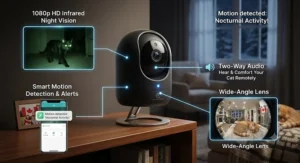
The Furbo 360 Cat Camera is one of the few cameras on this list actually engineered around cat behaviour specifically rather than adapted from a general pet or security camera — it listens for meowing and can send an alert the moment your cat starts vocalizing overnight, which is genuinely useful for catching the difference between a normal midnight chirp and prolonged distress yowling. The full 360-degree rotation means it can follow activity around an entire room rather than staying locked on one angle, and infrared night vision handles low-light conditions competently even without colour rendering.
Here’s what the spec sheet won’t tell you, but user reports suggest: the base “no monthly fee” version of this camera covers live viewing and basic recording, but the meowing-alert AI and extended cloud history that make Furbo genuinely distinctive for cat owners require a paid plan to unlock fully. Reviewers describe the rotation and treat-toss mechanics as reliably good, calling the night vision quality solid for the category, though a recurring criticism is that the picture is “grainier than competitors” when compared side by side with 2K options like the eufy E220.
Pros:
- ✅ Meowing-detection AI is genuinely tailored to cat behaviour
- ✅ Full 360° rotation covers an entire room without repositioning
- ✅ No-subscription base version available for live viewing
Cons:
- ❌ Full AI meow-alert features require a paid monthly plan
- ❌ Video resolution is grainier than 2K competitors
Pricing runs in the C$100-C$140 range for the no-subscription hardware, with monthly plans adding on top if you want the full meow-detection suite — worth it specifically if your cat is vocal enough at night that a targeted sound alert would actually change how you respond.
7. Arlo Pro 5S 2K — true colour night vision for the clearest dark-room footage
The Arlo Pro 5S 2K is the outlier on this list in the best way: instead of infrared black-and-white footage, it uses an integrated spotlight to produce genuine colour night vision, meaning you can actually distinguish your grey tabby from a shadow instead of squinting at a monochrome blob. At 2K HDR resolution with a 160-degree field of view, this is the sharpest and most detailed image quality of any camera covered here, and its smart animal-detection AI is specifically tuned to differentiate pets from general motion, cutting down false alerts significantly compared to generic motion sensors.
Based on the spec comparison, this is squarely the premium pick for anyone whose main frustration with pet cameras has been grainy, hard-to-interpret night footage — the colour rendering genuinely changes what you can tell from a clip at a glance. The trade-off is real: storage is cloud-only with no local recording option, meaning ongoing costs are baked into ownership rather than optional. Reviewer sentiment consistently praises the wide field of view and colour night vision as standout features, with “smart animal detection” called out specifically, though the lack of any free cloud storage tier is a frequently repeated frustration.
Pros:
- ✅ True colour night vision, not just infrared black-and-white
- ✅ 2K HDR resolution is the sharpest image quality on this list
- ✅ Smart animal detection specifically tuned to pets
Cons:
- ❌ Cloud-only storage with no free tier available
- ❌ Premium price compared to every other camera here
Expect pricing in the C$220-C$260 range plus an ongoing cloud plan — a real investment, but the only option here that solves the “is that actually my cat or a shadow” problem outright.
Setting Up for the Clearest Possible Night Vision Footage
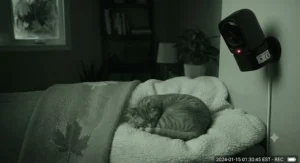
Buying the right hardware only solves half the problem — where and how you mount a night vision camera for nocturnal cats has as much impact on footage clarity as the camera’s specs. Start by placing the camera at cat-eye height rather than up near the ceiling; infrared sensors illuminate in a cone shape, and a high, downward-angled mount often leaves the floor level — exactly where your cat spends most of her time — sitting at the dim edge of that cone. Avoid pointing any night vision camera directly at a window or reflective surface like a mirror or glass cabinet, since infrared light bounces straight back into the lens and washes out the whole frame into a white blur.
For genuinely clear night vision cat camera footage in dark rooms, keep the lens itself dust-free — a thin film of dust across an infrared emitter scatters the light source and noticeably softens image sharpness, something owners rarely think to check until footage quality mysteriously drops. If your cat’s coat is very dark or very pale, test footage before committing to a permanent mount location, since infrared cameras render contrast differently than colour ones and a jet-black cat can occasionally blend into shadow even with decent night vision hardware. Finally, disable any “night mode” auto-brightness boosting in the app if you notice motion blur on a fast-moving cat — some cameras compensate for low light with a slower shutter speed, which sharpens still scenes but smears anything moving quickly, exactly the moment you most want a clear frame.
Real-World Scenarios: Matching the Camera to Your Cat’s Habits
Consider three different Canadian households and how their nighttime cat situations point toward different cameras. A condo-dwelling shift worker who sleeps through the day and needs to check on a cat left alone overnight benefits most from a camera like the eufy Security Indoor Cam E220, where 2K detail and local storage mean reviewing hours of footage after a shift doesn’t rack up cloud-streaming data or subscription costs. A multi-cat household in a detached home trying to figure out which cat is knocking things off the counter at 3 a.m. needs the wide rotation and meow-detection of the Furbo 360 Cat Camera, since pinpointing which specific cat is responsible for nighttime chaos matters more than raw resolution.
A family whose senior cat has started vocalizing and pacing at night — a pattern sometimes linked to age-related cognitive changes worth mentioning to a vet — is better served by the Arlo Pro 5S 2K‘s true colour night vision, since distinguishing normal restlessness from signs of disorientation or distress is genuinely easier with colour footage than with a grainy infrared silhouette. And a budget-conscious first-time pet camera buyer, simply curious whether their new rescue cat is settling in okay overnight, is well served by the Wyze Cam Pan v3 or Petcube Cam HD — low commitment, low cost, and enough night vision clarity to answer the basic question without overbuying features they may never use.
Understanding Nocturnal Cat Behaviour: Why 3 A.M. Feels Like Rush Hour
“Nocturnal” is technically the wrong word for most cats — domestic cats are crepuscular by nature, meaning their activity naturally peaks around dawn and dusk rather than in the dead of night, a pattern shaped by their evolutionary history as small predators avoiding both daytime heat and the attention of larger nighttime hunters. A large-scale tracking study of both indoor and outdoor cats found that cats actually covered more ground during daytime hours overall, but outdoor cats in particular showed markedly more nighttime activity than strictly indoor cats — suggesting that a purely indoor lifestyle, common in Canadian apartments and condos, can shift a cat’s natural rhythm toward more overnight activity than her ancestors would have shown.
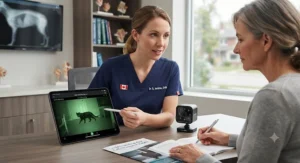
The same research found something Canadian cat owners will recognize immediately: human interaction schedules were an even stronger driver of activity timing than daylight itself, with cats becoming noticeably more active around the times their caregivers were home and engaged. That’s the practical takeaway behind most nighttime zoomies — an indoor cat who sleeps most of the day while you’re at work, then gets fed and briefly played with right before you go to bed, is often just running on a schedule you unintentionally set for her. A night vision camera doesn’t just satisfy curiosity here; reviewing a week of overnight activity tracking footage can reveal genuinely actionable patterns, like a 3 a.m. activity spike that lines up suspiciously well with an automatic feeder going off, or restlessness that starts right when a furnace or heat pump cycles on.
How to Choose a Night Vision Camera for Nocturnal Cats
Picking the right camera comes down to a short list of priorities, roughly in order of importance for most nighttime pet-monitoring use cases:
- Decide between infrared and colour night vision first. Infrared is cheaper and universal but renders footage in black-and-white with reduced detail; colour night vision (like the Arlo Pro 5S 2K) costs more but makes footage dramatically easier to interpret at a glance.
- Match storage type to your budget tolerance. Local storage cameras like the Reolink E1 Pro and eufy Security Indoor Cam E220 have no ongoing fees but cap how much history you can keep; cloud-based cameras offer more remote flexibility at the cost of a monthly bill.
- Check the actual night vision range, not just “has night vision.” A camera rated for roughly 9 metres, like the Petcube Cam HD, is plenty for a bedroom but may leave the far end of an open-concept living room dim.
- Consider whether pan-tilt or fixed lens suits your space better. A rotating camera like the Wyze Cam Pan v3 covers more ground from one mount; a fixed lens is simpler and has no motor to fail, but demands more careful initial placement.
- Weigh cat-specific features against general pet-camera features. Meow detection, as on the Furbo 360 Cat Camera, is genuinely useful if vocalization is your main nighttime concern, but adds cost that’s wasted if your cat is quiet and simply active.
- Factor in continuous recording needs versus motion-triggered clips. If you want a genuine overnight record regardless of movement, prioritize cameras explicitly built for 24/7 local recording rather than motion-only alert systems.
- Confirm Wi-Fi range and reliability in the room you’re mounting it. Even the best night vision camera is useless if it drops connection overnight — test signal strength in the actual room before committing to a permanent mount.
Getting Truly Clear Night Vision in Dark Rooms
The phrase “night vision” covers a surprisingly wide range of actual performance, and understanding why matters before you compare specs across brands. Standard infrared night vision works by flooding a room with light just outside the visible spectrum, which the camera’s sensor picks up and renders in grayscale — it’s reliable and inexpensive, but it flattens colour and contrast information, which is why infrared footage of a cat can look like a slightly fuzzy grey silhouette rather than a genuinely clear picture. Cats also have a reflective layer behind their retinas called the tapetum lucidum, the same structure responsible for “eyeshine” in flash photos, and it can cause a bright, sometimes distracting glare directly back at an infrared-equipped camera at close range — something to expect rather than be alarmed by if you see it in footage.
Colour night vision, used by cameras like the Arlo Pro 5S 2K, takes a different approach entirely: an integrated low-power spotlight (often infrared-invisible to human eyes but bright enough for the sensor) actively illuminates the scene, letting the camera capture genuine colour rather than reconstructing grayscale from infrared alone. This produces a dramatically clearer, more natural-looking image — genuinely useful if you need to tell your cat apart from a shadow, or distinguish normal grooming from a limp — but it comes at a real cost premium and, on some models, a faint visible glow that a light-sensitive cat may occasionally notice. For most dark-room use cases, a mid-tier infrared camera positioned well will answer “is my cat okay” just fine; colour night vision earns its premium specifically when fine detail actually matters, such as monitoring an elderly or recovering cat.
Night Vision Cameras vs. Regular Pet Cameras: What Changes After Dark
A “regular” pet camera and a genuine night vision cat camera can look identical in daylight product photos, which is exactly why this distinction trips up first-time buyers. Plenty of budget cameras marketed broadly as “pet cameras” include only basic low-light sensitivity rather than true infrared or colour night vision, meaning footage after sunset degrades into near-unusable darkness or heavy digital noise — fine for daytime monitoring, useless for the specific 2 a.m. use case this guide is built around. The cameras featured here were all selected specifically because their night vision performance is a documented, reviewed feature rather than an afterthought bolted onto a daytime-focused product.
| Factor | Regular Pet Camera | True Night Vision Cat Camera |
|---|---|---|
| After-dark clarity | Often grainy or unusably dark | Purpose-built infrared or colour sensor |
| Typical night range | Minimal or unspecified | Roughly 9+ metres on tested models |
| Best use case | Daytime check-ins | Overnight activity tracking |
| Price premium | Lower | Moderate to significant, depending on tech |
Looking at this comparison, the practical lesson is to never assume “has a camera that works at night” means the same thing as “has real night vision” — always check for an explicit infrared or colour-night-vision spec, ideally with a stated range in metres or feet, rather than trusting marketing copy alone. The Petcube Cam HD and Wyze Cam Pan v3 both explicitly publish night vision performance details, which is exactly the kind of transparency worth prioritizing over a camera that simply lists “night vision: yes” with no further detail.
Continuous Recording & Storage: Cloud vs. Local, Explained
“Continuous recording” means the camera captures footage nonstop rather than only when triggered by motion — genuinely useful for reviewing an entire night’s activity rather than hoping the motion sensor caught the moment that mattered. This capability depends entirely on storage architecture, and the two main approaches work very differently. Local storage, used by cameras like the Reolink E1 Pro and (optionally) the eufy Security Indoor Cam E220, writes footage directly to a microSD card or a home base station you own outright — no monthly fee, but capacity is fixed by the card size you install, and older footage gets overwritten once the card fills up.
Cloud storage, the default on the Furbo 360 Cat Camera and required entirely on the Arlo Pro 5S 2K, uploads footage to the manufacturer’s servers, giving you remote access from anywhere and protection if the physical camera is damaged or stolen, but almost always requires an ongoing monthly subscription for anything beyond a short free trial window.
| Storage Type | Upfront Cost | Ongoing Cost | Footage Retention | Access If Camera Fails |
|---|---|---|---|---|
| Local (SD/HomeBase) | Card or hub purchase | None | Limited by card capacity | Lost with the device |
| Cloud subscription | Usually included | Monthly fee | Set by plan tier | Safe on remote servers |
The analysis here is straightforward: if continuous recording storage without an ongoing bill is your priority, a local-storage camera paired with a large-capacity microSD card is almost always the more cost-effective route over a full year of ownership, since cloud plans supporting true continuous (rather than motion-triggered) recording tend to sit at the more expensive end of subscription tiers. Cloud storage earns its keep instead through convenience and resilience — worth paying for if remote access from anywhere or footage-survives-theft protection genuinely matters to your situation.

Common Mistakes When Buying a Night Vision Cat Camera
Even careful shoppers tend to repeat the same handful of errors when picking a nighttime pet camera, and most of them come down to skimming specs rather than reading them closely.
Assuming “night vision” always means the same thing. As covered above, infrared and colour night vision are genuinely different technologies with different clarity outcomes — always confirm which type a camera uses before assuming footage quality.
Ignoring the stated night vision range. A camera with unspecified or short-range night vision may leave the far side of a large room essentially dark, even though the daytime footage looks perfectly fine in product demos.
Underestimating storage costs over time. A cloud subscription that seems trivial monthly adds up meaningfully over a year or two — do the multiplication before assuming the cheaper hardware price is the whole story.
Mounting the camera somewhere that defeats its own night vision. Pointing an infrared camera at glass, mirrors, or a window at night causes reflective wash-out that no amount of camera quality can fix — placement matters as much as the spec sheet.
Overbuying features that don’t match the actual problem. A treat dispenser or meow-alert AI is genuinely valuable for some households and completely unused in others — buy for the specific nighttime behaviour you’re trying to understand, not the longest feature list.
Features That Actually Matter (And Those That Don’t)
Marketing copy for pet cameras tends to bury the genuinely important specs under a pile of features that sound impressive but rarely change the nighttime-monitoring experience. Night vision range and type, storage architecture, and field of view are the three specs that actually determine whether you get useful footage of your cat at 3 a.m. — everything else is secondary. Two-way audio is a nice-to-have for talking your cat down from counter-surfing, but it’s not going to make or break whether you can actually see what’s happening.
On the other hand, features like elaborate app gamification, extensive colour customization for the camera housing, or bundled subscription perks unrelated to video (like discount codes for pet food) genuinely don’t affect the core job of a night vision cat camera and shouldn’t sway a purchase decision. Motion-detection sensitivity settings are worth checking, since an overly sensitive sensor triggers constant false alerts from things like curtains moving in a draft, but this is a software refinement rather than a hardware dealbreaker — most cameras let you adjust sensitivity after purchase, so it’s rarely worth eliminating an otherwise good camera over.
Privacy, Safety & Canadian Regulations for Smart Pet Cameras
Any Wi-Fi-connected camera in your home is technically an internet-connected device, and Canada’s privacy regulator has published specific guidance worth reading before you set one up. The Office of the Privacy Commissioner of Canada’s guidance on smart devices recommends changing default passwords immediately, keeping camera firmware updated, and reviewing exactly what data a manufacturer collects and where it’s stored before connecting any internet-of-things device to your home network — advice that applies just as much to a C$40 pet camera as it does to a full home security system.
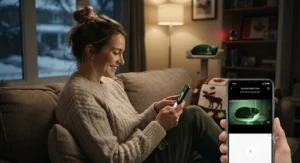
This matters more than it might seem for pet cameras specifically, since footage of your living space (and anyone who visits) is being transmitted and, in cloud-storage cases, stored on a third-party server. A CBC News investigation into smart home security vulnerabilities found that researchers were able to identify real, exploitable weaknesses across a range of consumer smart-home devices, underscoring why the password and firmware advice above isn’t just boilerplate caution. Practically speaking: enable two-factor authentication if the camera’s app offers it, avoid reusing a password from another account, and periodically check the app’s activity log for any login you don’t recognize — a five-minute habit that closes off most of the realistic risk.
Frequently Asked Questions
❓ Do cats see infrared light from night vision cameras?
❓ How far does night vision typically reach on a pet camera?
❓ Is continuous recording better than motion-triggered recording for tracking a nocturnal cat?
❓ Does a night vision cat camera need a monthly subscription to work?
❓ Can a night vision camera help figure out why my cat is active at night?
Conclusion
There’s no single “best” night vision camera for nocturnal cats — there’s the best one for your specific room, budget, and the specific question you’re trying to answer at 3 a.m. If you want maximum coverage from one mount without much fuss, the Wyze Cam Pan v3 or eufy Security Indoor Cam E220 cover that ground well. If continuous, gapless overnight recording without a monthly bill is the priority, the Reolink E1 Pro is purpose-built for exactly that. And if grainy infrared footage has never actually answered your questions and you need to see your cat clearly rather than guess at a shadow, the Arlo Pro 5S 2K‘s true colour night vision is worth the premium.
Whichever you choose, remember that hardware is only half the equation — thoughtful placement, a dust-free lens, and an honest look at whether you need local or cloud storage will do as much for footage clarity as the camera’s marketed spec sheet. A little research now saves a lot of squinting at grainy 3 a.m. footage later.
✨ Don’t Miss These Exclusive Deals! 🔍
Take your nighttime cat monitoring to the next level with these carefully selected cameras. Click on any highlighted item to check current pricing and availability. These picks will help you finally see what your cat gets up to after dark! 🐾🌙
Recommended for You
- Night Vision vs Infrared Pet Camera: 7 Picks Tested (2026)
- Night Vision Cat Camera Under $120 CAD: 7 Top Picks (2026)
- Treat Camera for Training Cats: 7 Proven Picks (2026)
Disclaimer: This article contains affiliate links. As an Amazon Associate, I earn from qualifying purchases. If you purchase products through these links, we may earn a small commission at no additional cost to you.
✨ Found this helpful? Share it with your friends! 💬🤗
